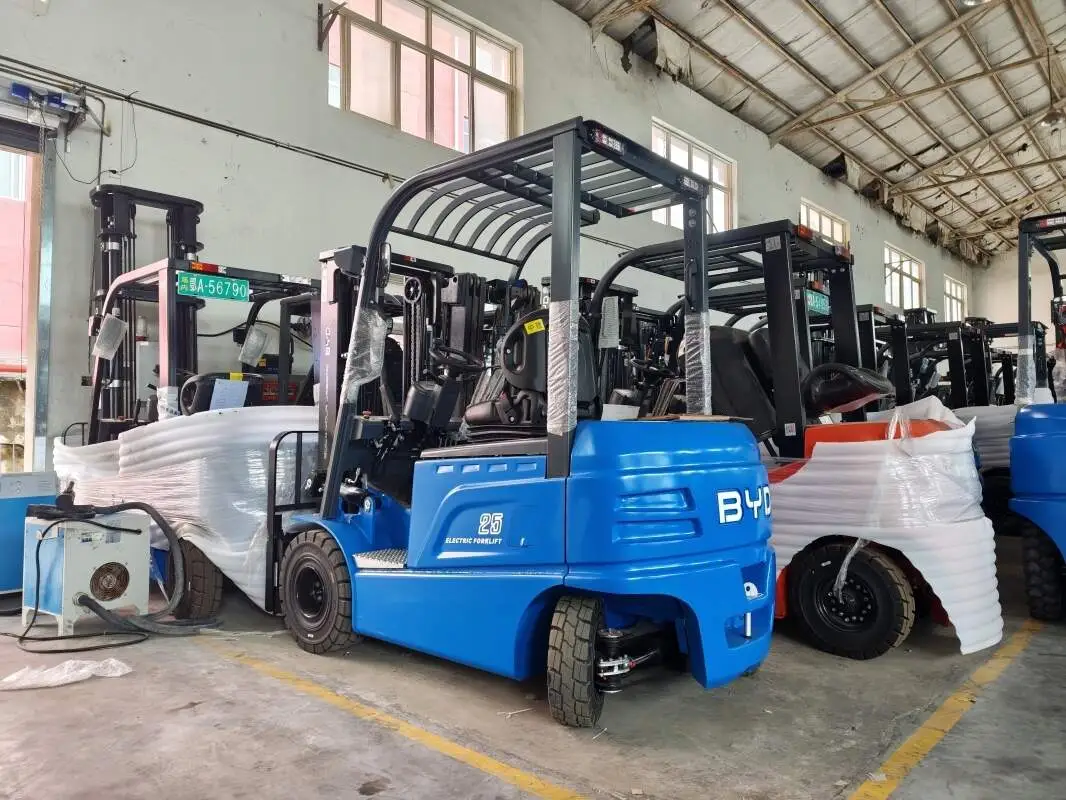
As an importer looking to bring electric forklifts into the European Union (EU) market, understanding and adhering to CE marking requirements is non-negotiable. CE marking is a mandatory conformity symbol that indicates a product meets all relevant EU health, safety, and environmental protection standards, allowing it to be sold and used across the 27 EU member states as well as the European Economic Area (EEA). For electric forklifts, failure to comply with these requirements can lead to costly delays, product seizures, fines, or even bans from the market. This guide breaks down everything importers need to know to navigate the CE marking process smoothly and ensure full compliance.
What is CE Marking for Electric Forklifts?
CE marking is not a quality label; instead, it is a legal requirement that demonstrates an electric forklift meets the essential health and safety requirements outlined in EU directives applicable to the product. For electric forklifts, several key directives come into play, each targeting specific aspects of the vehicle’s design, performance, and safety. Importers are responsible for ensuring that every electric forklift they bring into the EU carries a valid CE mark, which must be affixed to a visible, durable, and easily accessible part of the vehicle. The mark must be accompanied by the identification number of the notified body involved in the conformity assessment, if applicable.
Core CE Marking Requirements for Electric Forklifts
To obtain CE marking for electric forklifts, importers must ensure compliance with three primary EU directives, each with its own set of essential requirements:
#1. Machinery Directive (2006/42/EC)
The Machinery Directive is the overarching framework for all machinery sold in the EU, including electric forklifts. It focuses on ensuring that the vehicle is designed and constructed to minimize risks to operators, bystanders, and the environment. Key requirements under this directive include:
- Safety Features: Electric forklifts must be equipped with essential safety components such as emergency stop buttons, overload protection systems, stability control mechanisms, and visible warning signals (like lights and horns). These features must be tested to ensure they function reliably under normal and emergency operating conditions.
- Ergonomic Design: The vehicle’s controls, seating, and visibility must be designed to reduce operator fatigue and minimize the risk of human error. For example, controls should be intuitively placed, and the operator’s cabin should provide clear visibility of the load and surrounding area.
- Risk Assessment: A comprehensive risk assessment must be conducted during the design phase to identify potential hazards, such as tipping, collision, or electrical shock. Mitigation measures must be implemented to address each identified risk, and documentation of this assessment must be included in the technical file.
#2. Low Voltage Directive (2014/35/EU)
Since electric forklifts rely on battery-powered electrical systems, they must comply with the Low Voltage Directive, which applies to equipment operating within a voltage range of 50 to 1000 volts AC or 75 to 1500 volts DC. This directive ensures that electrical components are safe to use and do not pose risks of electric shock or fire. Key requirements include:
- Insulation and Wiring: All electrical components, including batteries, motors, and wiring, must have adequate insulation to prevent accidental contact with live parts. Wiring must be properly routed and secured to avoid damage that could lead to short circuits.
- Battery Safety: Batteries must be designed to prevent overcharging, overheating, and leakage. They should also be equipped with protective mechanisms such as fuses or circuit breakers to shut down power in the event of a fault.
- Testing: Electrical systems must undergo testing to verify their compliance with voltage limits, insulation resistance, and dielectric strength. These tests ensure that the system can operate safely under normal and fault conditions.
#3. Electromagnetic Compatibility Directive (2014/30/EU)
The Electromagnetic Compatibility (EMC) Directive ensures that electric forklifts do not emit excessive electromagnetic radiation that could interfere with other electronic devices, and that they are immune to electromagnetic interference from other sources. This is particularly important for electric forklifts operating in industrial environments where multiple electronic systems are in use. Key requirements include:
- Emission Testing: Tests are conducted to measure the amount of electromagnetic radiation emitted by the forklift’s electrical systems, including the motor, battery charger, and control electronics. These emissions must stay within limits set by EU standards to avoid disrupting nearby equipment.
- Immunity Testing: The forklift must be tested to ensure it can operate correctly when exposed to electromagnetic fields from sources such as radio transmitters, power lines, and other industrial machinery. This ensures that the vehicle’s controls and safety features do not malfunction due to external interference.
Testing and Assessment Procedures
The process of obtaining CE marking for electric forklifts involves a conformity assessment, which can be carried out in several ways depending on the complexity of the vehicle. Importers can choose between self-assessment (for simpler products) or assessment by a notified body (a third-party organization authorized by the EU to conduct conformity assessments).
For electric forklifts, which are considered complex machinery, assessment by a notified body is often required, especially if the vehicle incorporates new technologies or features that are not covered by harmonized standards. The assessment process typically involves:
- Sample Testing: The notified body will test one or more samples of the electric forklift to verify compliance with the essential requirements of the applicable directives. Tests may include safety performance checks, electrical safety tests, and EMC tests.
- Technical File Review: The notified body will review the technical construction file (TCF), which contains detailed documentation about the forklift’s design, materials, components, testing results, and risk assessment. This file must be comprehensive and up-to-date to demonstrate full compliance.
- Factory Audit: In some cases, the notified body may conduct an audit of the manufacturer’s production facility to ensure that production processes are consistent with the design specifications and that quality control measures are in place to maintain product conformity.
Documentation Importers Must Prepare
Importers play a critical role in ensuring that all necessary documentation is in place before bringing electric forklifts into the EU. The key documents required include:
- Technical Construction File (TCF): This is a detailed document that provides evidence of the forklift’s compliance with EU directives. It includes design drawings, material specifications, test reports, risk assessments, and instructions for use and maintenance. The TCF must be kept accessible for at least 10 years after the last product is placed on the market.
- Declaration of Conformity (DoC): This is a formal statement signed by the importer (or manufacturer) declaring that the electric forklift meets all relevant EU requirements. The DoC must include information such as the product’s identification, the applicable directives and standards, and the name and address of the signatory.
- User Manual: The user manual must be written in the language of the EU member state where the forklift is sold. It should provide clear instructions on how to operate, maintain, and service the vehicle safely, as well as information about its limitations and potential hazards.
Post-Certification Responsibilities
CE marking is not a one-time process; importers have ongoing responsibilities to ensure that the electric forklifts they sell continue to comply with EU requirements. These responsibilities include:
- Maintaining Documentation: Importers must keep the TCF and DoC up-to-date and accessible for inspection by EU authorities. If any changes are made to the product’s design or components, the documentation must be updated, and a new conformity assessment may be required.
- Monitoring Product Conformity: Importers should conduct regular checks to ensure that the electric forklifts received from manufacturers match the specifications and standards outlined in the technical file. This may include random testing of products or audits of the manufacturer’s production processes.
- Addressing Non-Compliance: If a non-compliance issue is identified, importers must take immediate action to correct it, such as recalling affected products, notifying EU authorities, and implementing measures to prevent the issue from recurring.
Common Pitfalls to Avoid
Navigating CE marking requirements can be complex, and importers often make mistakes that can lead to compliance issues. Some common pitfalls to avoid include:
- Ignoring Updated Directives: EU directives and standards are regularly updated, and importers must stay informed about any changes that may affect their products. Failing to comply with updated requirements can result in non-compliance.
- Choosing an Unqualified Notified Body: It is important to select a notified body that has expertise in testing and assessing electric forklifts. Working with an unqualified body can lead to invalid certifications and compliance issues.
- Incomplete Documentation: The TCF and DoC must be comprehensive and accurate. Missing or incomplete documentation can delay the certification process or result in rejection by EU authorities.
- Failing to Conduct Post-Market Surveillance: Importers must monitor the performance of their products after they are placed on the market to identify any potential safety issues. Failing to do so can lead to serious consequences, including product recalls and legal action.
Conclusion
For importers of electric forklifts, understanding and complying with CE marking requirements is essential for accessing the EU market. By familiarizing themselves with the core directives, testing procedures, documentation requirements, and post-certification responsibilities, importers can ensure that their products meet all relevant EU standards and avoid costly compliance issues. Taking the time to invest in proper compliance not only ensures market access but also builds trust with customers and demonstrates a commitment to safety and quality. With the right knowledge and preparation, importers can navigate the CE marking process successfully and position themselves for success in the EU market.