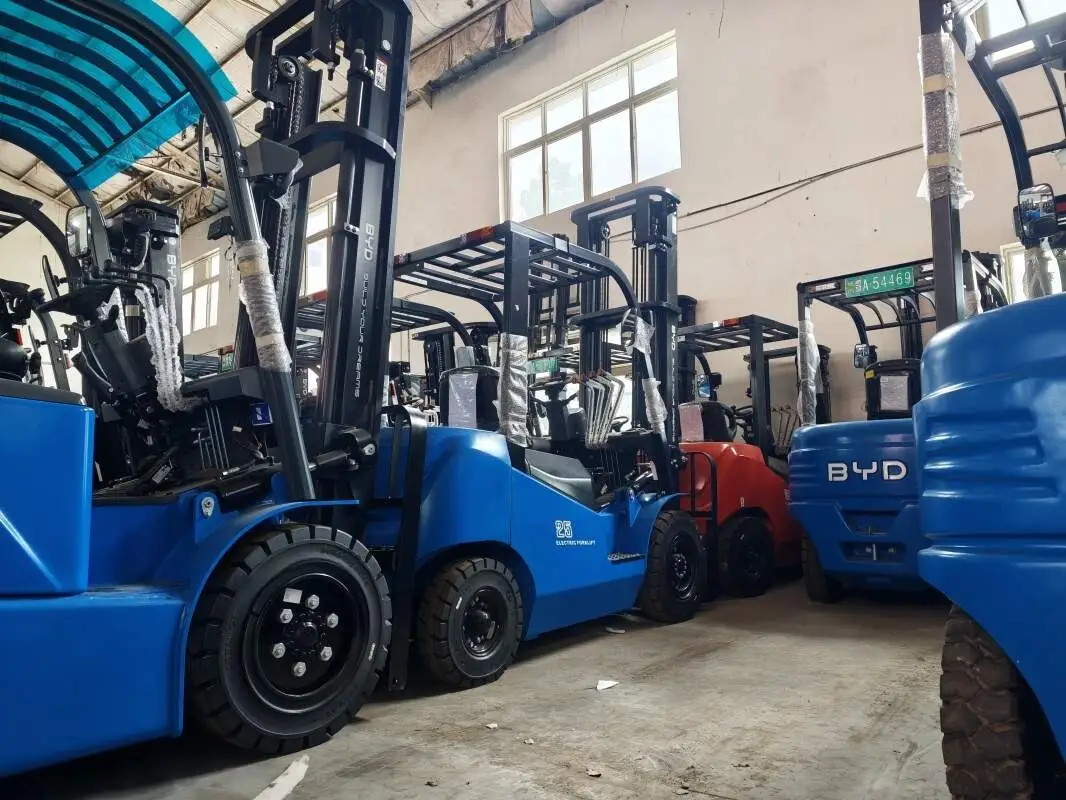
In the fast-paced indoor work environments of warehouses, distribution centers, and manufacturing facilities across the European Union (EU), electric forklifts play a critical role in streamlining material handling operations. However, the noise generated by these machines can pose significant challenges, including potential harm to worker health, reduced productivity, and disruption to daily operations. To address these issues, the EU has established a set of key noise level standards tailored specifically for indoor electric forklifts, designed to balance operational efficiency with workplace safety and comfort.
The EU’s focus on occupational health and safety has driven the development of comprehensive noise regulations for industrial equipment, including electric forklifts. These standards are rooted in broader EU directives, such as the Noise at Work Directive (2003/10/EC), which sets minimum requirements for protecting workers from the risks associated with exposure to noise in the workplace. For indoor electric forklifts, specific standards have been developed to account for their unique operational context—closed or semi-enclosed spaces where noise can accumulate more easily than in outdoor settings, amplifying its impact on workers and surrounding operations.
The primary standards governing noise levels for indoor electric forklifts in the EU are derived from international and regional benchmarks, adapted to meet the specific needs of indoor work environments. One of the core requirements is the limit on noise exposure at the operator’s position. Under current EU guidelines, indoor electric forklifts must ensure that the noise level measured at the operator’s ear does not exceed 80 decibels (dB(A)) during normal operation. This limit is set to prevent long-term hearing damage, as prolonged exposure to noise above this level can lead to permanent hearing loss, tinnitus, and other auditory issues that impact both worker well-being and job performance.
Beyond the operator’s position, EU standards also address the noise emitted by electric forklifts into the surrounding indoor environment. For areas where other workers are present, the noise level at a distance of one meter from the forklift should typically not exceed 85 dB(A) during routine operations. This requirement helps to minimize disruption to nearby tasks and ensures that all workers in the facility are protected from excessive noise exposure, regardless of their proximity to the forklift. It is important to note that these limits may vary slightly depending on the type of electric forklift and its intended use; for example, specialized models designed for heavy-duty indoor applications may have adjusted thresholds, but these variations always align with broader EU occupational safety regulations to ensure consistent protection.
To ensure that indoor electric forklifts meet these noise level standards, the EU mandates specific testing protocols that must be followed during certification and regular inspections. These testing methods are outlined in standardized documents, which detail the conditions under which noise measurements should be taken for accuracy.
First, testing must be conducted in a controlled environment that mimics typical indoor work settings. This includes a flat, hard surface similar to warehouse flooring, with minimal background noise to avoid skewing readings. The forklift should be tested under both loaded and unloaded conditions, as the weight of cargo can impact noise levels generated by the hydraulic system and tire friction. During testing, noise measurements are taken using calibrated sound level meters placed at specific positions: one at the operator’s ear level, and others at designated distances around the forklift. The meters must be set to measure A-weighted decibels (dB(A)), a scale that approximates the human ear’s sensitivity to different frequencies of noise, making it the most relevant metric for assessing occupational noise exposure.
Manufacturers seeking to market electric forklifts in the EU must obtain certification that their models meet these noise standards. Additionally, facility operators are required to conduct regular noise audits of their forklift fleets to ensure ongoing compliance. This includes periodic testing, maintenance checks, and operator training to minimize noise generation during daily use.
Compliance with EU indoor electric forklift noise standards is not just a legal requirement—it also offers significant benefits for businesses and workers alike. For workers, adherence to these standards reduces the risk of hearing-related health issues, improving overall well-being and job satisfaction. A quieter work environment also reduces stress levels, leading to increased focus and productivity, as workers are less distracted by excessive noise. For businesses, compliance helps to avoid potential fines and legal penalties associated with violating EU occupational safety regulations. It also enhances the company’s reputation as a responsible employer, attracting and retaining skilled workers who prioritize safe and comfortable work environments. Furthermore, investing in low-noise electric forklifts and noise-reduction measures can lead to long-term cost savings, as fewer workers will require medical treatment for hearing-related issues, and productivity losses due to noise-related distractions are minimized. In some cases, compliance with noise standards can also open up new opportunities for businesses; for example, facilities that operate in noise-sensitive indoor environments, such as near office spaces or residential areas, can continue their operations without causing disruptions, allowing them to expand their services or operate during extended hours.
Achieving compliance with EU noise standards for indoor electric forklifts requires a proactive approach from both manufacturers and facility operators. For manufacturers, this involves integrating noise-reduction technologies into the design of electric forklifts. This can include using low-noise electric motors, advanced hydraulic systems with reduced vibration, and rubberized tires that minimize road noise. Additionally, sound-dampening materials can be incorporated into the forklift’s cabin and body to reduce noise transmission to the operator and surrounding environment.
For facility operators, several strategies can help maintain compliance. Regular maintenance is crucial, as worn components such as bearings, tires, or hydraulic parts can increase noise levels significantly. Scheduling routine inspections and replacing worn parts promptly can prevent noise from exceeding allowable limits. Operator training is also essential—teaching workers to operate forklifts smoothly, avoid sudden acceleration or braking, and maintain appropriate speeds can significantly reduce noise generation during daily operations. Another effective strategy is to implement noise monitoring systems throughout the facility. These systems can track noise levels in real time, alerting managers to any deviations from the standard and allowing for immediate corrective action. Additionally, designing the facility layout to minimize noise propagation—such as using sound-absorbing materials on walls and ceilings, or creating designated forklift routes away from worker stations—can further reduce the impact of forklift noise on the indoor environment.
As the EU continues to prioritize occupational health and environmental sustainability, it is likely that noise standards for indoor electric forklifts will become more stringent in the coming years. This could involve lower noise limits for both operator exposure and surrounding environment noise, as well as more detailed testing protocols to ensure accurate measurements. Advancements in technology will also play a role in shaping future standards. The development of quieter electric motors, innovative vibration-dampening technologies, and smart monitoring systems will enable manufacturers to produce forklifts that meet even stricter noise requirements. Additionally, the growing adoption of automation in material handling may lead to new standards tailored for autonomous electric forklifts, which operate without human operators and may have different noise profiles.
For businesses, staying ahead of these trends will require ongoing investment in research and development, as well as a commitment to staying informed about regulatory updates. By proactively adopting new noise-reduction technologies and implementing best practices, businesses can ensure continued compliance while also reaping the benefits of a safer, more efficient work environment. In conclusion, the EU’s key noise level standards for indoor electric forklifts are a critical component of ensuring workplace safety and comfort in material handling operations. By understanding these standards, following proper testing and compliance protocols, and implementing proactive noise-reduction strategies, businesses can protect their workers, avoid legal penalties, and enhance operational efficiency for long-term success.