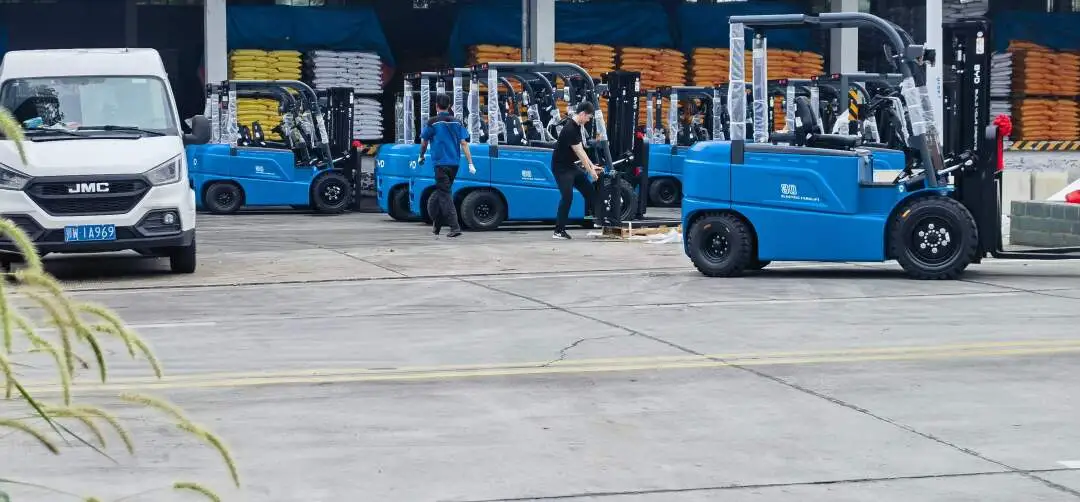
electric forklifts rely on a range of warning light signals to communicate critical information about operational status, potential faults, and safety risks. Understanding these signals is essential for operators and maintenance teams to ensure safe, efficient, and prolonged equipment service life.
The low battery warning light is one of the most frequently encountered signals. Typically illuminated in red or amber, it indicates that the forklift’s battery charge is reaching a critical level. This signal may trigger due to prolonged operation without charging, a faulty battery cell, or a malfunctioning charging system. When this light activates, operators should safely move the forklift to a designated charging area as soon as possible to avoid unexpected shutdowns that could lead to workplace hazards.
Another vital signal is the fault warning light, often represented by an engine or gear icon. This light activates when the forklift’s onboard diagnostic system detects an internal component malfunction, such as issues with the motor, control module, or hydraulic system. The exact fault may require further diagnostic testing, but immediate action includes pausing operation and notifying the maintenance team to prevent minor issues from escalating into costly repairs.
High hydraulic oil temperature warning lights alert operators to overheating in the hydraulic system, which is crucial for lifting and maneuvering loads. Overheating can occur due to heavy continuous lifting, insufficient hydraulic oil levels, or a clogged oil cooler. When this light turns on, operators should stop the forklift, allow the system to cool down, and check the hydraulic oil level. If the problem persists, a technician should inspect the cooling system for blockages or component failures.
The seatbelt unbuckled alert is a critical safety signal designed to protect operators. Illuminated when the operator fails to fasten their seatbelt, this reminder helps reduce the risk of injury during sudden stops or tip-overs. Operators must always fasten their seatbelt before starting the forklift; ignoring this signal not only violates safety protocols but also increases the likelihood of workplace accidents.
Lastly, the brake system warning light indicates potential issues with the forklift’s braking mechanism, such as low brake fluid, worn brake pads, or a malfunctioning brake sensor. A faulty braking system poses severe safety risks, so operators should immediately cease operation and have the brake system inspected and repaired by a qualified technician before resuming use.
Regularly familiarizing oneself with these warning light signals, conducting pre-operation checks, and responding promptly to alerts are key practices for maintaining electric forklift safety and reliability. By addressing signals quickly, operators can minimize downtime, reduce repair costs, and create a safer working environment for all personnel.