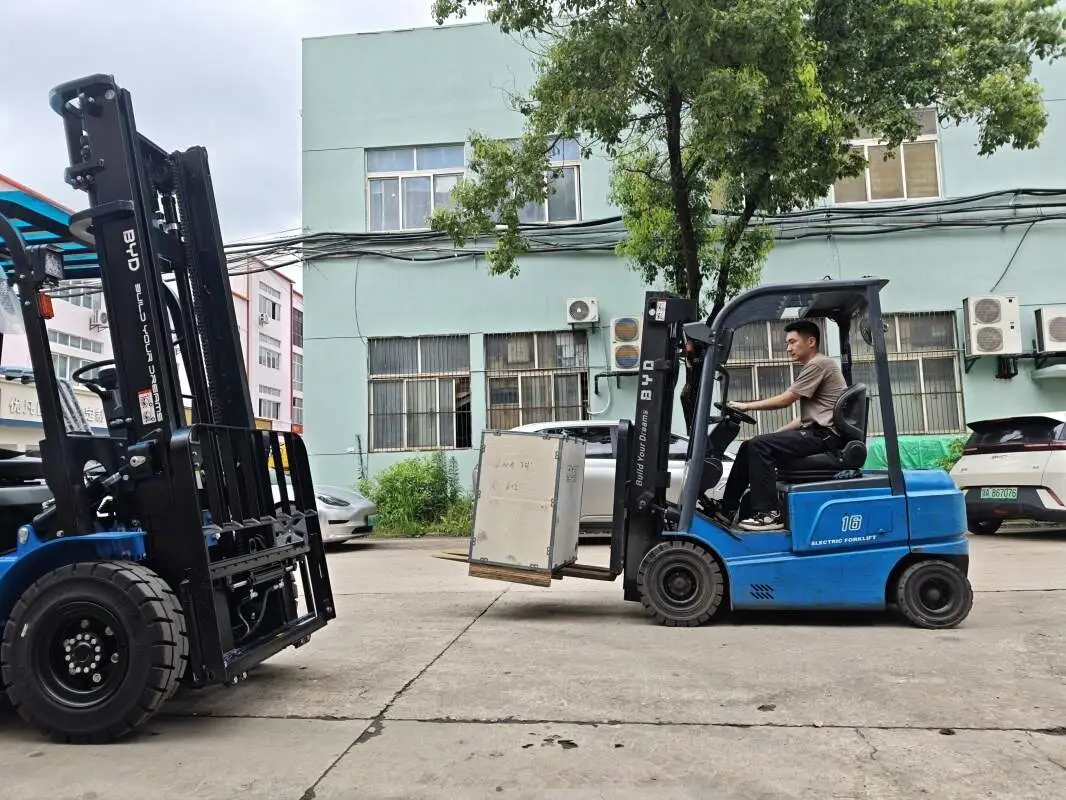
In industrial settings, forklifts are indispensable tools for efficient material handling, but their operation carries inherent risks. Equipping forklifts with appropriate safety accessories is a critical step to mitigate these risks, protect operators and bystanders, and ensure compliance with workplace safety regulations.
Seat belts are one of the most fundamental safety accessories for industrial forklifts. Designed to keep operators securely in their seats during sudden stops, turns, or tip-over incidents, seat belts significantly reduce the risk of ejection-related injuries. Even in low-speed operations, unexpected obstacles or uneven terrain can lead to sudden movements, making seat belts a non-negotiable safety component for every forklift operator.
Rearview mirrors and backup cameras are essential for improving visibility, a key factor in preventing collisions. Forklifts often have blind spots, especially when carrying large loads that block the operator’s forward or rear view. Rearview mirrors help operators monitor areas behind and beside the forklift, while backup cameras provide a clear visual feed of the path directly behind the vehicle. These accessories work together to eliminate blind spots, allowing operators to navigate crowded warehouses and outdoor loading yards with greater confidence.
Warning lights and auditory alarms are vital for alerting bystanders to the presence and movement of forklifts. Strobe lights, beacon lights, and directional turn signals make forklifts more visible in low-light conditions or busy environments. Auditory alarms, such as reverse beepers and horn systems, alert pedestrians and other equipment operators of the forklift’s approach, reducing the likelihood of accidental contact. These warning systems are particularly important in facilities where forklifts share space with foot traffic.
Load stabilizers and attachment guards play a crucial role in preventing load-related accidents. Load stabilizers help secure cargo during transport, reducing the risk of shifting loads that could cause the forklift to tip over. Attachment guards, on the other hand, protect operators and nearby personnel from moving parts of forklift attachments, such as forks or clamps, which can pose a hazard if not properly enclosed. By maintaining load stability and guarding moving components, these accessories minimize the risk of cargo damage and workplace injuries.
Operator presence sensors are increasingly common safety accessories. These sensors detect when an operator is not in the seat and disable the forklift’s movement functions, preventing unauthorized operation or accidental activation when the operator is away. This feature adds an extra layer of safety, especially in facilities where multiple personnel may have access to forklifts.
Investing in these common safety accessories is not just a matter of compliance; it is a commitment to creating a safer workplace for everyone. Each accessory serves a specific purpose, addressing different aspects of forklift operation risks. By ensuring that industrial forklifts are equipped with these essential safety components, businesses can reduce accident rates, lower operational costs associated with injuries and damages, and foster a culture of safety among their workforce.