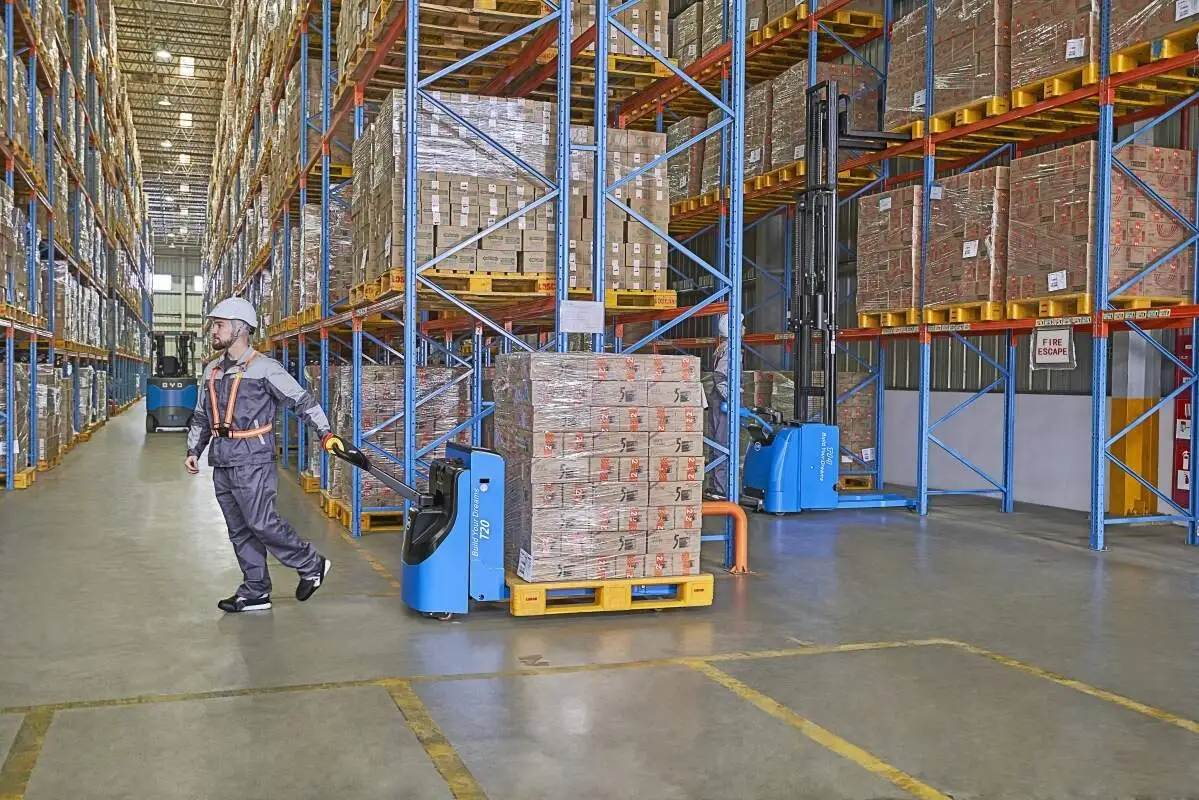
Class 7 industrial forklifts, also referred to as rough-terrain forklifts, are engineered to operate on uneven, unpaved surfaces where standard warehouse forklifts struggle to perform effectively. Their robust build, elevated ground clearance, and durable, traction-focused tires make them ideal for heavy-duty material handling tasks across a range of industrial sectors. Below is a structured breakdown of their primary application classifications.
In construction and infrastructure development projects, Class 7 forklifts serve as critical workhorses. They are tasked with transporting heavy construction materials—including steel beams, concrete blocks, and piping—across muddy, rocky, or uneven job sites. Unlike indoor forklifts limited to paved areas, their off-road capabilities eliminate the need for temporary paved pathways, streamlining workflow efficiency. These forklifts also assist in loading and unloading construction supplies from delivery trucks, ensuring timely distribution of materials to different zones of the site.
Within agricultural and forestry operations, Class 7 forklifts become indispensable tools. In farming contexts, they handle large bales of hay, sacks of grain, and heavy agricultural equipment components, moving them between fields, storage barns, and loading docks. Their ability to traverse muddy fields and gentle steep slopes makes them suitable for transporting harvested crops to processing facilities. In forestry, these forklifts aid in moving logs and wood products across remote, uneven forested areas, supporting both harvesting and transportation workflows.
Mining and quarrying environments demand equipment that can withstand harsh conditions and carry heavy loads, and Class 7 forklifts meet these rigorous requirements. They transport raw ore, rock fragments, and mining equipment components across rough, gravelly terrain within mining sites. Their sturdy frames and powerful engines enable them to move heavy loads over long distances, reducing manual labor reliance and enhancing operational safety by minimizing direct worker contact with heavy materials. They also assist in loading extracted materials onto transport vehicles for shipment to processing plants.
In port and intermodal terminal settings, Class 7 forklifts support the handling of oversized, non-containerized cargo that may not be suitable for standard container handlers. They load and unload heavy machinery, bulk goods, and irregularly shaped cargo from ships and trucks, navigating seamlessly across paved docks and gravel storage yards. Their versatility allows them to adapt to varying cargo types, making them a flexible solution for port operations where terrain conditions can shift quickly.
Each application classification underscores the adaptability and strength of Class 7 industrial forklifts. Their ability to operate in challenging, non-traditional environments makes them a valuable asset across multiple industries, ensuring heavy-duty material handling tasks are completed efficiently and safely, regardless of terrain limitations.