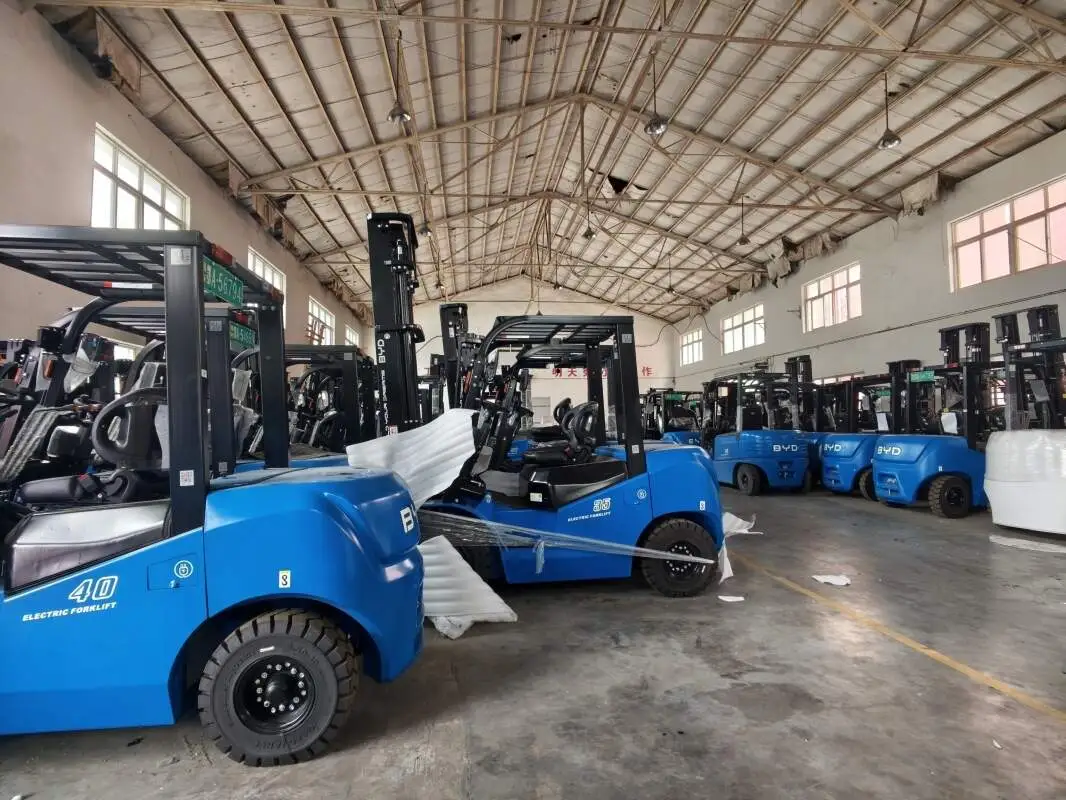
Small warehouses often face unique challenges when it comes to material handling, from limited floor space to the need for efficient, low-emission equipment. A 1 ton compact electric forklift is an ideal solution for many of these settings, but selecting the right model requires careful consideration of several key factors.
First and foremost, evaluate space compatibility. Small warehouses typically have narrow aisles and tight turning areas, so the forklift’s dimensions and turning radius are critical. Look for models with a compact overall length and width that can navigate aisle widths common in small storage facilities without sacrificing maneuverability. Measure your warehouse’s narrowest aisles and tightest corners to ensure the forklift can operate smoothly without risking damage to racks or inventory.
Next, confirm load capacity alignment. While the forklift is rated for 1 ton, it’s important to assess your daily operational needs. Consider the average weight of the pallets or materials you handle, as well as any occasional heavier loads that may arise. Opt for a model that can comfortably handle your typical maximum load while maintaining stability, even when lifting to the highest rack height required in your warehouse.
Battery performance is another essential factor. For small warehouses that operate multiple shifts or have limited charging downtime, a lithium-ion battery may be a better choice than lead-acid, as it offers faster charging times and longer operational hours between charges. If your warehouse has dedicated charging areas and longer breaks between shifts, a lead-acid battery could be a cost-effective option. Additionally, check the battery’s lifespan and availability of replacement parts to ensure long-term reliability.
Maintenance requirements should also be taken into account. electric forklifts generally require less maintenance than their internal combustion counterparts, but regular upkeep is still necessary to extend their lifespan. Look for models with easy-to-access components, such as battery compartments and hydraulic systems, to simplify routine checks and repairs. Consider the availability of service support in your area, as prompt maintenance can minimize downtime for small warehouses that rely on continuous material flow.
Finally, prioritize safety features. Small warehouses often have a mix of forklift operators and pedestrian workers, so features like anti-slip flooring on the operator platform, emergency stop buttons, and clear visibility from the driver’s seat are crucial. Some models also offer rearview cameras or proximity sensors to help operators navigate tight spaces and avoid collisions. Ensure the forklift meets relevant safety standards and provides adequate training resources for your team to operate it safely.
By carefully evaluating these factors, small warehouse owners can select a 1 ton compact electric forklift that meets their specific operational needs, enhances efficiency, and supports a safe working environment. Taking the time to assess each aspect will help you make an informed purchase that delivers long-term value for your business.