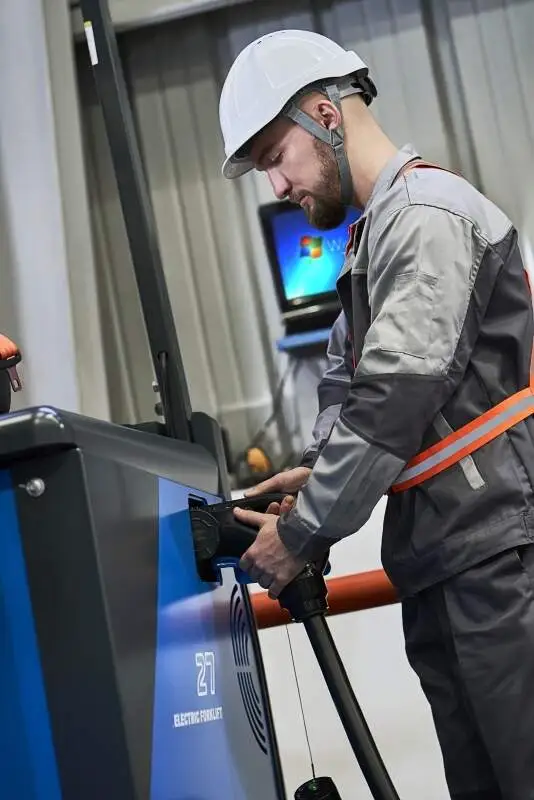
electric forklifts are essential workhorses in warehouses, distribution centers, and industrial settings, but their efficiency depends heavily on maintaining stable balance. When a forklift becomes unstable, it poses significant safety risks to operators, bystanders, and property. Understanding the root causes of this instability is key to preventing accidents and ensuring smooth operations.
One of the primary reasons an electric forklift loses balance is load imbalance. Every forklift has a rated load capacity, and exceeding this limit shifts the center of gravity beyond the vehicle’s stable base. Even loads within the capacity range can cause issues if they are not properly centered on the forks. When lifting heavy loads to height, a slight shift in the load’s position during movement can disrupt the delicate balance, increasing the risk of tipping forward or sideways.
Uneven or slippery surfaces also contribute to forklift instability. Warehouse floors with potholes, cracked concrete, or uneven ramps create inconsistent terrain that disrupts the forklift’s weight distribution. Spilled liquids, loose debris, or icy surfaces reduce tire traction, making it harder for the operator to control the vehicle. Driving over such surfaces can cause sudden skids or leans, leading to loss of balance.
Excessive speed and sudden maneuvers are another common culprit. Operating an electric forklift at high speeds, especially in tight spaces, compromises its stability. Sudden starts, stops, or sharp turns cause the load and the forklift’s own weight to shift rapidly. This rapid shift pushes the center of gravity outside the forklift’s stable triangle, making it prone to tipping. Even experienced operators may overlook this risk when under time pressure to meet deadlines.
Worn or damaged tires play a critical role in maintaining balance. Tires with uneven wear, deep cracks, or punctures fail to provide a stable, uniform base for the forklift. Worn tread reduces traction, especially on slippery surfaces, while uneven wear can cause the forklift to lean to one side, disrupting weight distribution. Regular tire inspections are essential to catch these issues before they lead to instability.
Finally, inadequate operator training often leads to balance problems. Operators who lack knowledge of proper load handling, weight limits, and safe driving techniques are more likely to make mistakes. For example, failing to adjust the mast angle correctly when lifting loads, or not using stabilizers (if equipped) during heavy lifts, can increase the risk of tipping. Even simple errors like turning while lifting a high load can throw the forklift off balance.
By addressing these common causes—through proper load management, regular maintenance, operator training, and adherence to speed limits—workplaces can significantly reduce the risk of electric forklift instability. Prioritizing safety not only protects personnel and assets but also enhances overall operational efficiency.