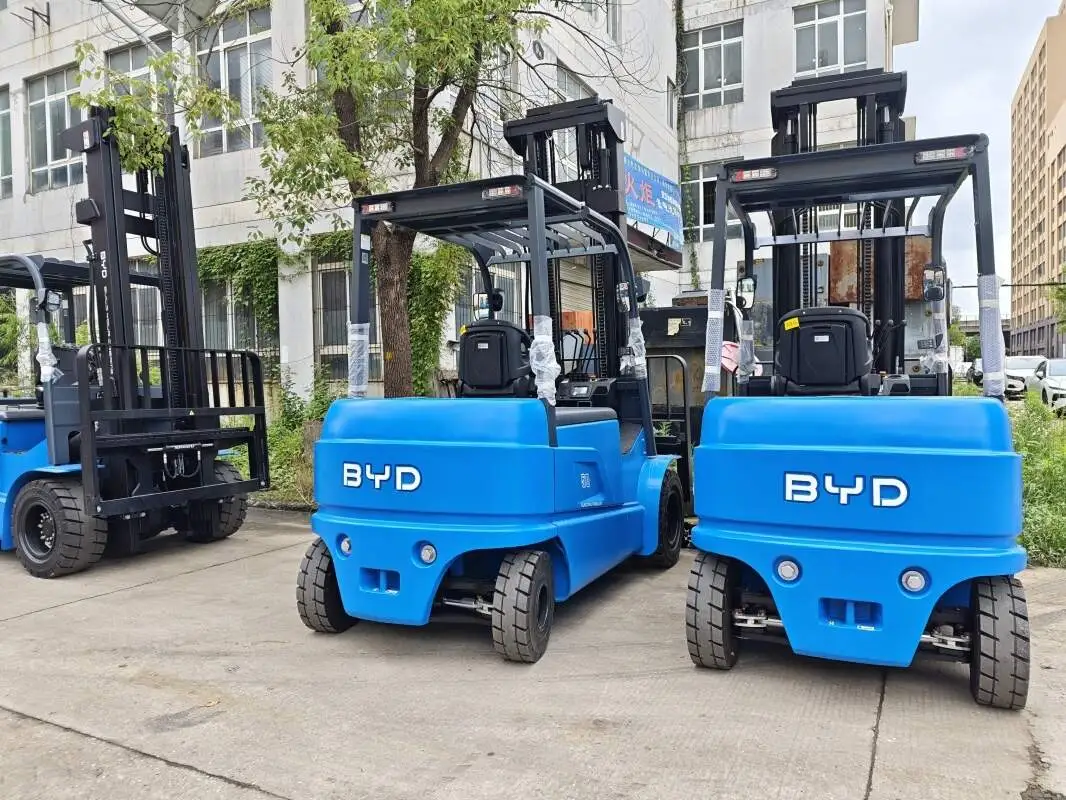
Internal combustion forklifts are indispensable workhorses in material handling operations, with engine size serving as a pivotal factor in defining their load capacity, performance efficiency, and environmental suitability. Understanding the most common engine configurations enables businesses to make informed decisions that align with their specific operational needs, avoiding unnecessary power costs or insufficient lifting capabilities.
Small engine configurations, typically ranging from 2.0 to 3.0 liters, are engineered for light-duty tasks. These compact engines excel in tight spaces like small warehouses, retail backrooms, or narrow aisles, offering exceptional maneuverability. They boast lower fuel consumption and reduced emissions compared to larger alternatives, making them ideal for short-distance pallet moving, light inventory management, and applications where space is limited. Most small engine forklifts can handle loads up to 3,000 pounds, catering to low-volume, precision-focused operations.
Medium engine configurations, spanning 3.0 to 5.0 liters, represent the most versatile option for general-purpose material handling. Found in standard warehouse and distribution center forklifts, these engines strike a balance between power and fuel efficiency. They can manage load weights between 3,000 and 7,000 pounds, supporting tasks such as loading and unloading delivery trucks, stacking pallets to medium heights, and navigating semi-outdoor environments. Available in diesel, gasoline, and LPG variants, medium engines adapt to diverse operational settings, making them a go-to choice for many businesses.
Large engine configurations, exceeding 5.0 liters, are designed for heavy-duty applications in demanding environments like construction sites, ports, or lumber yards. These high-torque engines can lift loads ranging from 7,000 to over 20,000 pounds, with robust components built to withstand continuous operation in harsh conditions. While they deliver unmatched lifting power, large engines consume more fuel and require regular, comprehensive maintenance to sustain performance over time. Diesel engines are the most common choice for large configurations due to their superior torque and durability under heavy loads.
When selecting an internal combustion forklift, businesses should evaluate daily load weights, operating space constraints, fuel availability, and long-term maintenance costs. Matching the engine size to specific task requirements ensures optimal performance, minimizes downtime, and maximizes operational cost-effectiveness, supporting smooth and efficient material handling workflows.