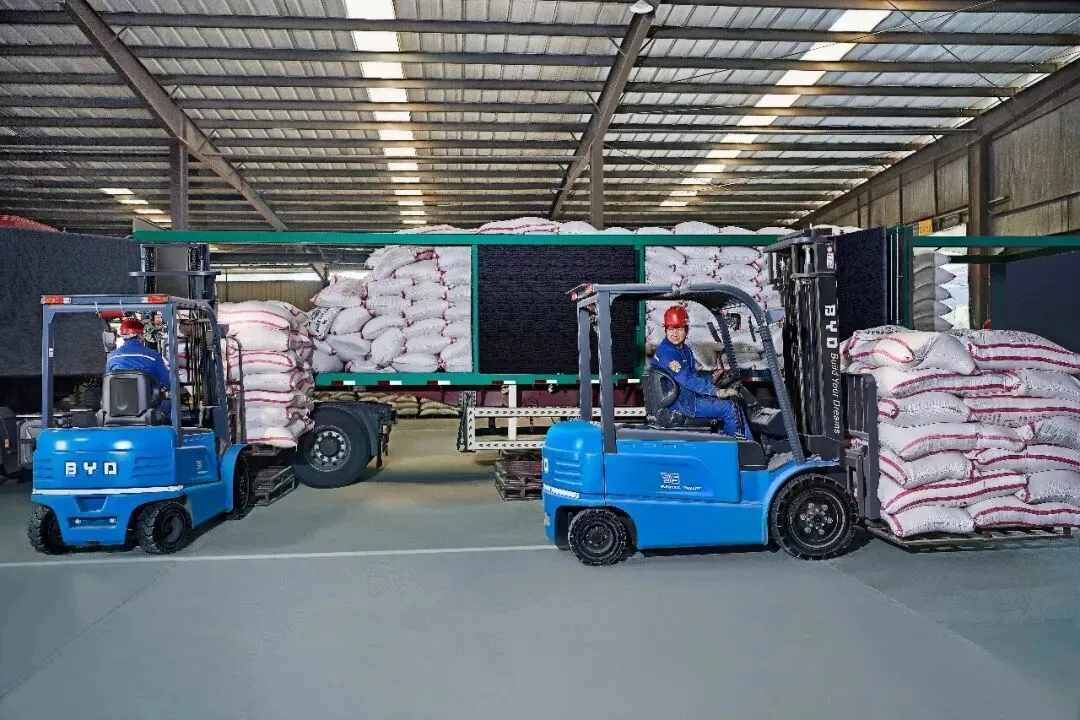
forklift tip-over incidents pose significant safety risks in warehouses, distribution centers, and industrial settings, with forward tip-overs being one of the most prevalent types. Understanding the key factors contributing to these events is critical for operators, supervisors, and safety managers to implement effective prevention strategies and protect personnel and assets.
One of the primary causes of forward forklift tip-overs is improper load handling and distribution. When loads are positioned too far forward on the forks, they shift the forklift’s center of gravity beyond its stable triangular base, creating an imbalance that increases the risk of tipping forward. Overloading the forklift beyond its rated capacity further exacerbates this issue, as excess weight strains the machine’s stability mechanisms and makes it harder to control, especially during lifting or movement.
Excessive speed and sudden, abrupt maneuvers also play a major role in forward tip-over incidents. Operating a forklift at high speeds—even on flat surfaces—reduces the operator’s reaction time to unexpected obstacles or changes in terrain. Sudden stops, sharp turns, or quick accelerations can cause the load to lurch forward, disrupting the forklift’s balance. This is particularly dangerous when carrying heavy or unstable loads, as the shifted weight can easily push the center of gravity outside the vehicle’s safe operating parameters.
Uneven or unstable ground conditions are another common trigger for forward tip-overs. Forklifts require a flat, firm surface to maintain stability. Operating on uneven terrain, ramps with incorrect slopes, or surfaces covered in loose gravel, mud, or potholes can tilt the vehicle forward. When navigating inclines, failing to position the load uphill further shifts the center of gravity toward the front, increasing the likelihood of a tip-over. Even minor surface irregularities can become a hazard when combined with a heavy load or rapid movement.
Operator error, often stemming from inadequate training, is an underlying factor in many forward tip-over cases. Operators who lack knowledge of load capacity limits, proper load positioning techniques, or safe operating protocols may make avoidable mistakes. Distractions, fatigue, or overconfidence can also lead to risky behaviors, such as driving with loads raised too high, ignoring speed limits, or failing to assess terrain conditions before moving.
Poor maintenance and mechanical failures can also contribute to forward tip-overs. Worn or damaged tires reduce traction, making it harder to control the vehicle during stops or turns. Malfunctioning lift mechanisms may fail to secure loads properly, while faulty brakes can lead to sudden, uncontrolled movements. Regular maintenance checks, including inspections of tires, brakes, and lift components, are essential to identify and repair issues before they compromise the forklift’s stability.
By addressing these common factors, workplaces can significantly reduce the risk of forward forklift tip-overs. Implementing comprehensive operator training programs, enforcing speed limits, conducting regular equipment inspections, and promoting safe load handling practices are key steps to create a safer working environment for everyone on site.