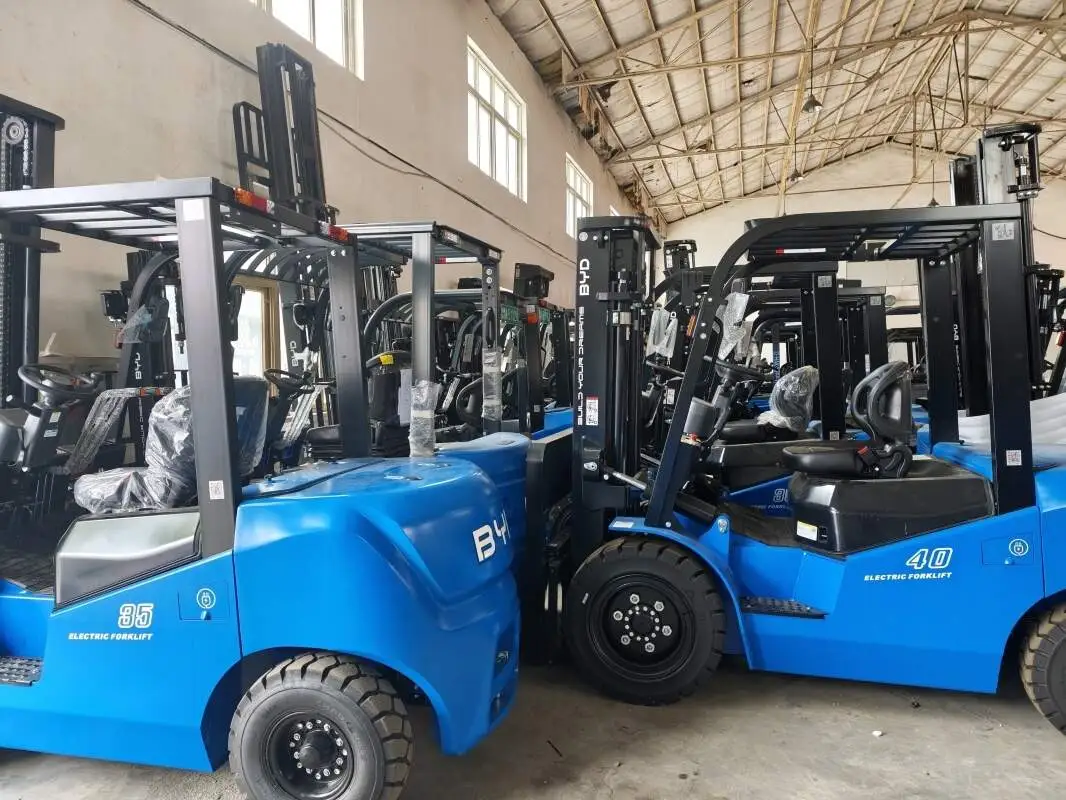
Forklifts are indispensable tools across a wide range of industries, serving as the backbone of material handling operations. Selecting the right forklift not only enhances operational efficiency but also ensures workplace safety and reduces long-term maintenance costs. This guide breaks down key considerations for choosing electric forklifts across four major industries.
For the warehousing industry, space optimization is a top priority. Warehouses often feature narrow aisles and high storage racks, making maneuverability a critical factor. Electric forklifts with compact designs and tight turning radii are ideal for navigating confined spaces. Additionally, evaluate the forklift’s load capacity based on typical pallet weights and lifting height to match rack configurations. Battery life is another key consideration; since warehouse operations involve frequent, short-distance moves, a forklift with a long-lasting battery that supports all-day use without frequent recharging will minimize downtime.
In the manufacturing sector, forklifts must adapt to diverse and often harsh working environments. Manufacturing facilities may have uneven floors, heavy loads, and varying material types, from small components to large machinery parts. Electric forklifts are preferred here due to their zero emissions, which helps maintain air quality in enclosed production areas. Prioritize models with robust build quality and durable tires to withstand constant use on rough surfaces. Flexibility is also important; look for forklifts that can handle both palletized and non-palletized loads to accommodate different production line needs.
The logistics and distribution industry relies on fast, reliable material handling to meet tight delivery schedules. Forklifts in this sector need to handle high-volume loading and unloading tasks, often in busy docks or distribution centers. Speed and stability are essential—electric forklifts with smooth acceleration and precise control can safely move goods quickly without compromising accuracy. Consider models with quick-charging battery capabilities to minimize downtime during peak hours. Also, assess the forklift’s compatibility with different types of loading equipment, such as trailers and conveyor systems, to ensure seamless integration into existing workflows.
For the construction industry, while outdoor terrain can be challenging, electric forklifts still play a vital role in indoor material storage and on-site tasks in flat, paved areas. These forklifts need to be rugged enough to handle heavy construction materials like bricks, steel beams, and precast concrete components. Look for models with waterproof and dust-resistant features to withstand construction site debris and occasional exposure to moisture. Load capacity should align with the heaviest materials commonly transported, and operators should prioritize forklifts with enhanced visibility to navigate around construction crews and equipment safely.
Across all industries, it’s crucial to assess operator training needs and maintenance requirements. Electric forklifts generally have lower maintenance costs compared to their internal combustion counterparts, but regular battery checks and servicing are still necessary to ensure longevity. By carefully evaluating industry-specific needs—including load capacity, operating environment, maneuverability, and battery performance—businesses can select the ideal electric forklift that aligns with their operational goals and budget.