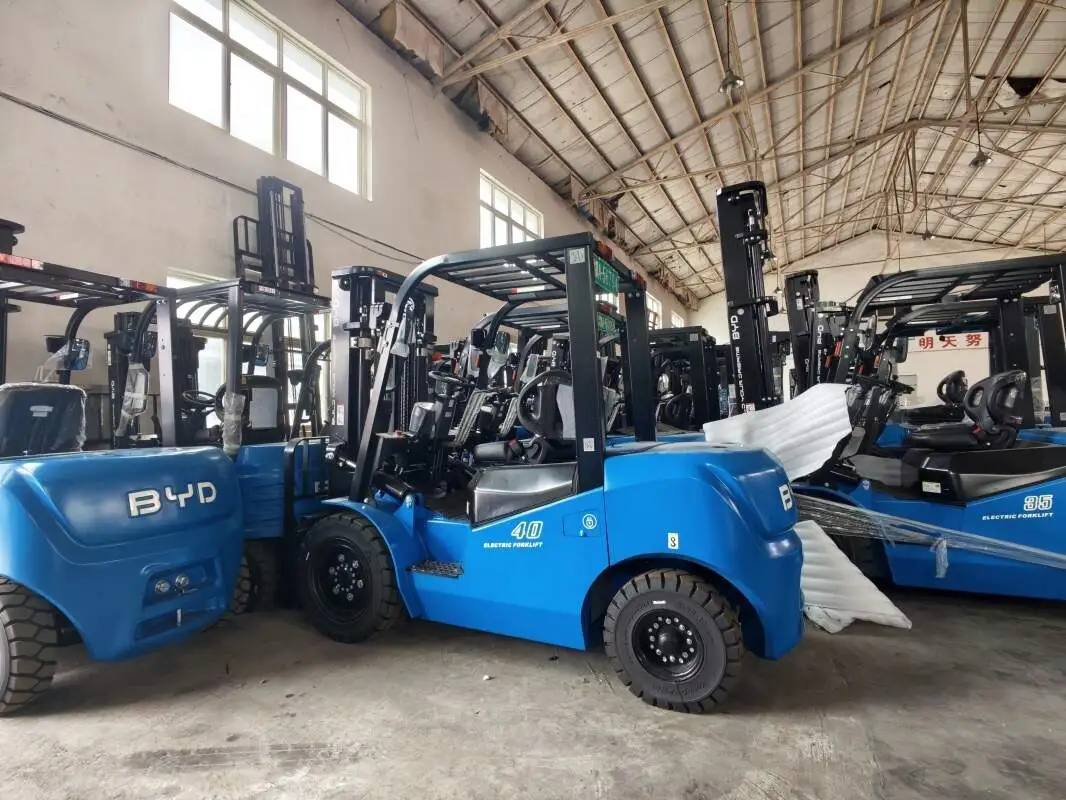
Class 1 industrial forklifts are a specific category of material handling equipment defined by their electric counterbalance design, powered entirely by rechargeable lead-acid or lithium-ion batteries. Unlike internal combustion forklifts, they produce zero tailpipe emissions and operate with minimal noise, making them ideal for indoor and environmentally sensitive settings. This classification is standardized by industrial equipment regulatory bodies, focusing on the power source and counterbalance mechanism that enables the forklift to lift heavy loads without relying on external supports.
One of the primary application scopes of Class 1 forklifts is in warehouses and distribution centers. These facilities often operate in confined indoor spaces where air quality and noise levels are critical for worker safety and productivity. Class 1 forklifts maneuver easily through narrow aisles, efficiently stacking and retrieving goods from high racks. Their zero-emission operation eliminates the need for ventilation systems to remove exhaust fumes, reducing operational costs while maintaining a healthy work environment. They are also capable of handling continuous shift work with quick battery swapping or charging stations, supporting the high throughput demands of modern logistics.
Food and pharmaceutical manufacturing facilities are another key area where Class 1 industrial forklifts are widely used. These industries adhere to strict hygiene and safety regulations to prevent product contamination. The clean operation of electric forklifts, free from fuel spills and exhaust, aligns with these standards. Additionally, their quiet operation does not disrupt sensitive production processes or disturb workers in close proximity. Class 1 forklifts can be easily cleaned and sanitized, making them suitable for areas where food products or pharmaceuticals are processed, stored, or packaged.
Cold storage facilities also benefit significantly from Class 1 forklifts. Unlike internal combustion models that may struggle with performance in low-temperature environments, electric counterbalance forklifts are designed to operate efficiently in freezing conditions. Their sealed battery systems and insulated components minimize the impact of cold temperatures on performance. Furthermore, since cold storage spaces are typically closed and well-insulated, zero-emission operation prevents the buildup of harmful gases, ensuring the safety of workers and the integrity of temperature-sensitive goods like frozen foods and medical supplies.
Retail and e-commerce fulfillment centers rely on Class 1 forklifts to manage the fast-paced movement of inventory. With the rise of online shopping, these centers handle high volumes of small orders that require frequent and precise material handling. The agility of Class 1 forklifts allows workers to quickly move between picking stations and storage areas. Their low noise levels also facilitate better communication among team members, reducing errors and improving overall operational efficiency.
In summary, Class 1 industrial forklifts are versatile electric counterbalance vehicles that cater to a wide range of industrial applications. Their eco-friendly, quiet, and clean operation makes them the preferred choice for indoor environments and industries with strict regulatory requirements. As sustainable material handling practices continue to gain traction, the demand for Class 1 forklifts is expected to grow, driving further innovations in battery technology and operational efficiency.