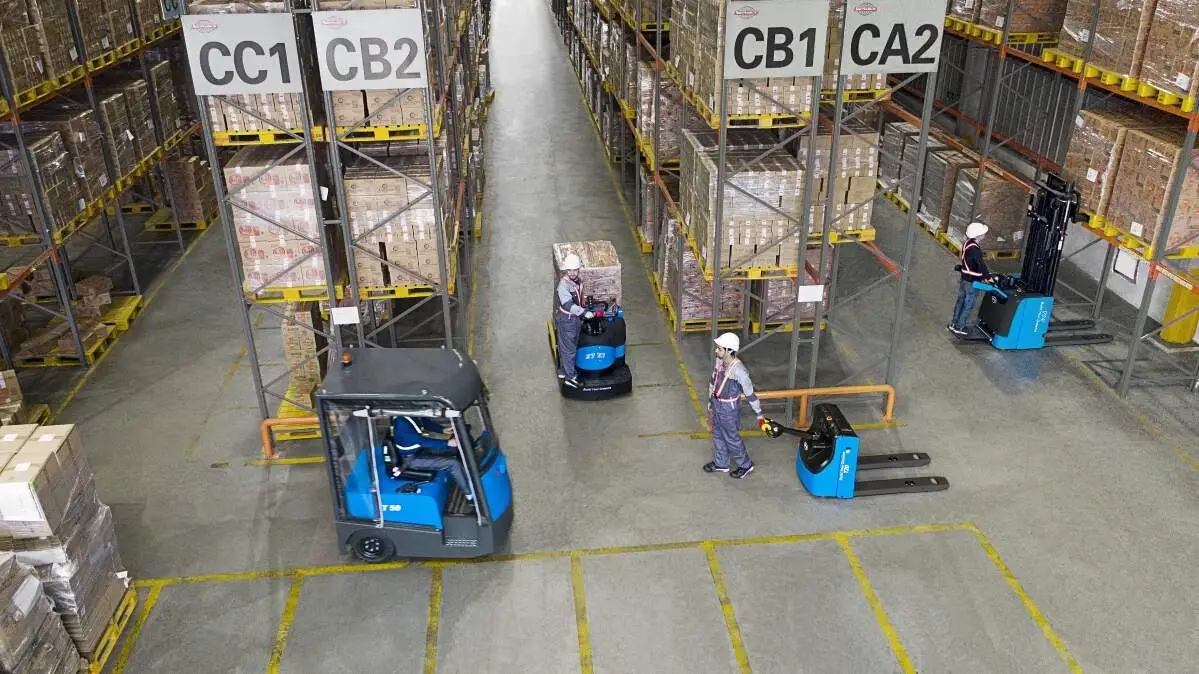
A counterbalance forklift stands as one of the most widely used material handling tools across various industries, valued for its versatility and efficiency in moving heavy loads.
Definition of Counterbalance Forklift
At its core, a counterbalance forklift is a specialized vehicle engineered to lift, carry, and stack loads of varying weights. The defining feature of this equipment lies in the weighted counterbalance component positioned at the rear of the forklift. This counterweight works to offset the weight of the load being lifted by the front-mounted forks, ensuring the vehicle remains stable and balanced during operation. Unlike some other forklift types that require external supports like outriggers, the counterbalance design allows the forklift to operate independently, making it suitable for a wide range of environments without additional setup.
Typical Application Scenarios
#Warehouses and Distribution Centers
Warehouses and distribution centers are among the primary settings for counterbalance forklifts. In these facilities, forklifts are used to load and unload palletized goods from delivery trucks, transport items between storage areas and loading docks, and stack cargo onto high racks for optimized space utilization. Their ability to maneuver in narrow aisles (depending on the model) makes them ideal for maximizing storage capacity, while their compatibility with standard pallets streamlines daily operations, reducing manual labor and speeding up order fulfillment processes.
#Manufacturing Facilities
Within manufacturing plants, counterbalance forklifts play a critical role in supporting production workflows. They are used to move raw materials from storage areas to assembly lines, transport partially finished products between workstations, and deliver finished goods to packaging or shipping zones. The forklift’s agility allows it to navigate around machinery and production equipment, adapting to the dynamic layout of manufacturing floors. By handling heavy materials efficiently, these forklifts help minimize downtime and maintain consistent production rates.
#Retail and Wholesale Establishments
Retail stores and wholesale outlets rely on counterbalance forklifts for both backroom operations and customer-facing areas. In back warehouses, they assist with unloading shipments, organizing inventory, and restocking shelves. For large-format retail locations, forklifts can also be used to move bulk goods directly to sales floors during off-peak hours. Their compact size (for smaller models) enables operation in tight spaces, making them a practical solution for businesses with limited storage and maneuvering areas.
#Construction Sites
Construction sites demand robust equipment that can handle rough terrain and heavy building materials, and counterbalance forklifts rise to this challenge. On job sites, they are used to transport materials like steel beams, concrete blocks, and construction supplies from delivery trucks to work zones. Many models are equipped with rugged tires that can traverse uneven ground, dirt, and gravel, making them suitable for outdoor construction environments. They also assist in lifting and placing materials at low to medium heights, supporting various stages of building construction.