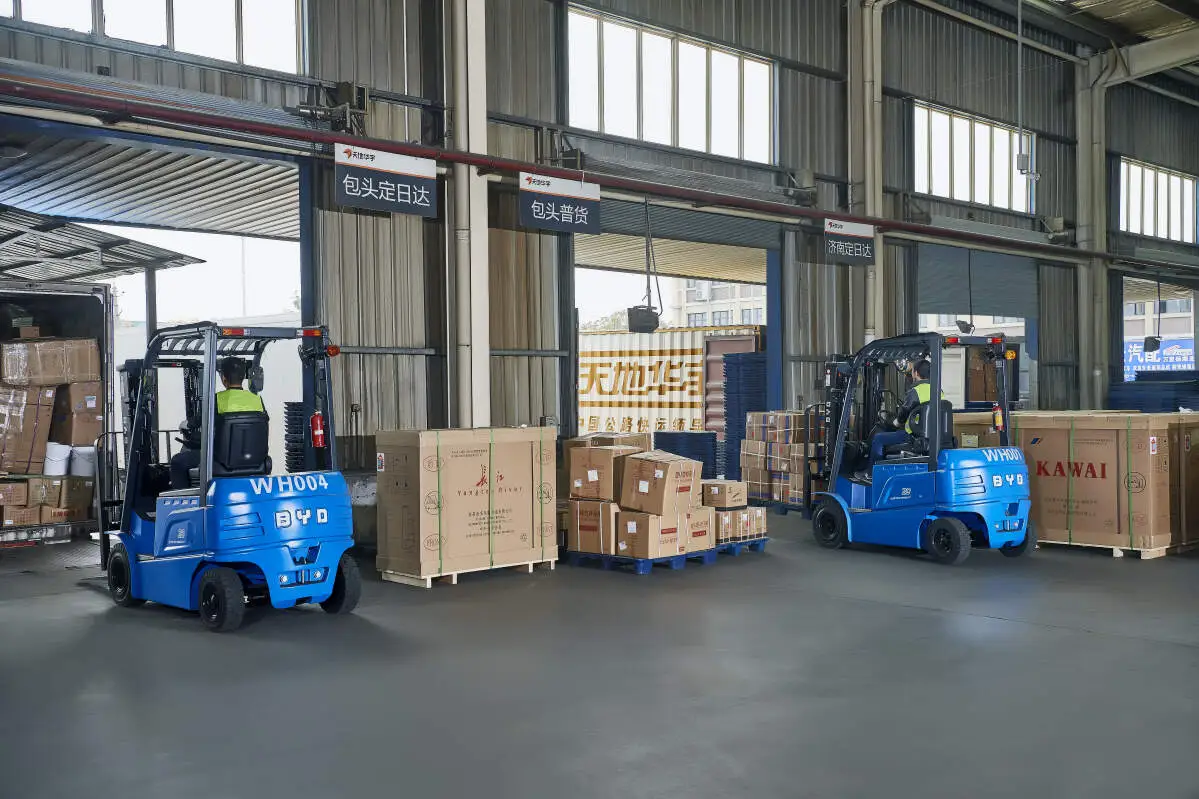
Industrial forklift trucks are indispensable workhorses in logistics, manufacturing, and warehousing operations, streamlining material handling tasks across diverse environments. Understanding their classification is key to selecting the right equipment for specific operational needs, optimizing efficiency and safety.
electric forklift trucks are powered by rechargeable batteries, making them ideal for indoor applications such as warehouses and retail distribution centers. Producing zero tailpipe emissions, they comply with strict indoor air quality regulations and operate with lower noise levels compared to combustion counterparts. Their compact design allows easy maneuverability in tight spaces, while advanced battery technology extends runtime, reducing downtime for recharging. These forklifts suit light to medium load handling where quiet, clean operation is a priority.
Internal combustion (IC) forklift trucks run on gasoline, diesel, or liquefied petroleum gas (LPG), offering high power and durability for outdoor operations. They excel in heavy-duty load lifting tasks at construction sites, port terminals, and lumber yards, where continuous operation and high load capacities are required. IC forklifts handle rough surfaces and extreme weather more effectively than electric models, though they produce emissions and need regular fueling and maintenance.
Rough terrain forklift trucks are engineered for outdoor environments with uneven or unpaved surfaces like agricultural fields, mining sites, and construction zones. Equipped with large, rugged tires and enhanced suspension systems, they provide excellent traction and stability on muddy, gravelly, or rocky terrain. These forklifts often have higher ground clearance and powerful engines, enabling them to navigate obstacles and lift heavy loads in conditions where standard forklifts struggle.
Narrow aisle forklift trucks are designed to maximize storage space in high-density warehouses and distribution centers. With a slim profile and specialized steering mechanisms such as articulating or reach capabilities, they operate in aisles as narrow as 6 to 8 feet, allowing businesses to utilize vertical storage efficiently. These forklifts prioritize precision and maneuverability, making them ideal for retrieving and placing pallets in tight, high-rise storage systems.
By categorizing industrial forklifts based on power source, design, and intended use, businesses make informed decisions aligned with their operational requirements. Each classification offers unique benefits, from the eco-friendly efficiency of electric models to the robust performance of rough terrain forklifts. Understanding these differences ensures material handling operations are efficient, safe, and cost-effective long-term.