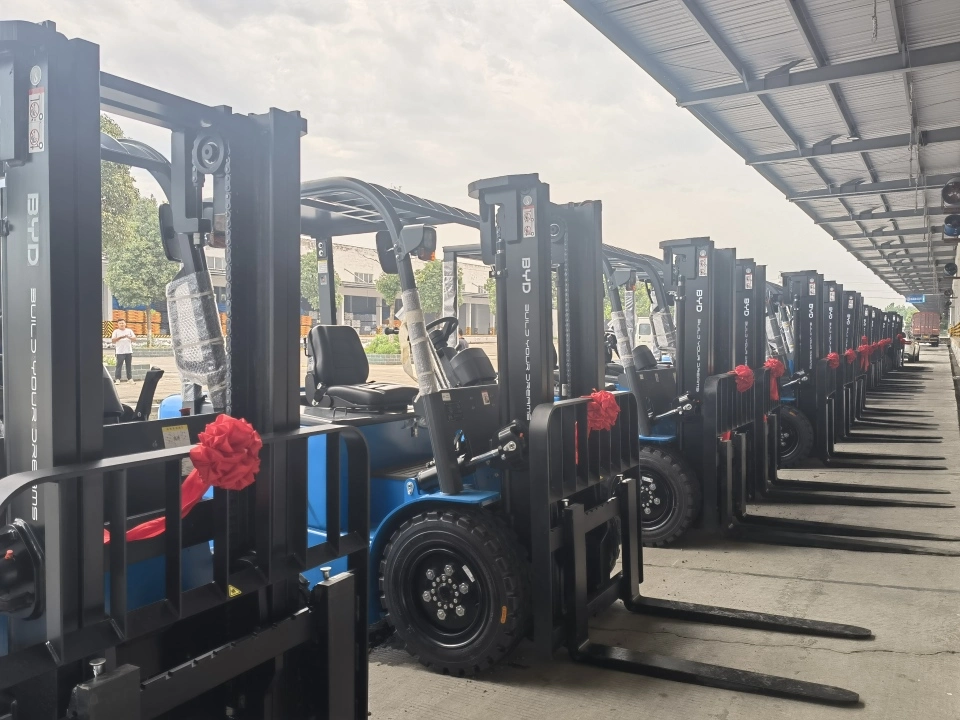
All-terrain forklifts are essential for handling heavy loads in challenging outdoor environments, from construction sites and agricultural fields to forestry operations. When renting one in your local area, making informed decisions ensures you get the right equipment for your needs while avoiding unnecessary costs or operational setbacks.
First and foremost, assess the specific terrain conditions of your local work site. All-terrain forklifts vary in their ability to navigate different surfaces—some are designed for muddy, uneven ground, while others excel on rocky slopes or sandy areas. Local rental providers often offer models tailored to regional terrain, so discuss your site’s details, such as slope angles, ground texture, and any obstacles like loose gravel or waterlogged areas, to select a forklift that can operate safely and efficiently.
Next, determine your rental duration and usage frequency. Short-term rentals are ideal for one-off projects like seasonal harvests or emergency repairs, while long-term contracts may offer cost savings for ongoing operations. Local suppliers may provide flexible terms, so clarify whether you need daily, weekly, or monthly rentals, and ask about any penalties for extending the agreement unexpectedly. Additionally, consider how often the forklift will be used daily—high-frequency use may require a more robust model with better durability.
Operator qualifications are another critical factor. Many local regions have strict regulations regarding forklift operation, requiring certified operators to ensure safety. Check if your rental provider offers on-site training or can connect you with qualified operators in the area. Even if you have in-house staff, verify that their certifications are valid for all-terrain models, as these require different skills than standard warehouse forklifts.
Prioritize safety features and maintenance records. A reliable all-terrain forklift should have essential safety components like rollover protection structures (ROPS), seat belts, and clear visibility aids. Ask local suppliers about their maintenance protocols—regularly serviced equipment reduces the risk of breakdowns during your project. Also, confirm that the forklift has undergone recent inspections and that the rental agreement covers emergency repairs or replacements in case of mechanical issues.
Budget considerations go beyond the base rental price. Local suppliers may charge additional fees for delivery and pickup, fuel, insurance, or damage waivers. Be sure to get a detailed quote that outlines all potential costs upfront to avoid surprises. Compare prices between different local providers, but don’t compromise on quality—cheaper options may lack proper maintenance or safety features, leading to costly downtime.
Finally, evaluate the reliability of local rental suppliers. Look for providers with a proven track record in the area, positive customer reviews, and a responsive support team. A reliable supplier will deliver the forklift on time, provide clear instructions for use, and offer prompt assistance if problems arise. You can also ask for references from other local businesses that have rented all-terrain forklifts from them to gauge their service quality.
By carefully considering these factors, you can select the right all-terrain forklift rental for your local project, ensuring smooth operations, safety, and cost-effectiveness. Taking the time to research local providers and assess your specific needs will help you make a decision that aligns with your operational goals.