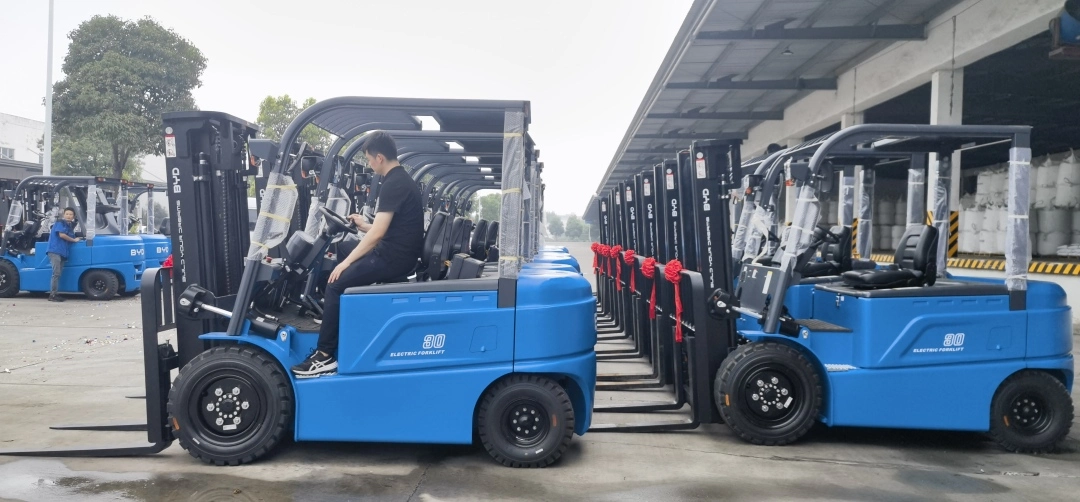
forklift operations in warehouses and industrial settings inherently involve blind spots, areas where operators cannot see pedestrians, obstacles, or other equipment. These blind spots pose significant collision risks, leading to workplace injuries, property damage, and operational delays. Addressing these gaps requires a combination of proven solutions, with safety mirrors and auxiliary devices being two of the most effective and widely adopted approaches.
Safety mirrors are a cost-effective, low-maintenance solution to expand an operator’s field of vision. Convex mirrors, mounted at strategic points like warehouse corners, narrow aisles, or loading docks, use curved surfaces to reflect a wide-angle view of hidden areas. This allows operators to spot oncoming traffic or pedestrians before entering a blind intersection. Forklift-mounted side mirrors, similar to those on vehicles, help monitor the sides and rear of the forklift, especially when reversing or maneuvering through tight spaces. Wide-angle rear mirrors complement side mirrors by providing a broader view of the area directly behind the forklift, reducing the risk of backing into obstacles. Proper placement is key—mirrors should be positioned to eliminate overlapping blind spots without obstructing the operator’s primary forward view. Regular cleaning and adjustment are also essential to ensure clear visibility, as dust, dirt, or misalignment can render them ineffective.
Beyond mirrors, auxiliary safety devices offer advanced support for blind spot mitigation. Camera systems, for instance, provide real-time video feeds of blind spots to a display inside the operator’s cabin. These systems can cover multiple angles, including the rear, sides, and front blind spots created by the forklift’s mast or load. Radar sensors are another valuable tool; they detect objects or pedestrians within defined blind zones and trigger visual or auditory alerts to warn the operator. Some systems even integrate with the forklift’s controls to slow or stop the vehicle if a collision is imminent. Auditory warning devices, such as reverse beepers or motion-activated alarms, alert pedestrians and nearby workers to the forklift’s presence, especially in areas where visibility is limited by storage racks or heavy loads. Light-based solutions, like spotlights or warning lights that illuminate blind areas, also enhance awareness by making the forklift’s position and movement more visible to others.
Combining safety mirrors with auxiliary devices creates a layered approach to blind spot management that addresses different types of visibility gaps. Mirrors excel at providing immediate, unobstructed views of nearby areas, while advanced devices offer proactive alerts and enhanced monitoring for more complex environments. Implementing these solutions not only improves workplace safety but also ensures compliance with industry regulations that mandate measures to reduce forklift-related hazards. Regular training for operators on using these tools correctly, along with routine maintenance checks, further maximizes their effectiveness. By prioritizing blind spot mitigation through mirrors and auxiliary devices, businesses can create a safer, more efficient work environment for all personnel.