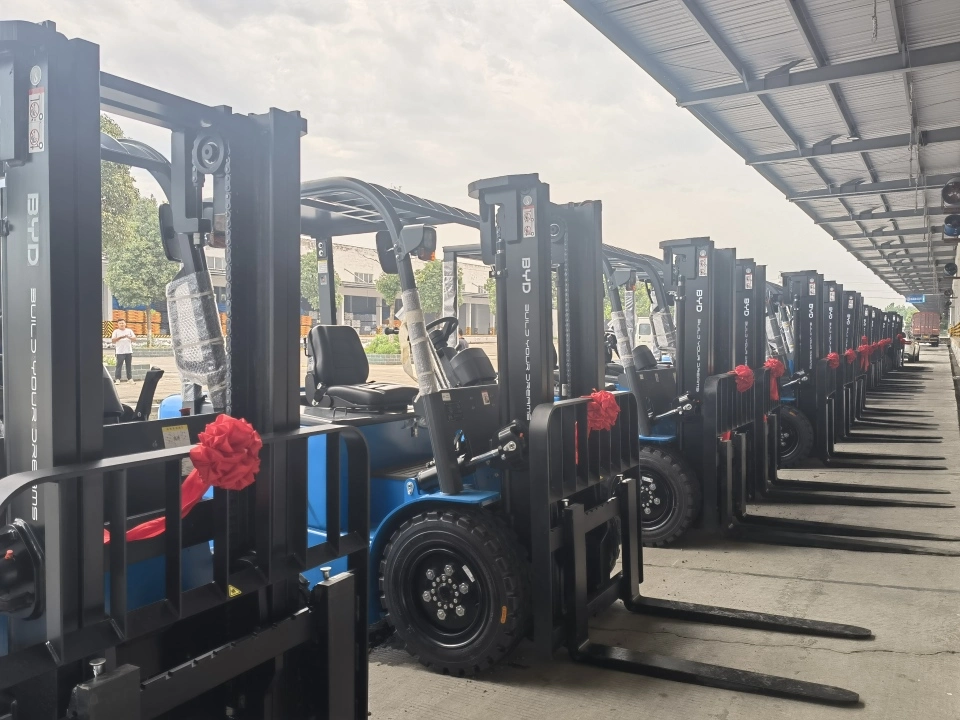
For forklift operators working in rough, uneven environments like construction sites, gravel yards, or outdoor storage areas, choosing the right tires is critical to maintaining operational efficiency and safety. Pneumatic tires, while common in smooth settings, often struggle with the harsh conditions of rugged terrain. This is where forklift solid tires come into play, offering a range of tailored benefits that address the unique challenges of rough working surfaces.
First, puncture resistance stands out as a primary advantage. Rough surfaces are littered with sharp debris, including metal scraps, rocks, and broken concrete—hazards that can easily puncture pneumatic tires, leading to sudden deflations and costly downtime. Solid tires, made from dense rubber compounds without an inner air chamber, eliminate this risk entirely. They can withstand contact with sharp objects without losing structural integrity, ensuring uninterrupted operation even in debris-heavy areas.
Next, enhanced durability reduces long-term operational costs. The thick, reinforced rubber construction of solid tires is designed to resist abrasion and wear caused by constant friction against rough terrain, such as gravel or unpaved ground. Unlike pneumatic tires that may require frequent replacements due to cuts or wear, solid tires have a significantly longer lifespan. This means fewer tire changes, less time spent on maintenance, and lower overall expenditure on tire-related replacements.
Stable load handling is another key benefit. Rough working surfaces often feature uneven ground, ruts, and bumps that can affect a forklift’s balance and stability. Solid tires provide a sturdier base with consistent pressure distribution across the tire surface. This stability allows forklifts to safely carry heavy loads without the risk of tipping or shifting, even when navigating uneven terrain. For operations that involve transporting heavy materials in outdoor or rugged settings, this stability translates to improved safety for both operators and valuable cargo.
Reduced maintenance requirements also make solid tires a practical choice. Pneumatic tires need regular checks for proper inflation, repairs for punctures, and replacements for worn treads. In contrast, solid tires require minimal upkeep. There’s no need to monitor air pressure, and their robust construction means they rarely need repairs. This frees up maintenance teams to focus on other critical equipment tasks, streamlining overall operational workflows.
Finally, solid tires perform reliably in extreme temperature conditions. Rough outdoor environments often expose forklifts to fluctuating temperatures, from hot summer days to cold winter mornings. Pneumatic tires can be affected by temperature changes, leading to variations in air pressure and reduced performance. Solid tires, however, maintain their flexibility and structural integrity across a wide range of temperatures, ensuring consistent performance regardless of weather conditions.
In conclusion, forklift solid tires are a smart investment for operations that regularly work on rough, uneven surfaces. Their puncture resistance, durability, stable load handling, low maintenance needs, and temperature resilience address the core challenges of rugged terrain, helping to boost operational efficiency, reduce costs, and enhance workplace safety.