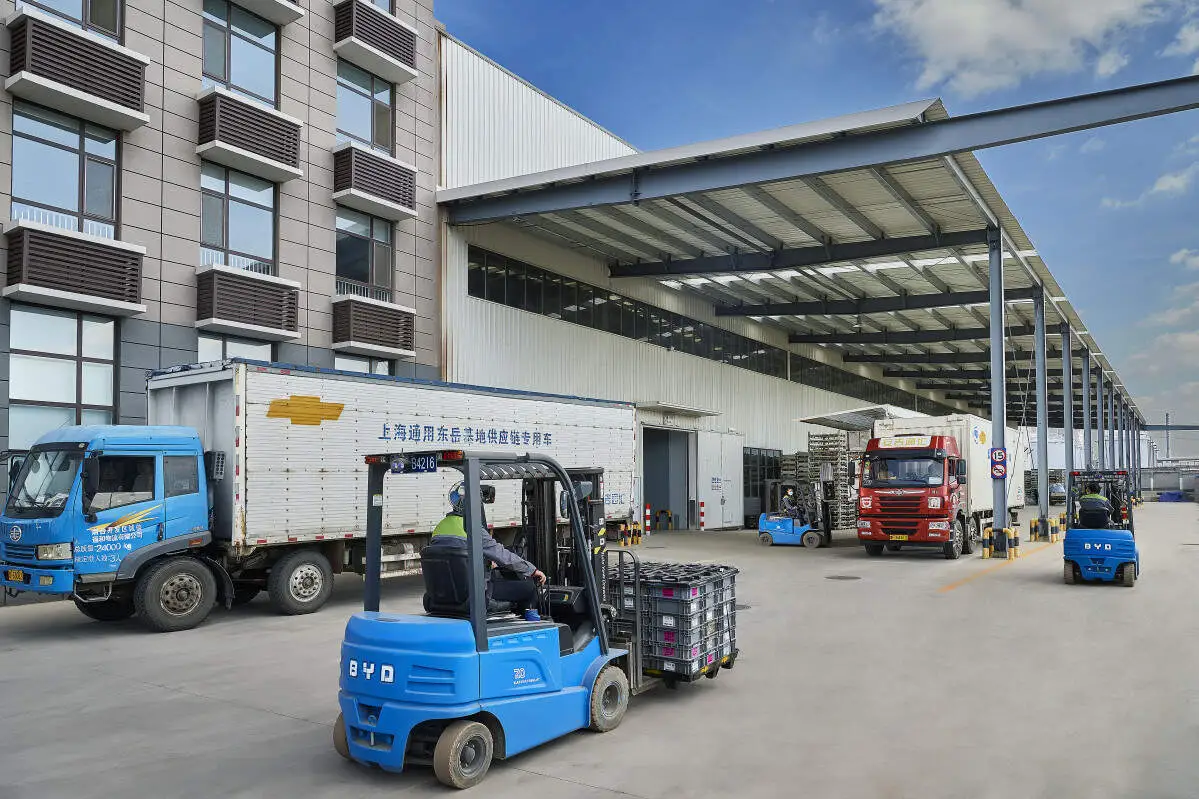
forklift tip-over incidents are among the most common and hazardous safety issues in warehouse and industrial settings. These accidents can lead to severe injuries, property damage, and operational downtime. One of the most effective ways to mitigate this risk is by understanding and correctly calculating the forklift load center—a critical factor in maintaining forklift stability.
The load center refers to the horizontal distance from the vertical face of the forklift’s forks to the center of gravity of the loaded cargo. Most forklifts are rated with a standard load center, typically 24 inches (600 millimeters), which is the baseline for their weight capacity ratings. However, this standard only applies when the cargo’s center of gravity aligns with this specified distance. When the cargo is longer, wider, or irregularly shaped, its center of gravity shifts outward, increasing the load center distance.
Understanding why the load center impacts stability is key to safe forklift operation. Forklift stability relies on a triangular balance system, with the front wheels and the rear axle forming the base of the triangle. The total moment (force multiplied by distance) created by the loaded cargo must stay within the boundaries of this triangle to prevent the forklift from tipping forward. As the load center increases, the moment exerted on the front of the forklift grows, reducing the vehicle’s ability to maintain balance, especially during turns, when ascending slopes, or when lifting loads to height.
Calculating the load center involves straightforward steps that every forklift operator should master. First, identify the center of gravity of the cargo. For uniformly shaped loads, this is usually the geometric center—half the length of the load for a rectangular pallet, for example. For irregularly shaped or unevenly distributed loads, you may need to use a scale to determine the balance point or visually assess the heaviest section of the cargo.
Next, measure the horizontal distance from the front face of the forks to this identified center of gravity. This measurement is your actual load center. Compare this distance to the forklift’s rated load center specified in the operator’s manual. If the actual load center exceeds the rated distance, you must adjust the maximum load weight to maintain stability. For instance, if a forklift has a 24-inch rated load center and a 5,000-pound capacity, a 36-inch actual load center would reduce the safe load capacity to approximately 3,333 pounds, calculated by dividing the rated load center by the actual load center and multiplying by the rated capacity.
Beyond calculation, several operational practices can further reduce tip-over risks. Always ensure cargo is evenly distributed on the forks, avoiding overhang on one side that could shift the center of gravity. When lifting loads, confirm the load center is within safe limits before raising the forks to height. During travel, keep the forks low to the ground (ideally 4 to 6 inches) to lower the overall center of gravity of the forklift and cargo. Avoid sharp turns at high speeds, as sudden movements can disrupt balance, never operate a forklift on slopes steeper than recommended by the manufacturer, and never carry loads that exceed the adjusted capacity based on the actual load center.
By prioritizing load center calculation and integrating these safety practices into daily operations, operators can significantly reduce the risk of forklift tip-over incidents. Regular training and adherence to these guidelines not only protect personnel and assets but also contribute to a more efficient and secure work environment.