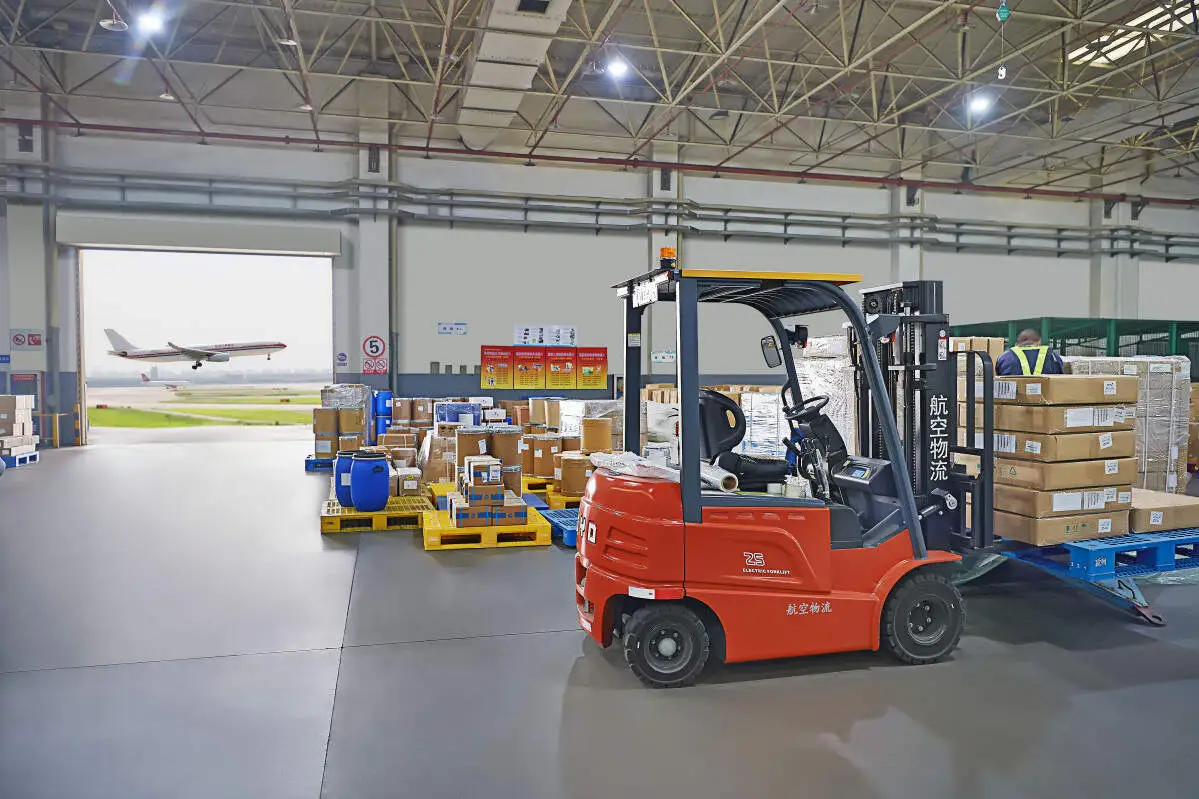
For warehouse and industrial operations, forklifts are indispensable tools, but their utility comes with inherent safety risks—most notably tip-over accidents, which can cause serious injuries and property damage. At the core of forklift operational safety lies the stability triangle, a fundamental concept that defines a forklift’s balance limits. This triangle is formed by the two front wheels and the rear pivot point of the forklift’s counterweight. When a forklift’s center of gravity remains within this triangular boundary, it maintains stable balance; shifting outside this area drastically increases tip-over risks.
Several key factors can push a forklift’s center of gravity beyond the stability triangle. Overloading, for instance, adds excess weight that shifts the center of gravity upward and outward, making the vehicle more vulnerable to tipping. Operating with loads lifted to extreme heights also raises the center of gravity, amplifying instability especially during turns or on uneven surfaces. Sudden maneuvers like sharp turns, quick stops, or accelerating rapidly can disrupt balance, as can working on sloped, wet, or debris-laden ground that compromises traction and alignment.
Mitigating tip-over risks requires a combination of structured training, proactive maintenance, and careful operational practices. First, all forklift operators must receive comprehensive training on the stability triangle concept, enabling them to recognize potential balance hazards before they escalate into accidents. Regular inspections of forklift components—including tires, brakes, and counterweights—ensure the equipment is in optimal working condition to maintain consistent stability.
Operational best practices also play a critical role in risk reduction. Always adhere strictly to the forklift’s rated load capacity, and distribute loads evenly across the forks to keep the center of gravity centered. Avoid lifting loads to unnecessary heights; keep them as low as possible during travel to minimize the risk of shifting balance. When navigating turns, reduce speed gradually and avoid sudden steering adjustments that can throw off the vehicle’s equilibrium. Prioritize working on flat, stable surfaces; if operating on slopes is unavoidable, travel with the load facing uphill to keep the center of gravity within the stability triangle.
By fully understanding the stability triangle and implementing these preventive measures consistently, businesses can significantly reduce forklift tip-over incidents, protect their personnel, and minimize costly operational disruptions. Prioritizing safety protocols ensures that forklifts remain reliable, stable tools that support efficient industrial and warehouse operations without compromising worker well-being.