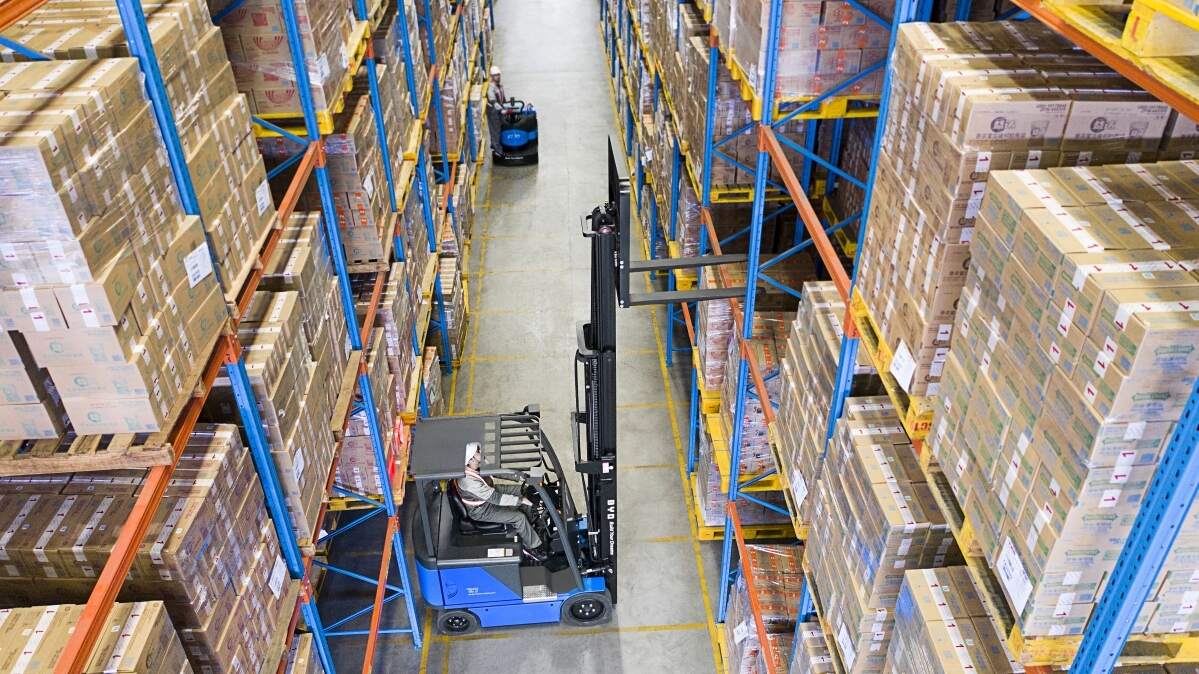
Narrow-aisle warehouse layouts have become increasingly popular in modern logistics, as they maximize storage density and optimize space utilization. However, designing such layouts requires careful consideration of electric forklift turning radius requirements—a critical factor that directly impacts operational safety, efficiency, and overall warehouse functionality.
The turning radius of a forklift refers to the smallest circular area required for the vehicle to make a full 180-degree turn without obstructing surrounding structures or storage racks. For narrow-aisle operations, this measurement is not a one-size-fits-all standard; it varies based on multiple key factors.
First, the type of electric forklift plays a significant role. Counterbalance forklifts typically have a larger turning radius compared to reach trucks, which are specifically engineered for tight, narrow-aisle maneuvering. The size and weight of the load being transported also influence the required radius—heavier loads can shift the forklift’s center of gravity, requiring additional space to maintain stability during turns to avoid tipping or load damage.
When designing a narrow-aisle warehouse, aligning aisle width with the forklift’s turning radius is non-negotiable. Aisle dimensions should not only accommodate the minimum turning radius but also include a small safety margin to account for operator error, slight load shifts, or unexpected obstacles. Industry guidelines recommend that aisle width be at least 10-15% wider than the forklift’s turning radius to ensure safe, smooth maneuvering without compromising storage capacity.
Beyond meeting basic space requirements, warehouse designers must balance efficiency with safety. Overly narrow aisles that barely meet the minimum turning radius can increase the risk of collisions with racks or other equipment, leading to damaged inventory, costly equipment downtime, and potential workplace injuries. Conversely, excessively wide aisles reduce storage capacity, undermining the primary benefit of a narrow-aisle layout.
To determine the appropriate turning radius for a specific warehouse, start by evaluating the type of electric forklift that will be used, including its dimensions and maximum load capacity. Conduct on-site simulations or use warehouse layout software to model forklift movements, ensuring that all turning points—such as at the end of aisles or near cross-aisle intersections—have sufficient space. Regular training for forklift operators is also crucial, as skilled operators can effectively maneuver within the designed radius while maintaining safety protocols.
In conclusion, understanding and adhering to forklift turning radius requirements is fundamental to successful narrow-aisle warehouse layout design. By carefully considering forklift type, load characteristics, and necessary safety margins, businesses can create layouts that maximize storage space, enhance operational efficiency, and maintain a secure working environment for all personnel.