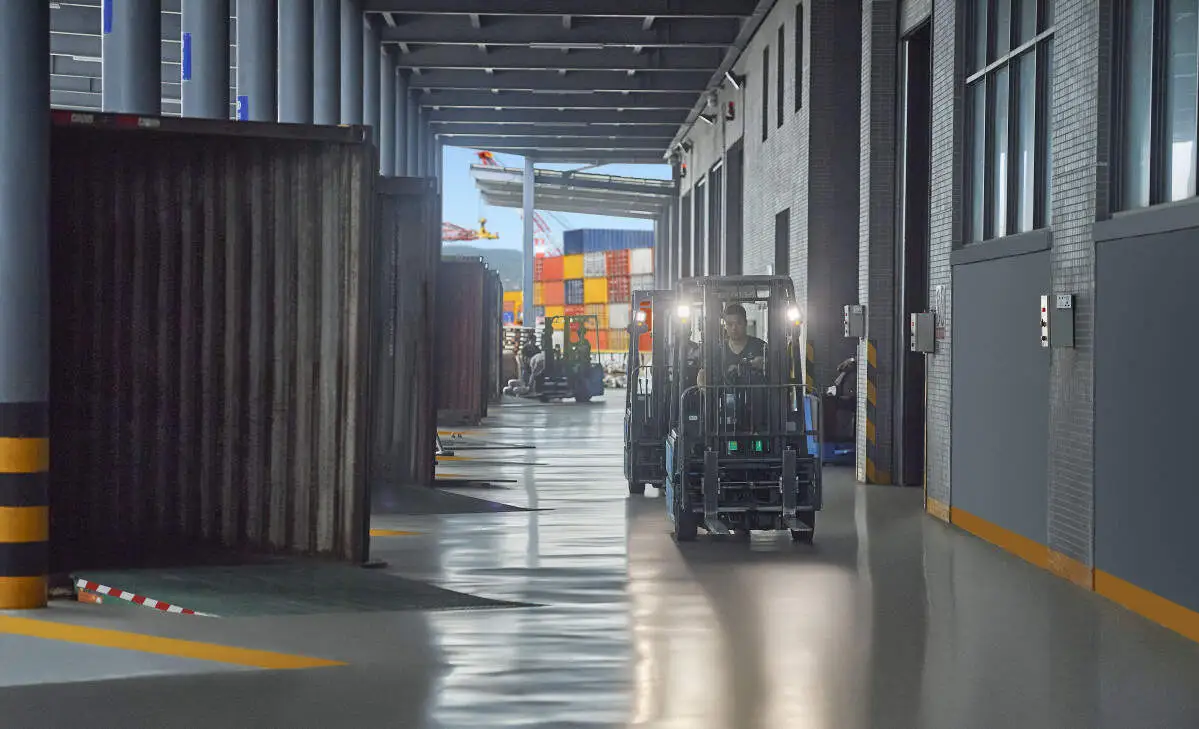
In today’s fast-paced warehouse and logistics environment, new-generation warehouse forklift equipment has emerged as a critical tool to enhance operational efficiency, safety, and sustainability. Unlike traditional models, these advanced machines integrate cutting-edge technologies to meet the evolving demands of modern storage facilities, where space optimization and quick order fulfillment are top priorities.
Smart Navigation and Autonomous Operation
One of the standout functional features of new-generation warehouse forklifts is their smart navigation system. Equipped with sensors, cameras, and mapping technology, these forklifts can navigate through narrow aisles, avoid obstacles, and follow predefined routes with minimal human intervention. Some models even support autonomous operation, allowing them to transport goods from one location to another without a dedicated operator, which frees up staff to focus on more complex tasks. This not only reduces the risk of human error but also improves the overall flow of warehouse operations, especially during peak periods.
Intelligent Load Management and Safety Enhancements
Another key feature is intelligent load management. These forklifts are designed to automatically detect and adjust to different load weights, ensuring optimal balance and stability during lifting and transportation. Integrated safety systems play a vital role too: collision avoidance alerts, automatic emergency braking, and tilt sensors prevent accidents that could damage goods or harm workers. Additionally, some models have height-limiting functions that restrict lifting in areas with low ceilings, further enhancing workplace safety.
Energy Efficiency and Eco-Friendly Design
Sustainability is a growing concern in the logistics industry, and new-generation warehouse forklifts address this with energy-efficient designs. Many are powered by advanced lithium-ion batteries that offer longer run times and faster charging compared to traditional lead-acid batteries. This reduces downtime and lowers overall energy consumption. Moreover, these forklifts produce zero emissions during operation, making them ideal for indoor warehouse environments where air quality is a priority. Some models also feature regenerative braking systems that recover energy during deceleration, further improving their eco-friendly credentials.
User-Centric Interaction and Predictive Maintenance
To ensure ease of use, new-generation forklifts incorporate user-centric human-machine interfaces (HMIs). The controls are intuitive, with touchscreen displays that provide real-time data on battery life, load status, and operation parameters. This allows operators to make informed decisions quickly. Additionally, predictive maintenance features use data analytics to monitor the forklift’s performance and identify potential issues before they escalate. This proactive approach reduces unexpected breakdowns, extends the equipment’s lifespan, and minimizes maintenance costs over time.
Overall, the functional features of new-generation warehouse forklift equipment are tailored to meet the dynamic needs of modern logistics operations. From smart navigation and safety enhancements to energy efficiency and predictive maintenance, these machines are transforming how warehouses operate, enabling businesses to achieve higher productivity, better safety standards, and greater sustainability in their daily operations.