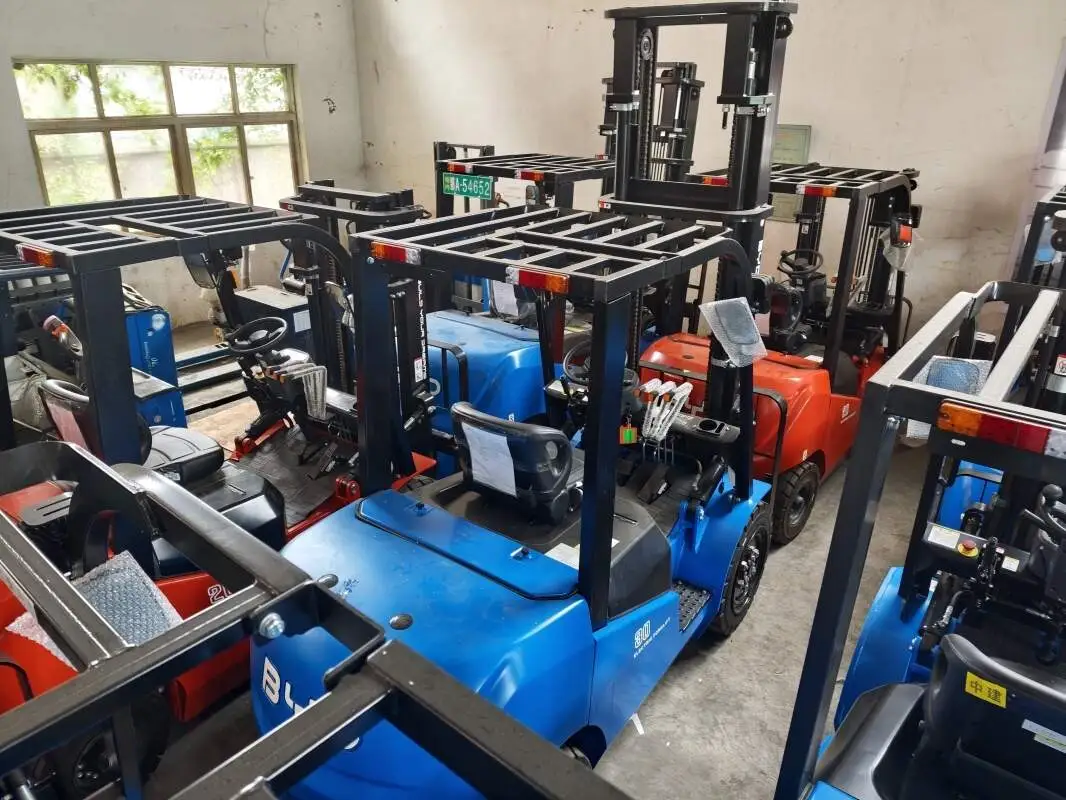
Operating counterbalance forklifts outdoors presents distinct challenges compared to indoor environments, where surfaces are smooth and conditions are controlled. To ensure safe, efficient material handling, operators must account for variable terrain, unpredictable weather, and unique load dynamics that define outdoor workspaces.
First, terrain adaptation is a foundational consideration. Outdoor sites often feature uneven ground, gravel paths, grassy areas, or sloped surfaces, all of which impact forklift stability. Operators should reduce speed significantly when navigating rough terrain to avoid tipping or losing control, especially when turning or traversing bumps. For sloped areas, always travel with the load facing uphill to maintain balance; when descending, reverse slowly to keep the forklift’s weight positioned over the rear wheels. Avoid sudden acceleration or braking on loose surfaces, as this can cause skidding or loss of traction.
Second, weather-related precautions are non-negotiable. Rain, snow, wind, and extreme temperatures all affect forklift performance and operator visibility. In wet conditions, inspect brake systems before operation to ensure they function properly, and avoid deep puddles that could damage electrical components or cause hydroplaning. Strong winds can destabilize lifted loads, so operators should limit maximum load height during windy days and avoid transporting tall, lightweight items that are prone to catching wind. In high temperatures, check fluid levels (coolant, hydraulic oil) regularly to prevent overheating, and take frequent breaks to avoid operator fatigue.
Third, load management requires extra vigilance outdoors. Outdoor loads may be irregularly shaped, oversized, or exposed to elements that compromise their stability. Before lifting, inspect loads to ensure they are properly secured and balanced; use strapping or wrapping for loose items to prevent shifting during transport. Maintain clear visibility by positioning loads so they do not block the operator’s line of sight, and avoid exceeding the forklift’s rated capacity, even if the load appears manageable. When transporting loads across long outdoor distances, pause periodically to recheck load stability and adjust as needed.
Fourth, routine pre-operation and post-operation checks are essential to keep forklifts in optimal condition for outdoor use. Before starting, inspect tire pressure and tread depth to ensure adequate traction on rough surfaces; check for damage to tires or wheels that could lead to blowouts. Verify that all lights (headlights, taillights, turn signals) are working, as outdoor sites may have low-light areas or require visibility during early morning or late evening shifts. After operation, clean debris from the forklift’s undercarriage and hydraulic components to prevent corrosion caused by exposure to dirt, moisture, or road salt.
Finally, specialized operator training tailored to outdoor environments is critical. Operators should receive training on navigating rough terrain, responding to weather-related hazards, and handling unique outdoor loads. Emergency procedures, such as how to recover a stuck forklift or respond to a load shift, should be reviewed regularly to ensure operators are prepared for unexpected situations.
By prioritizing these operation considerations, businesses can minimize risks, extend forklift lifespan, and maintain efficient material handling operations in outdoor settings.