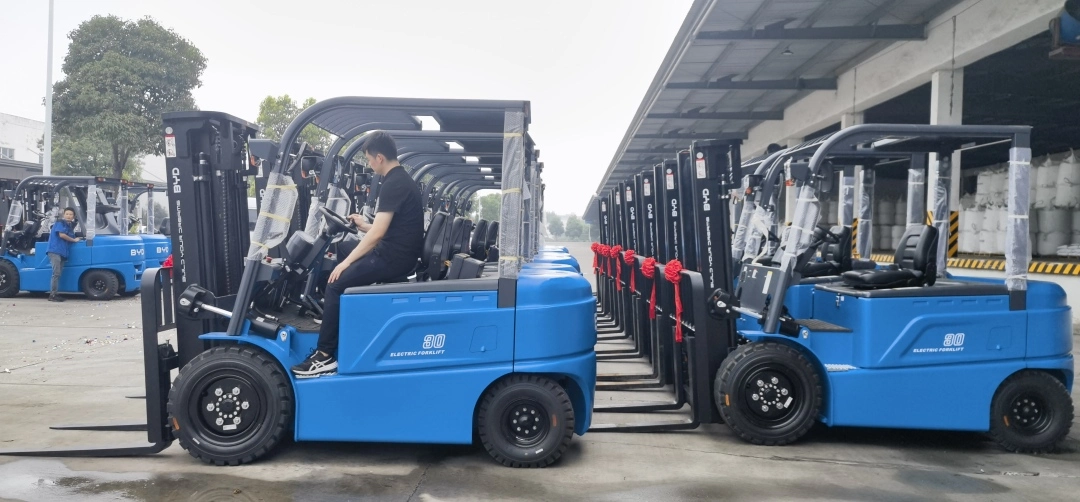
The forklift mast is a critical front-end structural component that serves as the backbone of a forklift’s material handling capabilities. Without this mechanism, a forklift would be unable to perform its core tasks of lifting, positioning, and transporting loads, making it indispensable in warehouses, distribution centers, manufacturing facilities, and other industrial settings.
At its most fundamental, the primary purpose of a forklift mast is to lift and position loads to varying heights. Powered by hydraulic cylinders, the mast extends vertically, raising the attached forks to access pallets on ground-level storage or high warehouse racks. This vertical lifting capability optimizes vertical storage space, a key factor in improving operational efficiency by maximizing usable warehouse area. Operators can adjust the mast’s height to match the specific needs of each task, ensuring precise load placement whether stacking goods or retrieving items from elevated positions.
Another core purpose of the forklift mast is to maintain load stability and enhance operational safety. Equipped with tilt functionality, the mast can lean forward to facilitate easy load retrieval from racks or backward to secure loads on the forks during transport. This tilt feature prevents loads from slipping off the forks, reducing the risk of workplace accidents and damage to goods. The mast’s robust construction, typically using high-strength steel, provides the structural integrity to support heavy loads without bending or failing, further contributing to safe operations. Additionally, the mast’s alignment with the forklift’s chassis helps maintain the vehicle’s overall balance, especially when carrying heavy loads at elevated heights.
Operational adaptability is also a key purpose of the forklift mast. Different mast configurations are designed to suit diverse work environments. Two-stage masts, for example, are ideal for standard warehouse heights, offering a balance of lifting capacity and maneuverability. Three-stage masts, by contrast, extend to greater heights, making them suitable for high-bay storage facilities where vertical space is fully utilized. Some masts are engineered for narrow-aisle operations, featuring compact profiles that allow forklifts to navigate tight spaces while still maintaining effective lifting capabilities. This adaptability ensures forklifts can perform efficiently across a wide range of industrial applications.
Proper maintenance of the mast is essential to preserve its functionality over time. Regular inspections of hydraulic hoses, chains, rollers, and structural components help identify signs of wear or damage early. Lubricating moving parts reduces friction and prevents premature wear, extending the mast’s lifespan. A well-maintained mast not only ensures consistent performance but also minimizes downtime and operational costs, supporting long-term productivity in material handling operations.
Overall, the forklift mast is far more than a simple lifting mechanism—it is a multifunctional component that enables efficient, safe, and adaptable material handling, playing a pivotal role in streamlining industrial logistics and storage operations.