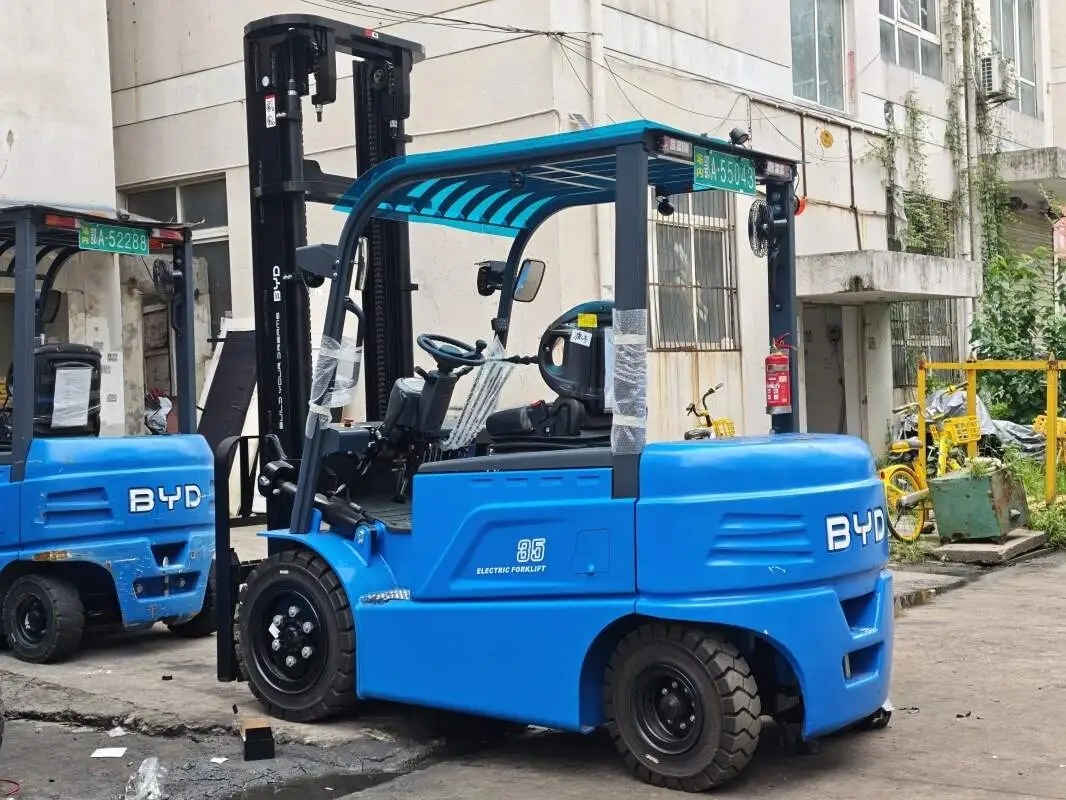
The governor plays a critical role in maintaining consistent engine speed for internal combustion forklifts, ensuring stable operation during material handling tasks. Incorrect governor settings can lead to erratic speed, reduced fuel efficiency, or even safety hazards. Below is a comprehensive, step-by-step guide to adjusting the governor correctly, following standard safety and maintenance protocols.
Before beginning any adjustment, prioritize safety. Park the forklift on a flat, level surface, engage the parking brake, and turn off the engine. Disconnect the ignition system to prevent accidental startup. Gather necessary tools: a wrench set, screwdrivers, a tachometer, and general engine maintenance guidelines. Ensure you have personal protective equipment, including gloves and safety glasses, to protect against moving parts and fluid spills.
Start with a preliminary inspection. Check for loose connections, worn components, or fluid leaks in the governor assembly and surrounding engine parts. A damaged governor spring or linkage can affect performance, so replace any faulty parts before proceeding with adjustments. Connect the tachometer to the engine according to standard instructions to accurately measure engine speed during the process.
Begin with idle speed adjustment. Start the engine and allow it to warm up to operating temperature. Locate the idle adjustment screw on the governor assembly. Turn the screw clockwise to increase idle speed or counterclockwise to decrease it, referencing the recommended idle speed range (typically between 600-800 RPM). Monitor the tachometer closely to ensure the speed stays within the specified range. Once set, let the engine run for a few minutes to confirm stability.
Next, adjust the high-speed setting. Locate the high-speed adjustment screw on the governor. To test the high speed, engage the forklift’s throttle fully while keeping the transmission in neutral. Turn the adjustment screw clockwise to increase maximum engine speed or counterclockwise to decrease it, adhering to the recommended range (usually between 2200-2600 RPM). Avoid exceeding the maximum speed limit, as this can cause engine damage. After setting, release the throttle and check that the engine returns to idle smoothly.
After completing both idle and high-speed adjustments, perform a series of tests to ensure proper function. Operate the forklift at various load levels, monitoring engine speed stability. Check for any hesitation, surging, or unexpected speed changes. If inconsistencies are found, repeat the adjustment steps to fine-tune the settings. Once satisfied, turn off the engine, disconnect the tachometer, and reassemble any components that were removed during the process.
Regular governor adjustments are an essential part of internal combustion forklift maintenance, helping to extend engine lifespan, improve fuel efficiency, and ensure safe operation. Always follow standard procedures and refer to general engine maintenance guidelines when performing adjustments, and consult a qualified technician if you encounter complex issues that require specialized knowledge.