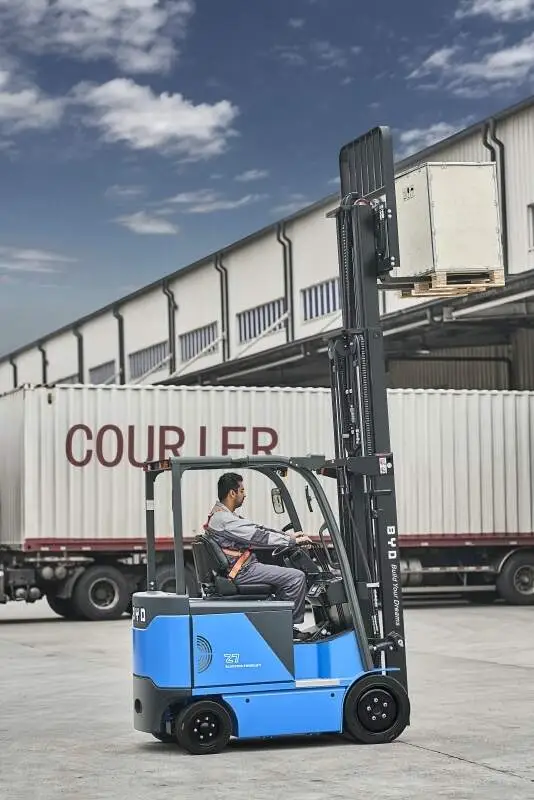
Forklifts are essential workhorses in material handling operations, and choosing the right tires is critical to ensuring their safety, efficiency, and longevity. Many operators overlook the impact of ground conditions on tire performance, leading to premature wear, increased maintenance costs, and even safety hazards. This guide breaks down how to select forklift tires based on common ground scenarios to optimize your operations.
For smooth, hard-surfaced environments like warehouse concrete floors and distribution center loading docks, solid rubber tires are the ideal choice. These tires are designed to withstand heavy loads and frequent, repetitive movement without the risk of punctures or deflation. Their dense rubber compound offers excellent abrasion resistance, reducing the need for frequent replacements and minimizing downtime. Additionally, solid tires provide stable handling on flat surfaces, ensuring precise maneuvering when stacking pallets or navigating narrow aisles. It’s important to inspect the tire tread regularly for signs of uneven wear, which can indicate alignment issues that may affect performance over time.
When operating on rough, unpaved ground such as construction sites, outdoor storage yards, or gravel paths, pneumatic tires are the better option. These tires feature an air-filled cavity that absorbs shocks from uneven terrain, protecting both the forklift’s suspension components and the cargo being transported. The deep, rugged tread pattern provides enhanced traction, preventing slippage on loose or uneven surfaces. While pneumatic tires are more susceptible to punctures, choosing models with reinforced sidewalls can mitigate this risk. Regularly checking tire pressure is also essential to maintain optimal performance—underinflated tires can reduce stability and increase fuel consumption, while overinflated tires may lead to a harsher ride and reduced traction.
Wet, oily, or slippery surfaces present unique challenges for forklift operations, such as in food processing plants, cold storage facilities, or areas where spills are common. In these environments, tires with specialized anti-slip tread patterns are necessary. The deep, grooved treads channel water and oil away from the tire’s contact point, improving grip and reducing the risk of skidding. It’s advisable to select tires made from a rubber compound that maintains flexibility in low temperatures for cold storage applications, ensuring consistent traction even in icy conditions. Regularly cleaning the tire treads to remove debris or buildup will also help preserve their anti-slip properties.
For indoor environments with smooth, polished floors, such as retail warehouses or exhibition halls, non-marking tires are the preferred choice. These tires are made from a special rubber compound that does not leave black scuff marks on the floor, maintaining a clean and professional appearance. Despite their non-marking design, these tires still offer sufficient load-bearing capacity and traction for standard material handling tasks. It’s important to note that non-marking tires may wear faster on rough surfaces, so they are best reserved for indoor use where floor conditions are consistent.
In conclusion, selecting the right forklift tire requires careful consideration of the ground conditions in which the equipment operates. By matching tire type to the environment, operators can enhance safety, reduce maintenance costs, and extend the lifespan of both the tires and the forklift itself. Regular inspections and proactive maintenance will further ensure that your forklift remains in optimal working condition for all your material handling needs.