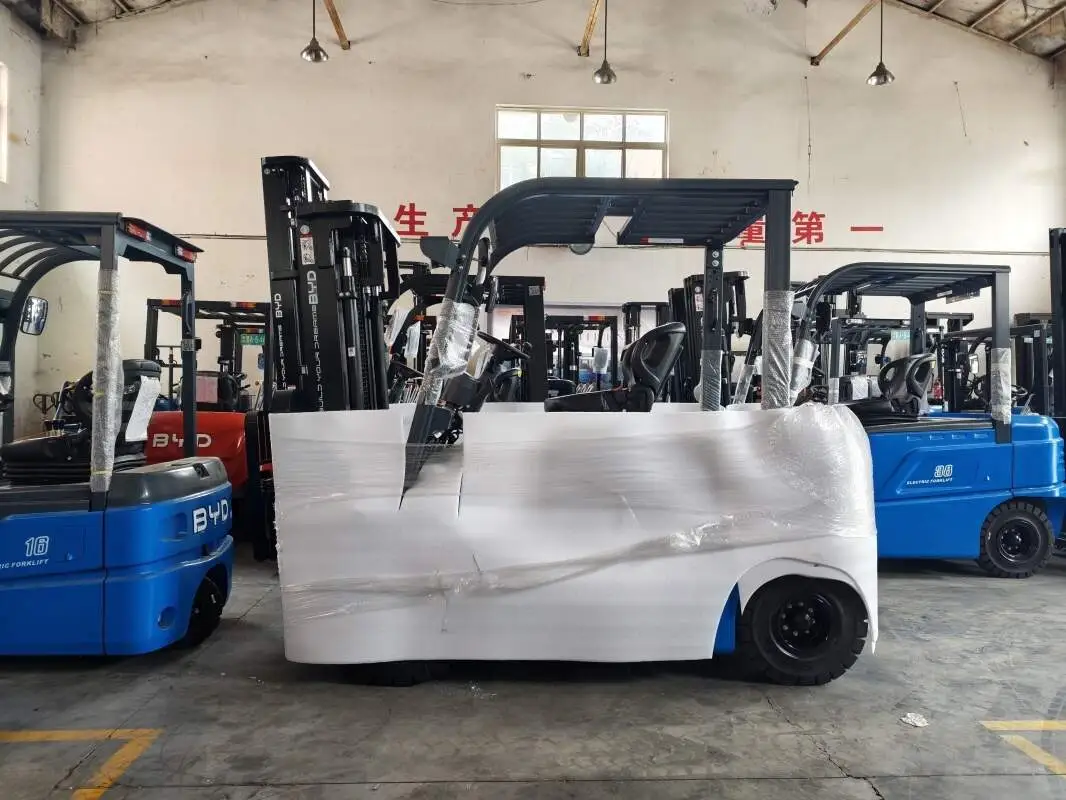
Heavy-duty forklifts are engineered to tackle the most demanding material handling tasks, making them a staple in industrial environments where heavy loads and continuous operation are standard. Unlike standard forklifts, these robust machines boast enhanced load capacities, reinforced frames, and powerful propulsion systems, enabling them to handle weights that far exceed typical industrial equipment limits. Their design prioritizes durability and reliability, ensuring they can thrive in harsh, high-traffic settings such as ports and manufacturing factories.
In port operations, heavy-duty forklifts play a critical role in streamlining cargo movement. Ports handle a constant influx of large containers, bulk goods, and heavy machinery, requiring equipment that can lift and transport these items efficiently. Heavy-duty forklifts excel at loading and unloading ships, transferring containers between storage yards and transport vehicles, and stacking heavy cargo at height. Their ability to operate on uneven surfaces, including paved docks and gravel yards, makes them versatile enough to adapt to the varied terrain found in port facilities. Additionally, their extended operating hours without significant downtime ensure they can keep pace with the round-the-clock schedules common in global shipping hubs.
Within manufacturing factories, heavy-duty forklifts support daily operations by moving raw materials, finished products, and large equipment across production floors. These facilities often deal with heavy components, such as steel beams, engine parts, or large assembly modules, which require specialized lifting equipment. Heavy-duty forklifts can navigate narrow aisles in warehouses, transport loads between production lines, and place heavy items onto storage racks with precision. Their ergonomic controls also help reduce operator fatigue during long shifts, contributing to safer and more efficient workflow management. In industries where heavy-load handling is a core part of operations, these forklifts are indispensable tools for maintaining productivity.
Both port and factory environments demand equipment that can withstand rigorous use, and heavy-duty forklifts deliver on this front. Their sturdy construction, including thick steel frames and heavy-duty tires, resists wear and tear from frequent use and rough conditions. Advanced hydraulic systems provide smooth and precise lifting, minimizing the risk of damage to cargo or equipment. Many models also feature fuel-efficient engines or electric powertrains, reducing operational costs while meeting environmental standards. Furthermore, their adaptability to various attachments allows them to perform a wide range of tasks without needing multiple specialized machines.
For businesses operating in ports or factories, investing in heavy-duty forklifts is a strategic decision that enhances operational efficiency, improves safety, and reduces long-term maintenance costs. These machines are designed to meet the unique challenges of heavy-load handling in high-demand industrial settings, providing a reliable solution for keeping operations running smoothly. Whether it’s moving containers at a busy port or transporting heavy components across a factory floor, heavy-duty forklifts prove to be an essential asset for any industrial material handling operation.