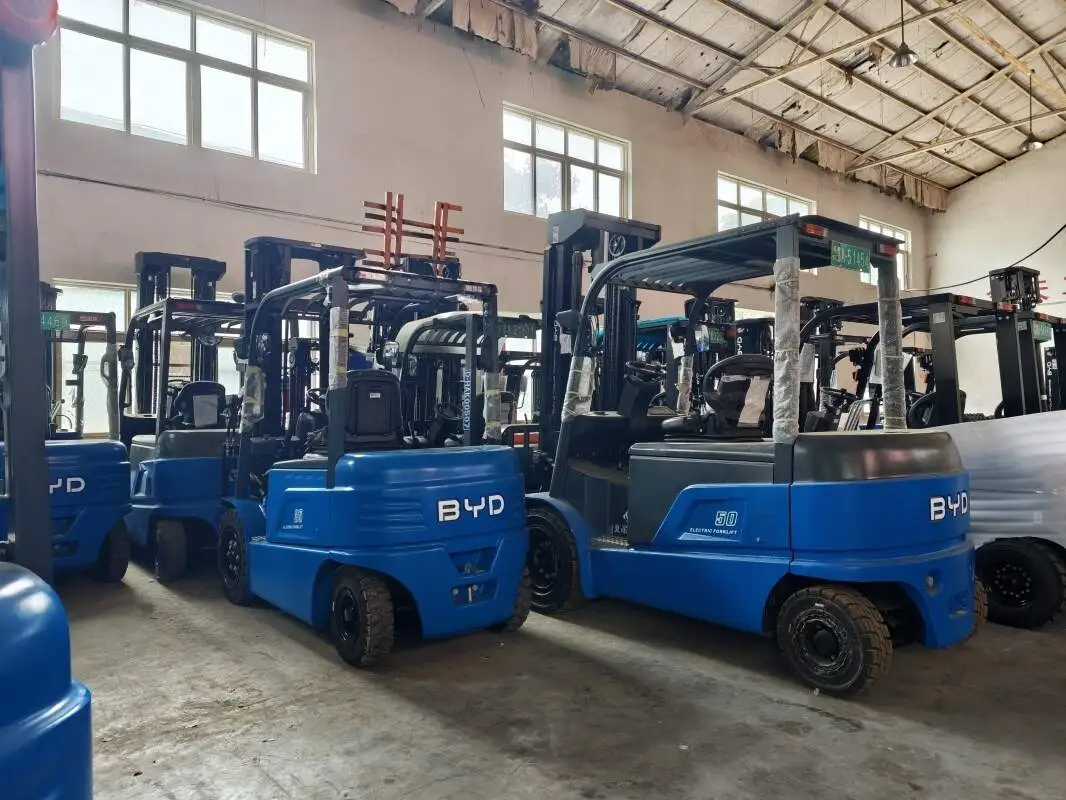
Urban logistics is a critical backbone of the European Union’s (EU) economy, but it also contributes significantly to urban air pollution, noise disruption, and traffic congestion. In response, the EU has implemented a series of regulations and directives to transform urban freight into a sustainable, low-impact activity. Among the solutions emerging to meet these rules, zero emission electric forklifts have emerged as a key tool for businesses operating in city centers and surrounding logistics hubs.
Core Focus Areas of EU Urban Logistics Rules
The EU’s urban logistics framework is built around three interconnected priorities: reducing greenhouse gas (GHG) and pollutant emissions, minimizing noise pollution, and improving the efficiency of urban freight operations. Key regulations include the Euro VI emissions standards, which set strict limits on nitrogen oxides (NOx), particulate matter (PM), and other harmful pollutants from commercial vehicles. Additionally, many EU cities have established Low Emission Zones (LEZs), where access is restricted to vehicles meeting specific emission criteria, with penalties for non-compliance.
Beyond emissions, the EU’s Sustainable Urban Mobility Plans (SUMPs) encourage cities to adopt measures such as restricted delivery time windows, optimized routing, and the use of quieter equipment to reduce noise disturbance for residents. The EU’s Circular Economy Action Plan also emphasizes the need for energy-efficient equipment and sustainable supply chain practices, pushing businesses to minimize waste and reduce their carbon footprint.
How Zero Emission Electric Forklifts Align with EU Regulations
Zero emission electric forklifts address multiple EU urban logistics requirements simultaneously, making them a practical compliance solution for businesses.
First, their zero-tailpipe operation directly aligns with the EU’s emission reduction goals. Unlike traditional internal combustion engine (ICE) forklifts, electric models produce no NOx, PM, or carbon monoxide (CO) emissions during use. This makes them suitable for operation within LEZs, where ICE equipment may be banned or subject to heavy fines. For logistics hubs located near residential areas, electric forklifts also help reduce local air pollution, supporting the EU’s target of reducing premature deaths from air pollution by 55% by 2030.
Second, electric forklifts operate at significantly lower noise levels than ICE alternatives. Most electric models produce between 60-70 decibels during operation, compared to 80-90 decibels for diesel forklifts. This compliance with the EU’s noise pollution regulations allows businesses to operate during restricted night-time delivery windows, which are often implemented to reduce daytime traffic congestion. Night-time operations also help logistics companies meet tight delivery deadlines without disrupting urban residents, aligning with SUMP objectives.
Third, electric forklifts offer greater maneuverability than many ICE models, making them ideal for the narrow spaces common in urban logistics centers and city loading docks. Their compact design allows for easier navigation through crowded warehouses and tight street-side loading zones, improving operational efficiency. This agility supports the EU’s goal of optimizing urban freight flows, reducing the time vehicles spend idling or navigating congested areas, and further lowering overall emissions from the logistics chain.
Fourth, electric forklifts contribute to the EU’s circular economy goals through their energy efficiency and recyclability. Modern electric forklifts have high energy conversion rates, with up to 90% of electrical energy converted into usable power, compared to just 30-40% for diesel models. Many manufacturers also design electric forklift batteries for recycling, with components such as lithium-ion cells recoverable for reuse in other applications. This reduces waste and supports the EU’s focus on closing resource loops in supply chains.
Real-World Compliance in EU Urban Logistics
Across the EU, businesses have already begun adopting zero emission electric forklifts to meet urban logistics rules, with measurable results. In several major EU cities, logistics hubs serving LEZs have replaced their entire fleet of ICE forklifts with electric models, eliminating tailpipe emissions from on-site operations. These hubs report not only avoiding LEZ penalties but also reducing operational costs through lower fuel and maintenance expenses.
In urban delivery operations, electric forklifts are used to load and unload zero emission delivery vans at street-side docks. This end-to-end zero emission chain ensures that every stage of the logistics process meets EU emission standards, from the warehouse to the final delivery point. For businesses operating in cities with strict noise regulations, electric forklifts have enabled extended operating hours, allowing them to process deliveries during off-peak times and reduce daytime traffic congestion.
Small and medium-sized enterprises (SMEs) in the EU are also benefiting from electric forklifts, supported by EU-funded grants and incentives. These financial tools help offset the higher upfront cost of electric equipment, making compliance accessible to businesses of all sizes. Many SMEs report that the long-term savings on fuel and maintenance quickly offset the initial investment, making electric forklifts a financially viable choice.
Addressing Challenges for Wider Adoption
While electric forklifts offer clear compliance benefits, some challenges remain to their widespread adoption in EU urban logistics. One key issue is the availability of charging infrastructure in urban logistics hubs. Many older facilities lack dedicated charging stations, requiring businesses to invest in new infrastructure to support electric forklift fleets. However, the EU’s Connecting Europe Facility and national-level funding programs are helping address this gap, providing grants for the installation of charging points in logistics centers.
Another challenge is the limited range of some electric forklift models, which can be a barrier for businesses with large warehouses or extended operating hours. Advances in battery technology, such as faster charging times and higher energy density, are addressing this issue. Modern lithium-ion batteries can be charged to 80% capacity in under an hour, allowing forklifts to return to operation quickly without significant downtime.
Future Outlook: Electric Forklifts and Evolving EU Rules
As the EU continues to strengthen its urban logistics regulations, the role of zero emission electric forklifts will become even more critical. The EU’s 2035 ban on new ICE light commercial vehicles will likely extend to industrial equipment such as forklifts in the coming years, pushing businesses to transition fully to zero emission models. Additionally, the EU’s Net Zero Industry Act will support the development of advanced electric forklift technologies, including solid-state batteries and automated operation systems.
Automated electric forklifts, in particular, will play a key role in future EU urban logistics. These systems can optimize warehouse operations, reducing idle time and improving energy efficiency, while also eliminating the risk of human error. When combined with smart routing software and zero emission delivery vans, automated electric forklifts will create fully integrated, sustainable logistics chains that meet the EU’s most stringent environmental and operational requirements.
In conclusion, zero emission electric forklifts are not just a compliance tool for EU urban logistics rules—they are a foundational element of a sustainable, efficient urban freight system. By addressing emissions, noise, and operational efficiency, electric forklifts help businesses meet regulatory requirements while also reducing costs and improving their environmental footprint. As the EU’s rules evolve, electric forklifts will continue to adapt, ensuring that urban logistics remains a reliable, sustainable part of the European economy.