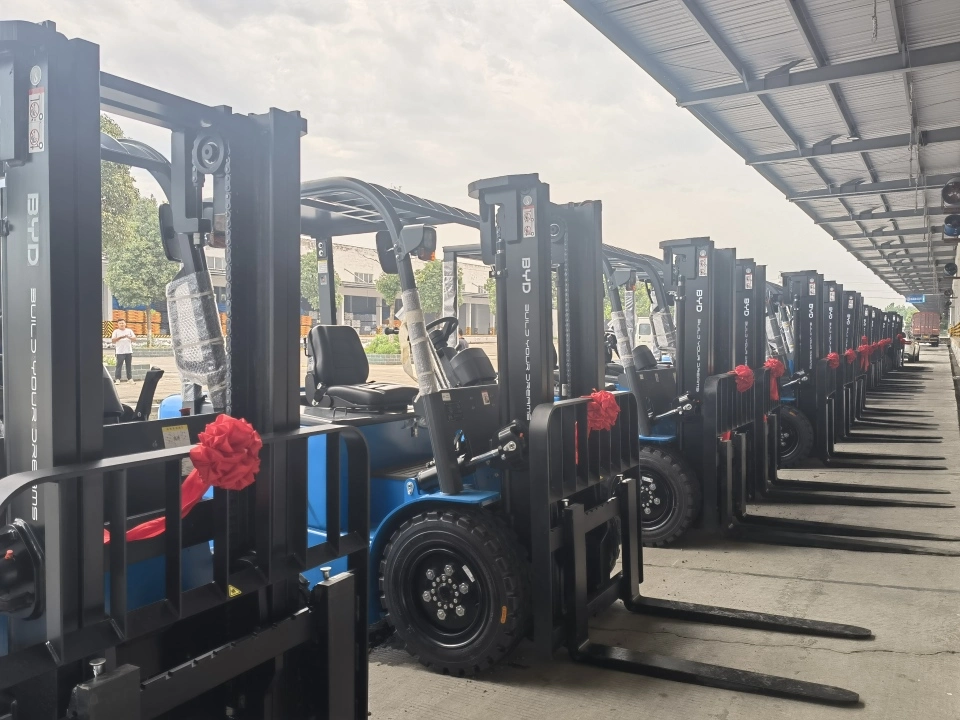
electric forklifts play a pivotal role in modern warehousing, logistics, and industrial operations, where driving stability directly ties to operational safety, efficiency, and cargo integrity. The condition of the ground surface is a critical yet often overlooked factor that significantly influences how an electric forklift handles, maneuvers, and maintains balance during operation. Understanding these impacts is essential for operators and facility managers to mitigate risks and ensure smooth daily workflows.
Smooth concrete surfaces are the most common ground for electric forklift operations. They offer consistent traction, allowing forklifts to accelerate, brake, and turn with reliable stability. The even surface minimizes jolts and vibrations, reducing wear on the forklift’s components and lowering the risk of cargo shifting. However, minor cracks or accumulated debris on concrete can create hidden hazards. Small debris may get caught under tires, causing sudden balance shifts, while cracks can disrupt weight distribution if the forklift passes over them at high speeds.
Gravel and loose dirt surfaces present notable challenges to forklift stability. The uneven, shifting nature of these materials reduces tire traction, making slips or slides more likely, especially when turning or carrying heavy loads. Loose ground can also cause the forklift to sink slightly, altering its center of gravity and increasing tipping risks. Operators must reduce speed drastically, avoid sharp turns, and ensure loads are securely fastened to prevent shifting that could further compromise stability. Additionally, constant vibration from gravel can accelerate wear on the forklift’s suspension and steering components, requiring more frequent maintenance checks.
Slippery surfaces, such as wet concrete, spilled liquids, or icy floors, pose severe stability risks. Reduced traction extends braking distances, and sudden movements like quick turns or stops can lead to skidding. This endangers operators, increases cargo damage risks, and raises the chance of collisions with nearby structures. In such conditions, operators should avoid sudden acceleration or deceleration, maintain slow speeds, and ensure tires have adequate tread depth to maximize grip. Facilities should also implement regular cleaning protocols and slip-resistant coatings to minimize these hazards.
Uneven and rough terrain, including ramps, potholes, or sloped surfaces, tests a forklift’s stability to its limit. When navigating slopes, the forklift’s center of gravity shifts, boosting the risk of forward or backward tipping, especially with heavy loads. Potholes or uneven patches can cause sudden jolts, leading to cargo shifting or loss of control. Operators must strictly adhere to load weight limits, travel slowly over rough terrain, and keep forks low to the ground to maintain a lower center of gravity. For ramps, traveling straight up or down is critical, as turns can disrupt balance.
In conclusion, different ground surfaces have varied and significant impacts on electric forklift driving stability. By recognizing these challenges and implementing appropriate operational practices, operators and facility managers can enhance safety, reduce equipment wear, and improve overall efficiency. Regular ground surface inspections, proper forklift maintenance, and operator training are key steps to ensuring stable and safe forklift operation across all terrain types.