Industrial classification plays a critical role in business operations, influencing everything from asset accounting and tax reporting to regulatory compliance and safety standards. Among the ongoing debates in this field is a seemingly straightforward question: Does a forklift qualify as fixed plant? This discussion requires a clear understanding of fixed plant definitions, equipment characteristics, and industry-specific classification frameworks.
To address this question, it is first essential to define what constitutes fixed plant. In industrial terms, fixed plant typically refers to permanent or semi-permanent equipment installed in a specific location and integrated into a facility’s core operations. These assets are not designed for regular movement; examples include manufacturing production lines, stationary boilers, and fixed conveyor systems. Fixed plant is often tied to a facility’s physical structure, with relocation requiring significant time, cost, and operational disruption.
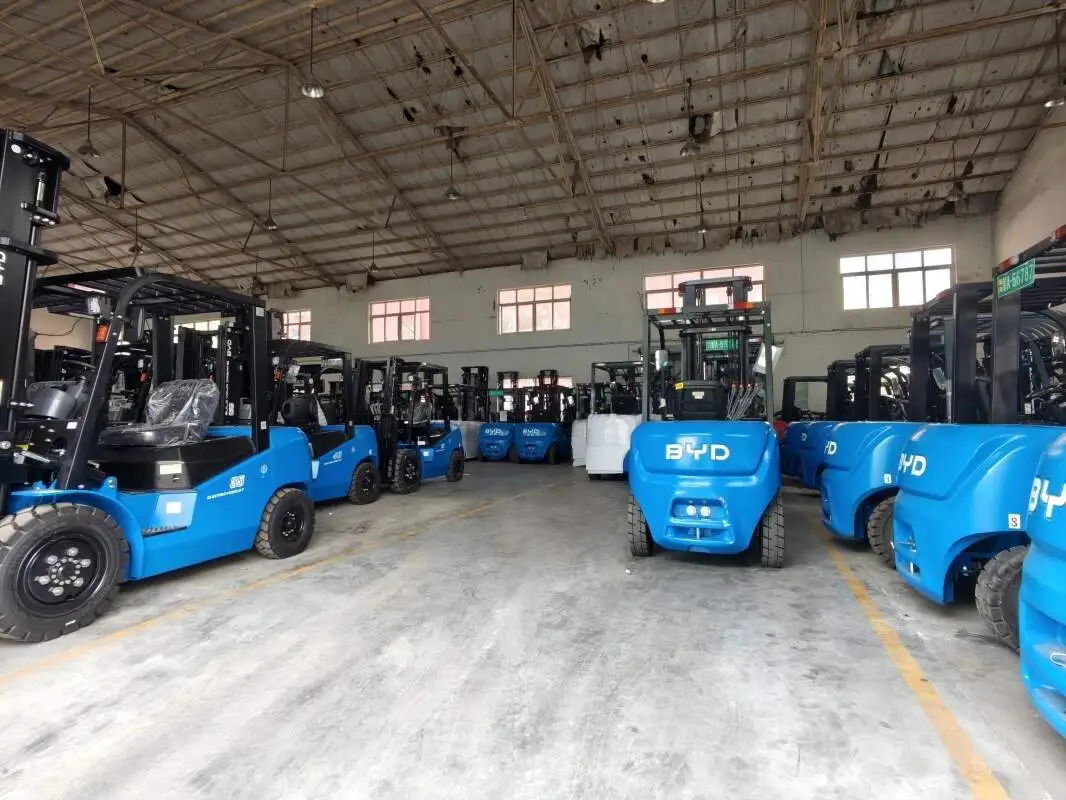
Forklifts, by contrast, are engineered for mobility. Their primary function is transporting materials across warehouses, construction sites, and manufacturing facilities, with designs that enable easy maneuverability and relocation. Most industry classification systems categorize forklifts as mobile industrial equipment, distinct from fixed plant. However, edge cases can blur this line. For instance, a custom-built forklift permanently anchored to a production line, designed solely to perform a specific non-mobile task within that line, might be considered part of the fixed plant. Similarly, some automated guided vehicles operating within a predefined fixed route and unable to be easily repurposed for other locations may fall under fixed plant classifications in certain regulatory contexts.
The distinction between forklifts and fixed plant has tangible implications for businesses. For tax purposes, fixed plant assets often have different depreciation schedules compared to mobile equipment, affecting a company’s financial reporting. Regulatory compliance also varies: fixed plant may require specific safety inspections tied to facility infrastructure, while mobile forklifts fall under standards for powered industrial trucks, including operator training and regular maintenance checks.
In conclusion, the classification of a forklift as fixed plant depends on its design, use case, and the specific industry or regulatory framework applied. In most scenarios, forklifts are classified as mobile industrial equipment due to their inherent mobility and multi-purpose functionality. However, businesses should consult industry guidelines or regulatory bodies to ensure accurate classification, as miscategorization can lead to financial and compliance issues.