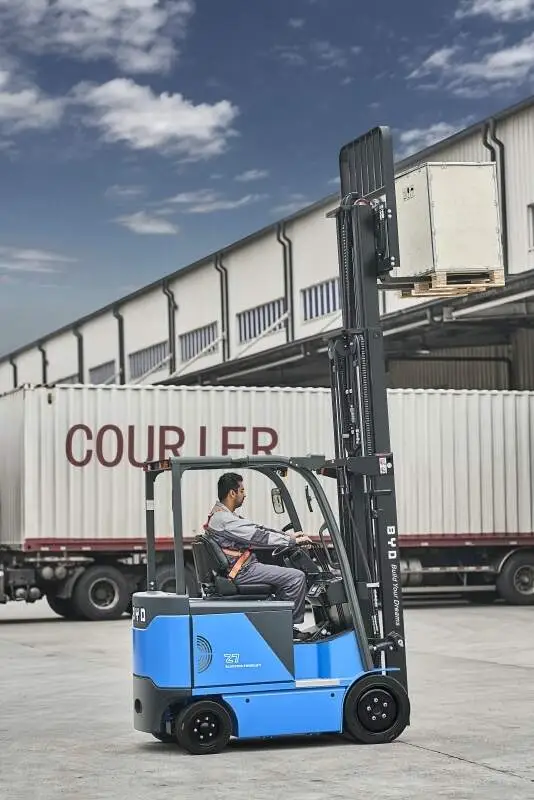
In the realm of material handling, selecting the right equipment is critical to boosting operational efficiency and ensuring workplace safety. Two widely utilized tools—specialized telehandlers and standard electric forklifts—each possess unique characteristics tailored to specific task requirements. Understanding their key distinctions helps businesses make well-informed choices aligned with their operational scenarios.
Design and Structural Variations
Specialized telehandlers feature an extendable boom arm, a defining component that enables them to reach elevated heights and distant locations beyond the scope of standard forklifts. Their chassis is built for robust stability, making them suitable for uneven outdoor terrain. In contrast, standard electric forklifts have a fixed mast structure, optimized for vertical lifting in confined indoor spaces. Their compact frame allows seamless maneuverability through narrow warehouse aisles, whereas telehandlers prioritize extended reach over tight-space navigation.
Core Application Scenarios
Telehandlers shine in outdoor settings such as construction sites, agricultural operations, and large logistics yards. They can lift heavy loads to upper floors of construction projects, stack materials in elevated outdoor storage areas, and even adapt to tasks like digging or lifting with compatible attachments. Standard electric forklifts, however, are primarily designed for indoor environments including warehouses, retail distribution centers, and manufacturing facilities. Their zero-emission operation makes them ideal for enclosed spaces where air quality is a priority, and they excel at loading/unloading trucks, stacking pallets, and short-distance material movement.
Performance and Functional Capabilities
When evaluating lifting capacity, telehandlers typically offer higher maximum weights at extended reaches, though their vertical lifting height may match some electric forklift models. Electric forklifts provide consistent power for repetitive tasks and boast faster acceleration in indoor settings, enhancing productivity during frequent material transfers. Telehandlers are equipped with large, rugged tires for rough terrain traversal, while electric forklifts use smooth, non-marking tires to protect indoor flooring. Additionally, electric forklifts operate quietly, making them suitable for noise-sensitive environments, whereas telehandlers generate more noise due to their complex boom mechanisms and often larger power systems.
Cost and Maintenance Considerations
Specialized telehandlers generally come with a higher upfront cost due to their intricate boom systems and heavy-duty construction. Their maintenance demands are also more intensive, as the extendable boom components require regular inspections, lubrication, and servicing. Standard electric forklifts, while having a significant initial investment, offer lower long-term operational costs thanks to reduced fuel expenses and simpler maintenance of electric components. Battery care is a key factor for electric forklifts, but modern models feature efficient battery systems that minimize downtime and extend service life.
If you are seeking a reliable standard electric forklift solution, Jianshu New Energy specializes in BYD electric forklifts, offering a diverse range of models to meet various indoor material handling needs. For more details or inquiries, please contact us at 17399989919@163.com. Choosing the right equipment depends on your specific operational environment, load requirements, and long-term cost considerations, ensuring you maximize efficiency and safety in daily operations.