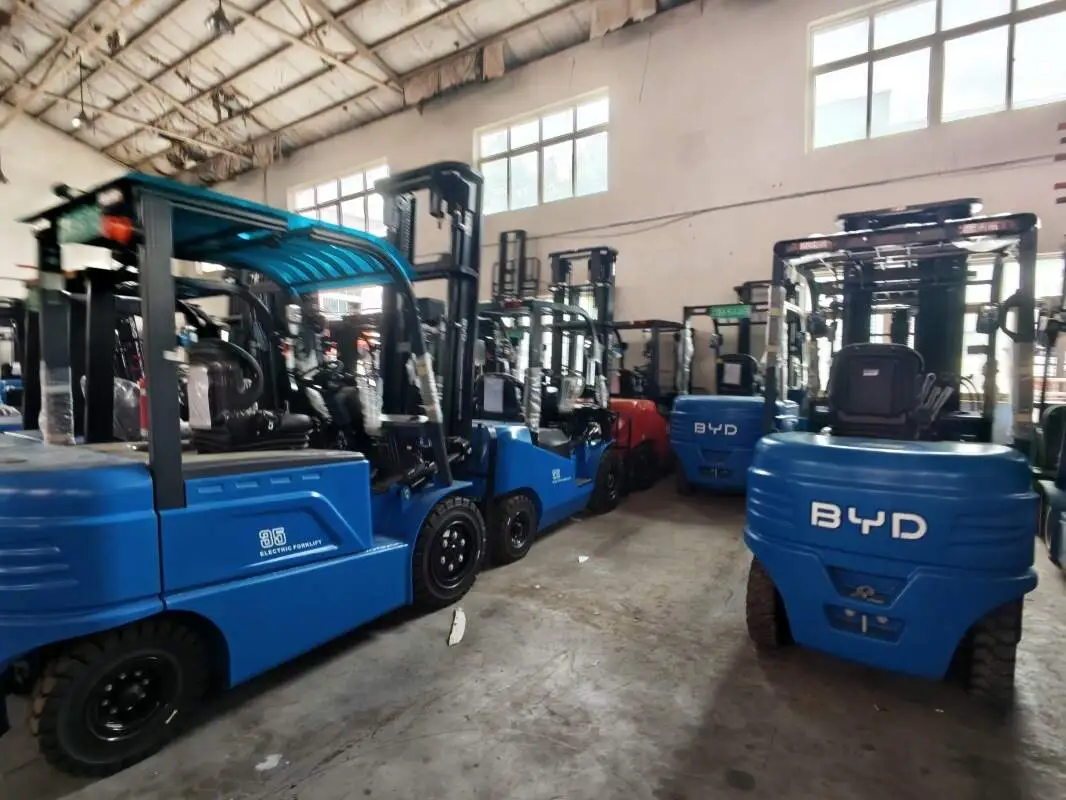
In today’s fast-paced industrial and warehouse environments, efficient material handling is a cornerstone of smooth operations. Traditional forklifts, while versatile, often fall short when faced with specialized cargo types or complex storage layouts. This is where forklift attachments step in, offering tailored solutions to address diverse material handling challenges and unlock new levels of productivity.
Side-shift attachments are among the most widely used additions to standard forklifts. Designed to move the forks horizontally without repositioning the entire vehicle, these attachments eliminate the need for repeated maneuvering in tight spaces. This not only reduces the risk of accidental collisions with racks or other equipment but also cuts down on the time spent aligning forks with pallets. For warehouses dealing with high-density storage, side-shift attachments enable more precise stacking, maximizing vertical and horizontal space utilization and ultimately increasing storage capacity.
Rotating attachments are another essential tool for handling non-standard loads. Whether working with cylindrical cargo like drums or coils, or irregularly shaped items such as furniture or machinery parts, rotating attachments allow operators to adjust the orientation of loads mid-lift. This eliminates the need for manual repositioning, which can be time-consuming and pose safety risks. By enabling 360-degree rotation, these attachments ensure that loads are placed exactly where needed, reducing product damage and streamlining workflows in sectors like manufacturing, construction, and distribution.
Clamp attachments offer a secure alternative to traditional forks for handling fragile or non-palletized cargo. From boxes and bales to plastic containers and wooden boards, clamp attachments use pressure to hold items firmly in place without relying on pallet support. This not only reduces the need for additional packaging materials but also minimizes the risk of cargo slipping or being crushed during transport. For businesses handling perishable goods or delicate products, clamp attachments help maintain product integrity and reduce waste, contributing to cost savings over time.
Beyond improving efficiency, forklift attachments also play a key role in enhancing workplace safety. By reducing the need for manual intervention in load handling, these attachments lower the risk of musculoskeletal injuries and other accidents associated with manual labor. Additionally, many attachments are designed with safety features like load sensors and automatic locking mechanisms, ensuring that loads are handled securely throughout the lifting and transport process.
Investing in the right forklift attachments can deliver long-term benefits for businesses of all sizes. By customizing forklift capabilities to match specific operational needs, companies can optimize their material handling processes, reduce downtime, and improve overall operational efficiency. Whether navigating narrow warehouse aisles, handling specialized cargo, or maximizing storage space, forklift attachments provide flexible, cost-effective solutions that adapt to the evolving demands of modern industrial logistics.