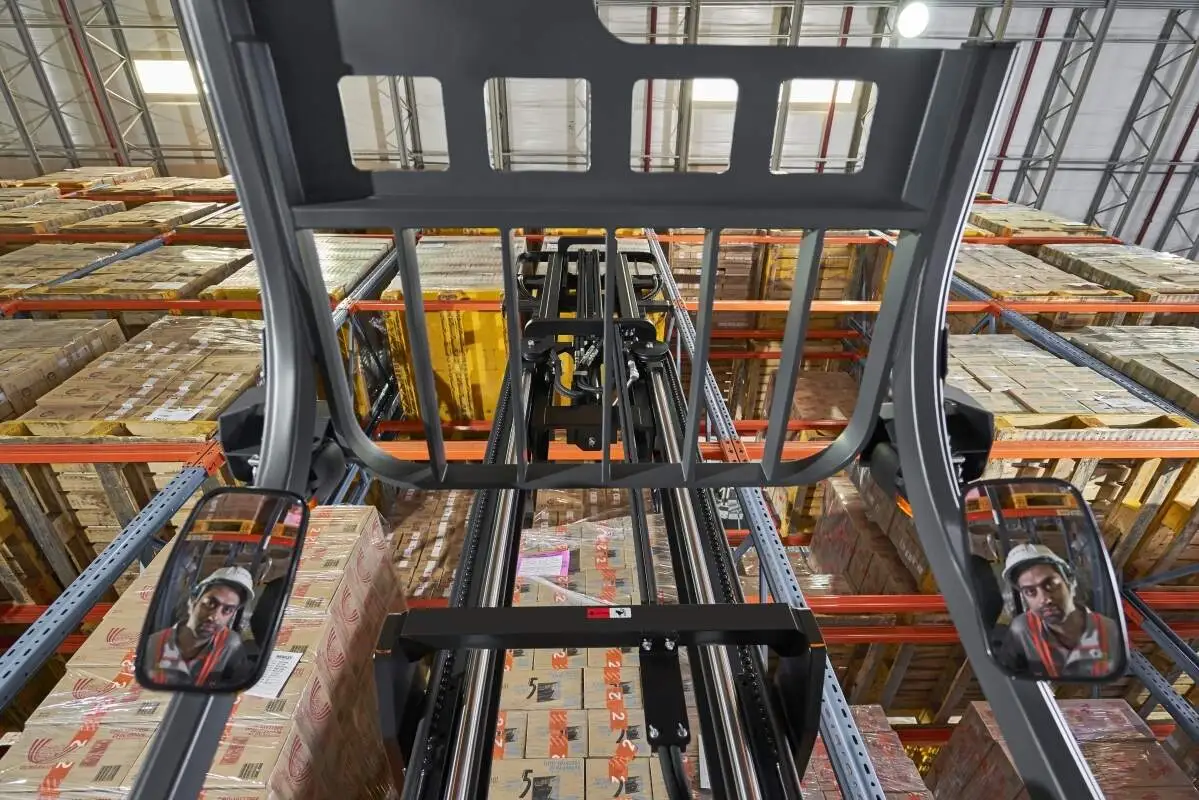
forklift tip-overs pose significant safety risks in industrial environments, leading to injuries, property damage, and costly operational downtime. Mitigating this threat relies on intentional mechanical design choices centered on stability and load management.
A core design priority is optimizing the forklift’s center of gravity (CoG). Engineers calculate the CoG across all load scenarios, ensuring it stays within the vehicle’s stability triangle during operation. Strategically sized rear counterweights offset the weight of front-loaded cargo, effectively preventing forward tip-overs. Low-profile chassis designs further lower the overall CoG, reducing the likelihood of lateral tip-overs when turning or navigating uneven terrain.
Wider wheelbases and track widths expand the forklift’s base of support, enhancing lateral stability. Designers also incorporate steering mechanisms that limit turning angles at higher speeds, reducing centrifugal force that can destabilize the vehicle. Calibrated suspension systems maintain consistent tire contact with surfaces, even on rough ground, preventing sudden balance shifts that could lead to tip-overs.
Critical components like masts, carriages, and frames are constructed from high-strength materials with reinforced joints to withstand dynamic lifting and maneuvering loads. This prevents structural deformation over time that could alter the CoG or compromise overall stability. Load-bearing parts undergo rigorous stress testing to ensure they meet strict safety standards for maximum load capacities.
Integrated mechanical safety systems add an extra layer of protection. Mechanical load limiters prevent the forklift from lifting loads beyond its rated capacity—a leading cause of tip-overs. Side tilt sensors with mechanical triggers activate alarms or restrict vehicle movement when the forklift approaches a critical stability threshold. Some designs also include anti-tip bars that extend to contact the ground if the forklift begins to lean, providing additional support to prevent tipping.
By combining these mechanical design factors, manufacturers can significantly reduce forklift tip-over risks. These choices not only enhance workplace safety but also improve operational efficiency by minimizing accident-related downtime, with regular maintenance and operator training complementing these design features to sustain stability throughout the forklift’s service life.