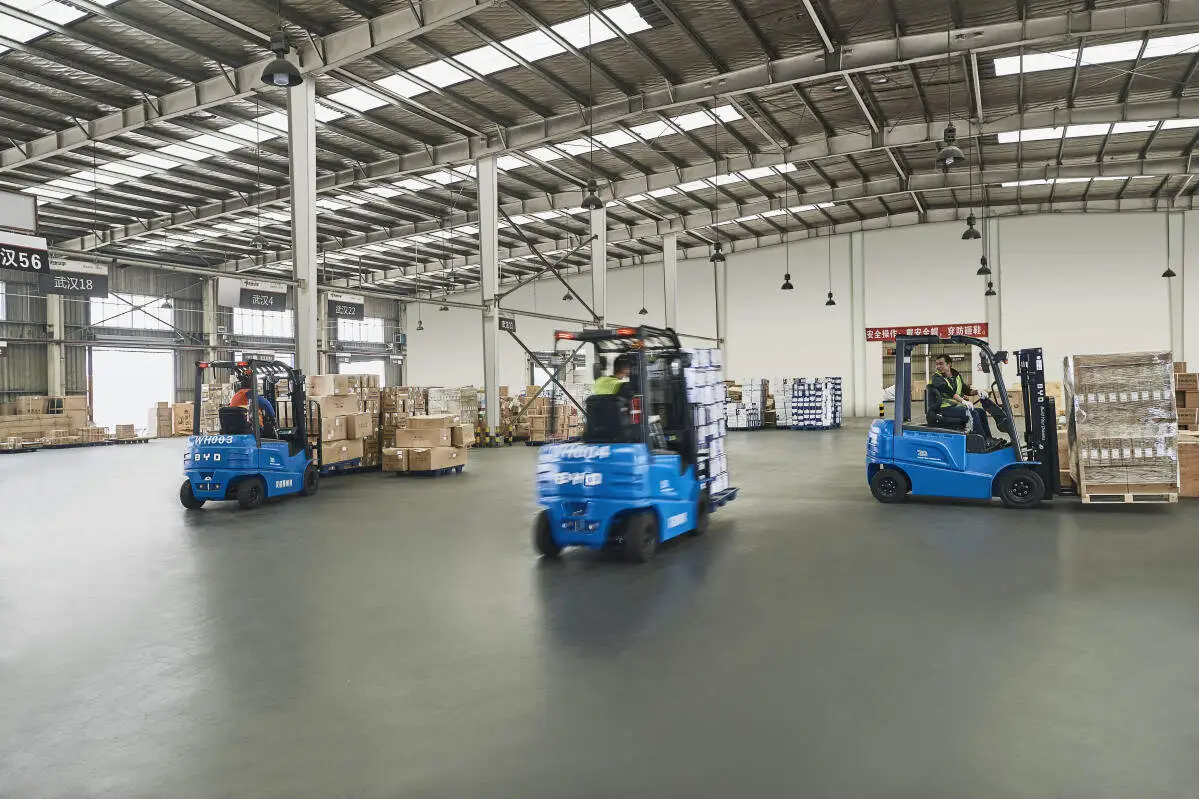
Forklifts are indispensable tools in warehouses, distribution centers, and industrial facilities, where precise maneuverability is critical for safe and efficient operations. The steering system, a core component of any forklift, relies on a series of mechanical principles to translate the operator’s input into controlled movement of the vehicle’s wheels. Understanding these principles is key to maintaining forklifts, troubleshooting issues, and ensuring optimal performance.
At the heart of the forklift steering system lies the steering linkage, a network of mechanical components that connect the steering wheel to the front wheels. When the operator turns the steering wheel, it rotates a steering shaft connected to a gear mechanism—typically a recirculating ball or rack-and-pinion system. This gear converts the rotational motion of the steering wheel into linear motion, which is then transferred through tie rods to the steering knuckles attached to the front wheels. The linkage ensures that both wheels turn in the correct direction and at the appropriate angle, allowing the forklift to navigate tight spaces with accuracy.
Many modern forklifts incorporate a hydraulic power steering system to reduce the force required for steering, especially when carrying heavy loads. This system uses a hydraulic pump driven by the forklift’s engine or electric motor to generate pressure. When the operator turns the steering wheel, a control valve directs hydraulic fluid into a cylinder connected to the steering linkage. The fluid pressure pushes the cylinder, amplifying the operator’s input and making it easier to turn the wheels. The hydraulic system also helps maintain consistent steering response regardless of load weight, ensuring stability and control during operation.
Steering geometry plays a crucial role in the forklift’s maneuverability and stability. Key elements include the kingpin inclination, caster angle, and toe setting. The kingpin is the axis around which the front wheels rotate; its inclination helps return the wheels to the straight-ahead position when the operator releases the steering wheel. The caster angle, the tilt of the kingpin forward or backward, enhances straight-line stability and improves steering feel. Toe setting refers to the angle at which the front wheels are aligned relative to each other, ensuring even tire wear and precise tracking. Forklifts often have a short wheelbase and tight turning radius, achieved through specialized steering geometry that allows optimal pivot in confined spaces.
Balancing steering resistance is another important mechanical principle. Forklifts carry heavy loads at varying heights, which affects weight distribution and the force required to steer. The steering system is designed to counteract these changes in resistance. For example, when a forklift carries a heavy load, weight shifts forward, increasing front wheel load. The hydraulic power steering system adjusts fluid pressure to compensate, ensuring the operator can steer with minimal effort. Additionally, tire design and ground contact affect steering resistance; wider tires with good traction reduce slippage and improve control during turns.
In conclusion, the forklift steering system is a complex integration of mechanical components and principles that work together to provide precise, stable, and efficient maneuverability. From the steering linkage translating operator input to the hydraulic system reducing effort, each component plays a vital role. Understanding these principles helps maintain and repair forklifts, while also ensuring operators use these machines safely and effectively in diverse industrial environments.