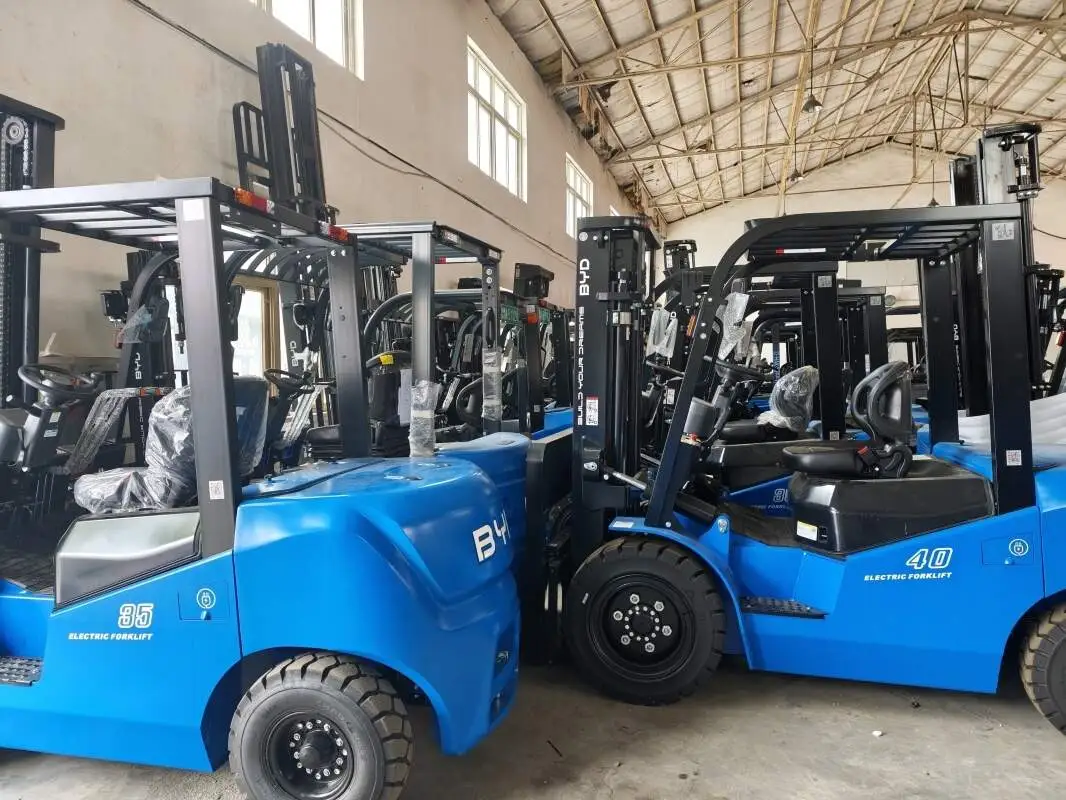
Manual hydraulic forklift trucks, as a cost-effective and flexible material handling tool, play a critical role in various industrial and commercial scenarios due to their simple operation, compact structure, and no need for external power supply.
In warehouse operations, these forklifts excel in narrow-space material handling. Warehouses often feature tight aisles between storage racks, where large powered forklifts struggle to maneuver. Manual hydraulic forklifts, with their small footprint, can easily navigate these confined areas, efficiently moving pallets of goods from storage zones to picking stations or loading docks. They are particularly suitable for light to medium load tasks, such as transferring small batches of inventory, reducing the risk of rack or product damage that might occur with larger equipment. Additionally, their quiet operation ensures they do not disrupt other warehouse activities, making them a preferred choice for indoor environments where noise control is important.
Within manufacturing facilities, manual hydraulic forklifts serve as essential tools for intra-workstation material transport. Production lines require frequent movement of raw materials, semi-finished products, and components between different workstations. Unlike powered forklifts that need charging or fuel refueling, manual models can be used continuously without downtime, as long as operators have basic physical capacity. They are perfect for short-distance, frequent transport tasks, such as delivering parts to assembly lines or moving finished products to packaging areas. Their ability to handle loads up to several tons also makes them suitable for supporting small-scale production batches, aligning with the flexible production needs of many modern factories.
In the retail industry, manual hydraulic forklifts facilitate efficient stock replenishment and in-store logistics. Retail stores, especially those with limited backroom space, rely on these forklifts to unload goods from delivery trucks and transport them to storage areas or directly to sales floors. Their compact size allows them to move through narrow backroom corridors and even around retail displays without causing disruption to customers. For small retail outlets that do not have the budget for powered equipment, manual hydraulic forklifts offer a cost-effective solution, reducing operational expenses while meeting daily material handling demands.
Outdoor small-scale logistics scenarios also benefit from manual hydraulic forklifts. For tasks like loading and unloading small cargo trucks at local distribution points, or moving goods between outdoor storage yards and nearby facilities, these forklifts are highly adaptable. They do not rely on electricity or fuel, making them suitable for areas without power access. Their robust construction can withstand mild outdoor conditions, such as paved ground and light rain, ensuring reliable performance in various outdoor settings.
Overall, manual hydraulic forklift trucks demonstrate strong adaptability across multiple scenarios, providing practical, cost-effective material handling solutions for businesses of all sizes. Their simplicity and versatility make them an indispensable tool in modern logistics and industrial operations, addressing specific handling needs that larger or powered equipment cannot meet.