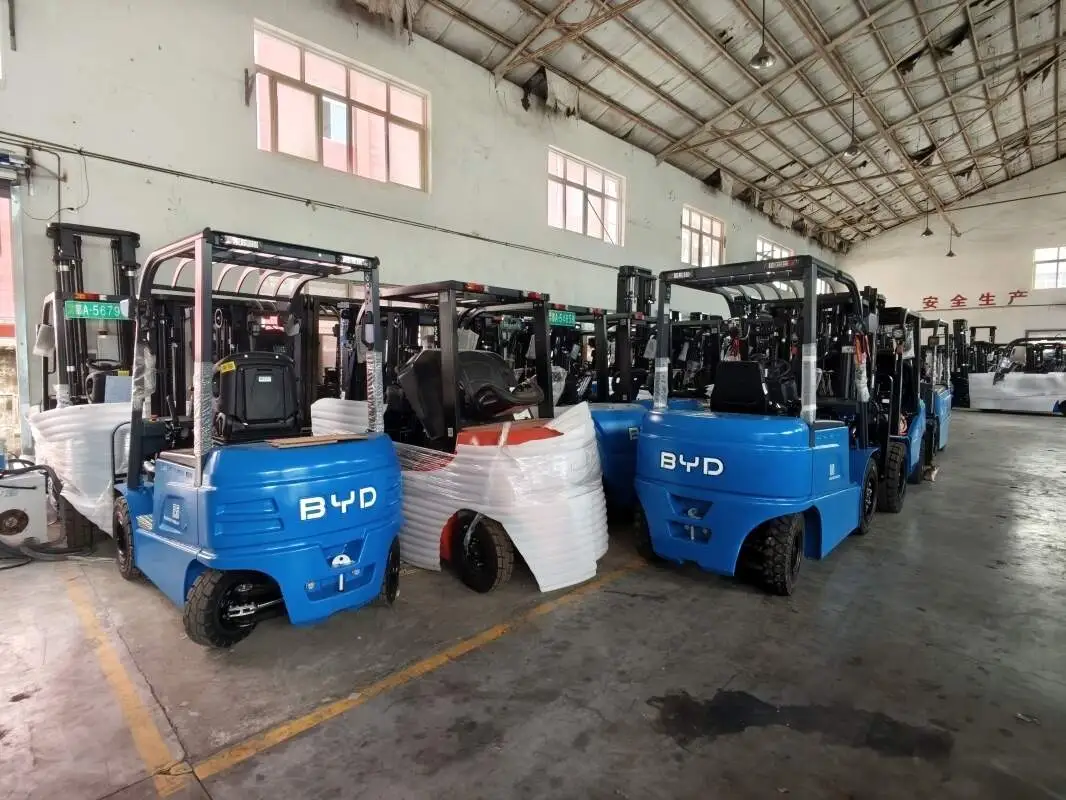
In modern warehouse management, narrow-aisle facilities have become increasingly popular due to their ability to maximize storage capacity within limited floor spaces. However, these environments present unique challenges for material handling equipment, as traditional forklifts often struggle to navigate tight corners and narrow pathways without compromising efficiency or safety. This is where articulated forklifts emerge as a tailored solution, offering a range of operational advantages that address the specific needs of narrow-aisle warehouses.
Unlike standard forklifts with a rigid frame, articulated forklifts feature a jointed design that allows the front section to pivot independently from the rear. This unique articulation mechanism enables the vehicle to make tight turns within confined spaces, a capability that is critical for operating in narrow aisles where every inch of space counts.
One of the primary operational advantages of articulated forklifts is their ability to optimize space utilization. These forklifts can operate in aisles significantly narrower than those required for conventional models, allowing warehouse managers to add more storage racks or increase the density of existing storage areas, directly boosting overall storage capacity without expanding the facility’s footprint. By making the most of available vertical and horizontal space, businesses can store more inventory while maintaining easy access to goods.
Enhanced maneuverability is another key benefit. The articulated joint allows the forklift to turn in tight circles, eliminating the need for wide turning radii that waste valuable space. This agility means operators can navigate around obstacles, such as pallet racks or stacked inventory, with greater ease, reducing the time spent maneuvering and increasing the speed of material handling tasks. In fast-paced warehouse environments, this improved efficiency translates to higher throughput and faster order fulfillment times.
Safety is also a critical operational advantage. The precise steering and tight turning capabilities of articulated forklifts minimize the risk of collisions with racks, walls, or other equipment. This not only protects valuable inventory and warehouse infrastructure from damage but also reduces the likelihood of workplace accidents, creating a safer environment for operators. Additionally, enhanced visibility features in many models further support safe operation in confined spaces.
Articulated forklifts also offer excellent adaptability to diverse storage configurations. They can handle both low-level and high-level storage tasks, with models capable of reaching significant heights to access upper rack levels. This versatility eliminates the need for multiple types of material handling equipment, reducing capital investment and simplifying fleet management. Whether retrieving items from ground-level pallets or storing goods in high-density racking systems, articulated forklifts can adjust to the task at hand with ease.
In conclusion, articulated forklifts provide a range of operational advantages that make them an ideal choice for narrow-aisle warehouses. From maximizing space utilization and enhancing maneuverability to improving safety and adaptability, these vehicles address the core challenges of confined warehouse environments. By integrating articulated forklifts into their material handling operations, businesses can streamline workflows, increase storage capacity, and improve overall operational efficiency, ultimately supporting better inventory management and customer satisfaction.