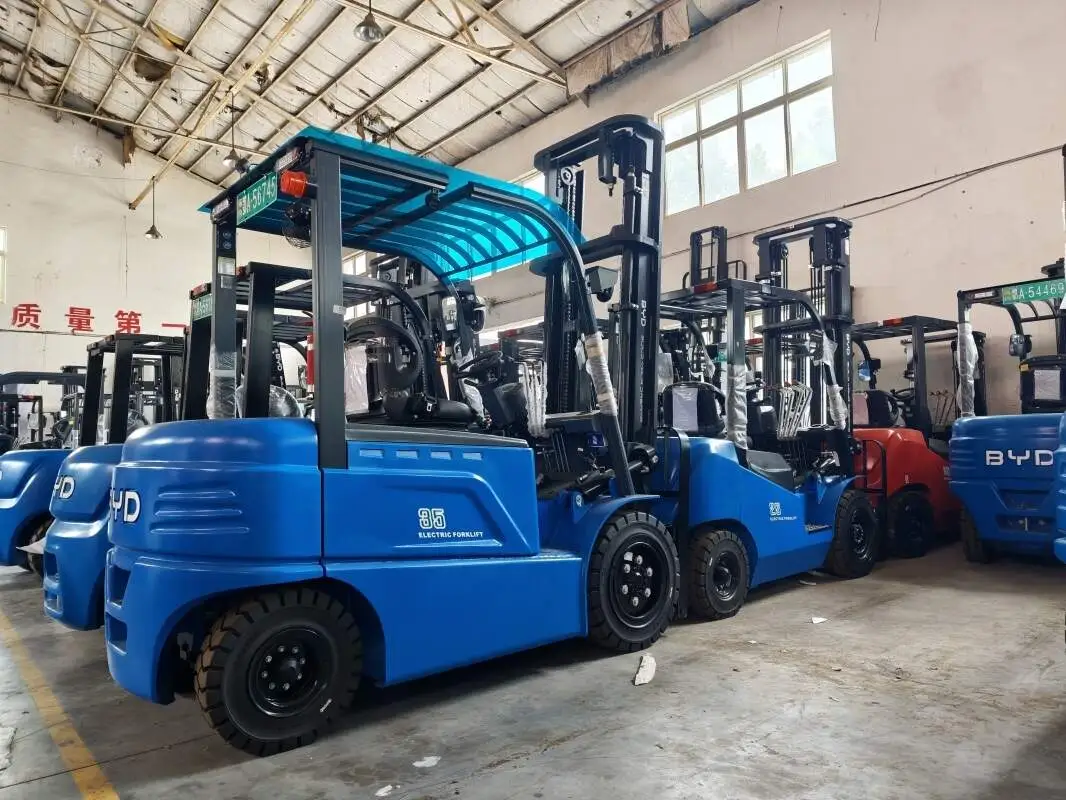
In today’s warehouse industry, the shift toward sustainable, employee-focused operations has positioned electric forklifts as a leading solution for indoor material handling. Unlike internal combustion alternatives, electric models produce no tailpipe emissions, making them perfectly suited for enclosed warehouse environments where air quality and regulatory compliance are critical. Beyond zero-emission performance, electric forklifts offer a range of operational merits that boost efficiency, safety, and long-term cost management.
A primary advantage is their ability to preserve indoor air quality. Combustion forklifts emit harmful pollutants like carbon monoxide, nitrogen oxides, and particulates, which accumulate in enclosed spaces, endangering worker health and violating occupational safety standards. Electric forklifts eliminate these emissions, reducing reliance on expensive ventilation systems and creating a healthier workplace. This not only supports employee well-being but also ensures adherence to strict environmental regulations governing indoor air quality.
Reduced noise pollution is another key operational benefit. Indoor warehouses often have teams working in close quarters, and high engine noise from combustion models can cause fatigue, communication barriers, and long-term hearing damage. Electric forklifts operate at significantly lower decibel levels, fostering a quieter work environment that improves employee comfort and safety. Quieter operations also enable clearer communication between staff, lowering accident risks and streamlining workflow efficiency.
Electric forklifts also deliver long-term cost savings. While upfront costs may be higher, operational expenses are far lower. They have fewer moving parts than combustion engines, cutting down on maintenance needs—no oil changes, filter replacements, or fuel system repairs are required, reducing downtime and service costs. Additionally, electricity is typically cheaper per operating hour than gasoline or diesel, leading to substantial savings over the equipment’s lifespan.
For operational performance, electric forklifts offer smooth, consistent power ideal for indoor tasks. Their precise control over lifting and maneuvering is especially valuable in narrow warehouse aisles, where space is limited. The absence of fuel tanks eliminates spill risks, reducing fire hazards and cleanup costs. Many electric models also include advanced safety features like automatic braking and stability controls, further minimizing workplace accidents.
As warehouses prioritize sustainability, safety, and efficiency, electric forklifts have become a reliable choice for emission-free indoor operations. Their ability to improve air quality, reduce noise, cut long-term costs, and enhance safety makes them a worthwhile investment for any indoor warehouse aiming to optimize material handling processes. Adopting electric forklifts helps businesses meet regulatory requirements while creating a more productive, sustainable work environment for employees.