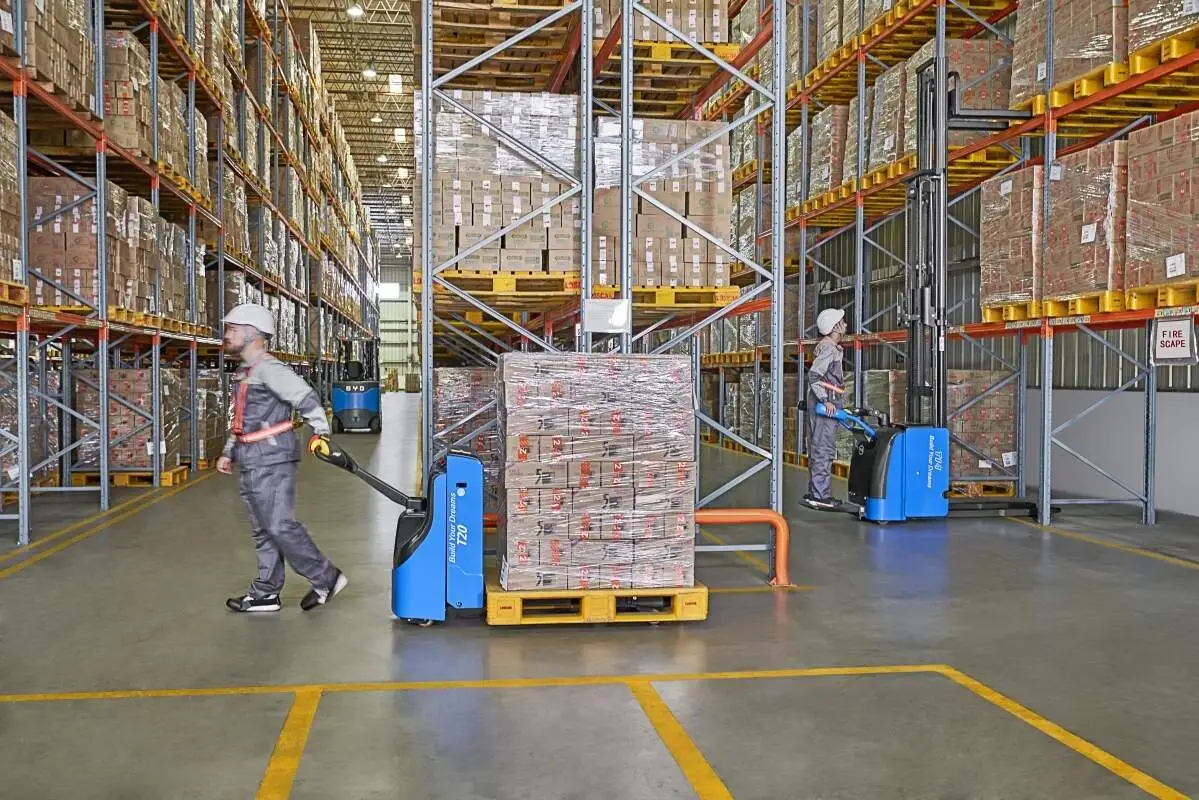
In modern warehouse operations, optimizing material handling processes is key to maintaining efficiency and meeting daily operational demands. forklift attachments play a critical role in extending the functionality of standard forklifts, allowing them to handle a wider range of loads and adapt to diverse storage and handling scenarios. Understanding the most common types of these attachments can help warehouse managers make informed decisions to enhance productivity and safety.
The most fundamental forklift attachment is the pallet fork, a staple in nearly every warehouse. Designed to slide into standard wooden or plastic pallets, these forks provide a stable base for lifting and transporting palletized goods. While basic in design, they are highly versatile, suitable for moving everything from cartons to heavy machinery components. Their durability and simplicity make them essential for routine warehouse tasks, reducing manual labor and streamlining load movement.
Side shifters are another widely used attachment that adds flexibility to forklift operations. This device allows the forklift carriage to move horizontally, enabling operators to align forks with pallets without repositioning the entire vehicle. This is particularly useful in narrow aisles or when working with tightly stacked pallets, as it reduces the risk of damage to goods and warehouse infrastructure. By minimizing the need for repeated maneuvering, side shifters save time and improve overall operational efficiency.
For handling non-palletized loads such as boxes, barrels, or rolls of material, clamp attachments are indispensable. There are various types of clamps, including paper roll clamps, drum clamps, and carton clamps, each tailored to specific load shapes and weights. These attachments use hydraulic pressure to securely grip loads, eliminating the need for pallets or additional securing devices. This not only saves storage space but also reduces the risk of load damage during transport, making them ideal for warehouses handling irregularly shaped items.
Fork positioners are designed to adjust the distance between forklift forks quickly and efficiently, without requiring the operator to exit the vehicle. This feature is especially beneficial when handling pallets of different sizes, as it eliminates the time-consuming task of manually adjusting fork spacing. By allowing operators to adapt to varying load dimensions on the fly, fork positioners enhance workflow continuity and reduce downtime associated with load preparation.
Rotator attachments add a dynamic element to forklift operations, enabling the carriage and forks to rotate up to 360 degrees. This is particularly useful for tasks like dumping bins, inverting loads, or positioning goods at specific angles. Rotators are commonly used in warehouses handling bulk materials or items that require orientation adjustments, such as stacked containers or large rolls. Their ability to manipulate loads in multiple directions expands the forklift’s capabilities beyond basic lifting and transport.
When selecting forklift attachments for warehouse operations, it is important to consider factors such as load type, warehouse layout, and daily operational requirements. Each attachment serves a unique purpose, and combining the right set can significantly enhance productivity, safety, and adaptability. By investing in the appropriate attachments, warehouse managers can ensure their forklift fleet is equipped to handle a wide range of tasks, supporting smooth and efficient daily operations.