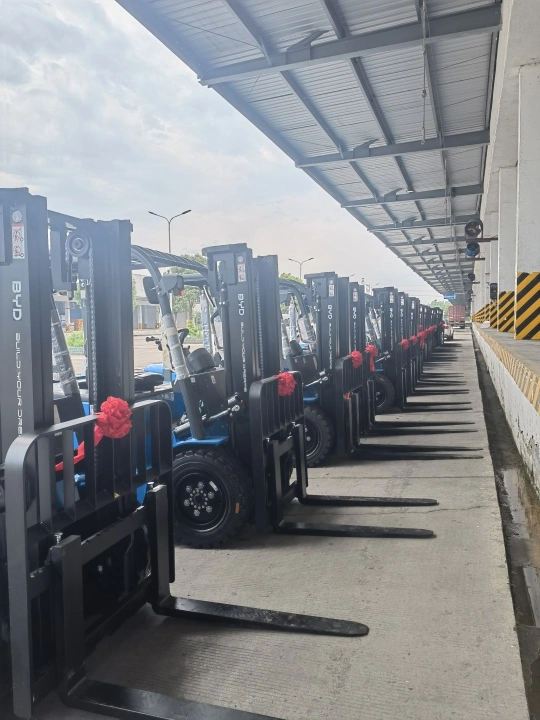
The global forklift industry has witnessed steady growth in recent years, driven by the expansion of e-commerce, industrial logistics, and warehouse automation. Forklift manufacturers worldwide are evolving to meet diverse operational demands, each cultivating distinct core capabilities to stand out in a competitive market.
A significant segment of global forklift manufacturers focuses on electric forklift innovation. These producers prioritize advancing battery technology, aiming to extend operational range, reduce charging times, and minimize environmental impact. Their core capabilities include optimizing energy efficiency for both indoor and outdoor applications, developing compact designs suitable for narrow warehouse aisles, and integrating regenerative braking systems to enhance overall performance and energy conservation. This focus aligns with the growing industry shift toward sustainable material handling solutions as businesses seek to lower their carbon footprints.
Another group of manufacturers specializes in heavy-duty forklift systems, catering to sectors such as port logistics, construction, and heavy manufacturing. Their core strengths lie in engineering robust, high-load-capacity vehicles that can operate reliably in harsh, demanding environments. These makers invest in durable, corrosion-resistant materials and reinforced structural designs to ensure long-term functionality, while also incorporating advanced safety features like real-time load monitoring and stability control systems to protect operators, cargo, and equipment.
In response to the rise of smart logistics and warehouse automation, many global forklift manufacturers have developed expertise in automation and IoT integration. Their core capabilities include creating forklifts equipped with sensors, cameras, and telematics systems that enable real-time fleet tracking, predictive maintenance alerts, and seamless integration with warehouse management systems. Some offer customizable automated guided vehicle solutions, allowing businesses to streamline material flow, reduce manual labor costs, and improve overall operational efficiency.
Beyond product development, leading manufacturers distinguish themselves through comprehensive customer-centric service capabilities. This includes end-to-end support from initial consultation and custom design tailored to specific operational needs, to after-sales maintenance, timely spare parts supply, and operator training programs. By prioritizing these services, manufacturers help businesses maximize forklift uptime, minimize operational disruptions, and ensure optimal performance across their material handling operations.
As the global demand for efficient and sustainable material handling equipment continues to evolve, forklift manufacturers are expected to further refine their core capabilities, focusing on advancements in battery technology, AI-driven automation, and personalized service solutions to meet the changing needs of businesses across diverse industries.