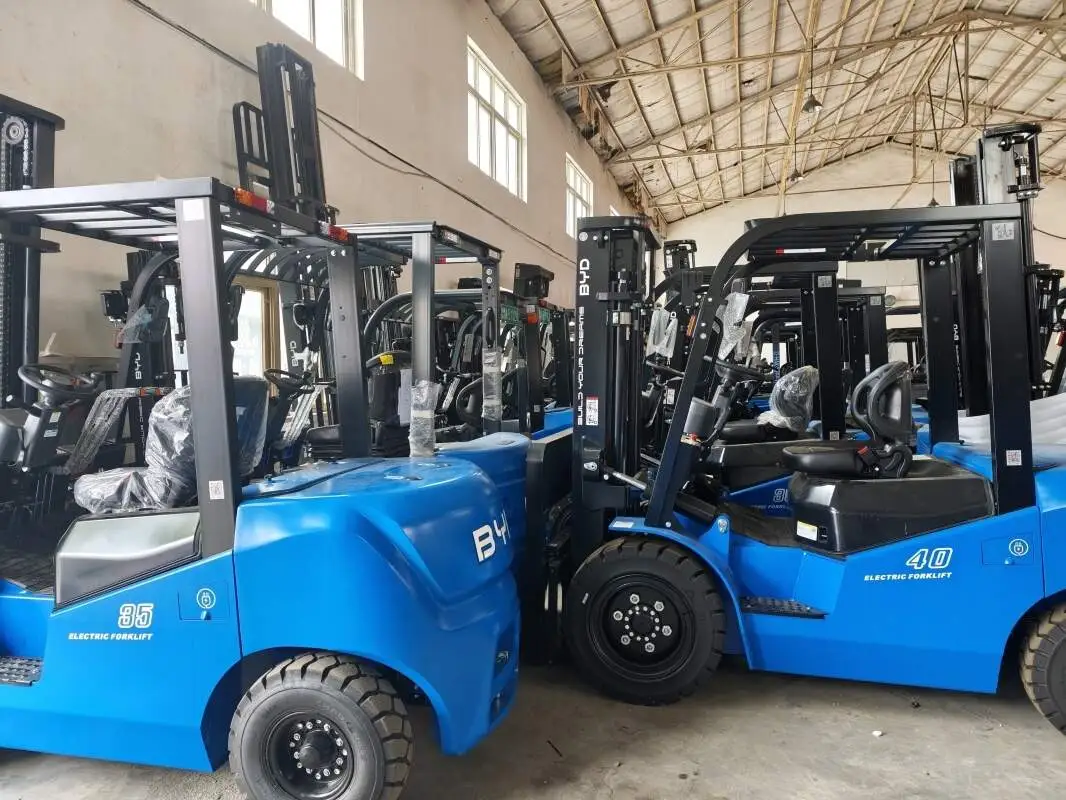
Pre-Startup Preparation & PPE Compliance
Before initiating any electric forklift startup, operators must ensure they are in proper physical condition—free from fatigue, impaired judgment, or any health issues that could affect performance. Mandatory personal protective equipment (PPE) includes steel-toe boots, high-visibility vests, and, where required, safety glasses. Operators should also survey the immediate area to clear obstacles, ensure no personnel are in the forklift’s path, and confirm the startup zone has sufficient space for maneuvering.
2. Walkaround Pre-Start Inspection
A thorough walkaround is critical to identifying potential hazards before starting the forklift. Begin by inspecting the electric forklift’s tires for adequate pressure, excessive wear, or damage such as cuts or bulges. Check the fork tines for cracks, bends, or signs of excessive wear that could compromise load stability. Examine the battery compartment to ensure connections are tight and free from corrosion, and verify there are no leaks in hydraulic lines or fluid reservoirs. Don’t overlook external safety features: test the functionality of headlights, taillights, and warning horns by activating them briefly during the walkaround.
3. Cabin & System Pre-Startup Checks
Once the walkaround is complete, enter the forklift cabin and adjust the seat to ensure proper visibility and access to all controls. Adjust side and rear mirrors for optimal coverage of the surrounding area. If the forklift is equipped with a seatbelt, fasten it securely before proceeding. Next, inspect the dashboard: check the battery charge indicator to ensure sufficient power for the planned operation, and scan for any warning lights or error codes that indicate system malfunctions. Test the brake pedal for responsiveness—press it firmly to confirm it engages smoothly and holds the forklift in place. Also, test the steering mechanism to ensure it turns freely without stiffness or unusual noises.
4. Controlled Startup & Initial Maneuver
With all pre-checks complete, initiate the startup sequence. For key-operated forklifts, insert the key and turn it to the “on” position; for keyless models, activate the start button as instructed. Allow the forklift’s systems to initialize for a few seconds, monitoring the dashboard for any new warning alerts. Once the system confirms readiness, slowly engage the accelerator to move the forklift a short distance (1-2 meters) in a clear area. During this initial maneuver, test the brakes again to ensure they stop the forklift promptly, and verify the steering responds accurately to input. This step helps confirm that all critical systems function as intended before beginning full operations.
5. Post-Startup Verification & Reporting
After the initial maneuver, pause to conduct a final check of all systems. Ensure the battery charge remains stable, hydraulic controls operate smoothly, and all safety features (horn, lights) are fully functional. If any irregularities are detected—such as unusual noises, warning lights, or unresponsive controls—immediately shut down the forklift, tag it as out of service, and report the issue to a qualified maintenance technician. Never attempt to operate a forklift with known malfunctions, as this increases the risk of accidents, injury, or equipment damage.
Regular adherence to these safe startup procedures is essential for maintaining workplace safety, extending equipment lifespan, and ensuring compliance with industry safety standards. Operators should receive ongoing training to reinforce these steps and stay updated on any changes to equipment or safety protocols.