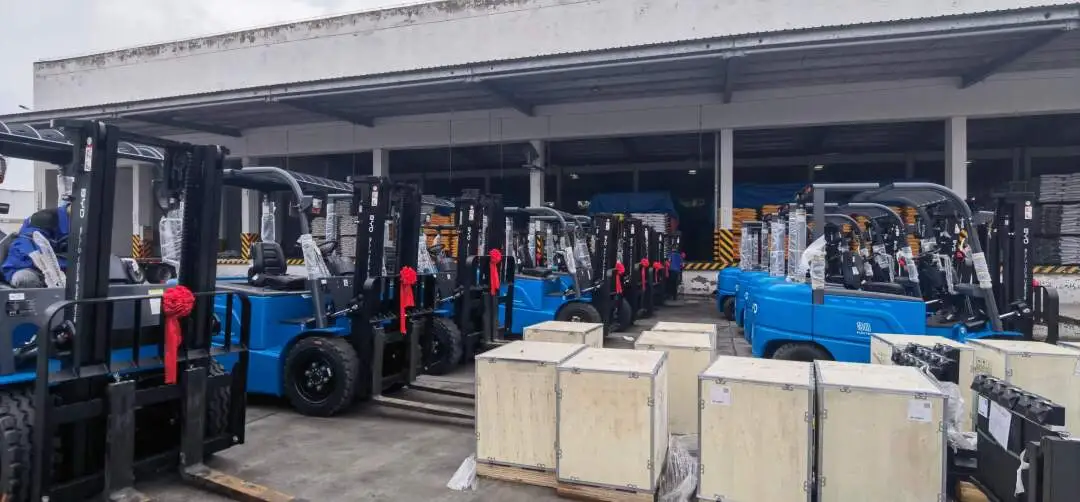
Sideloader forklifts are indispensable for handling long, bulky loads like timber, steel beams, and pipes that traditional forklifts struggle to manage. When procuring one, understanding the core price-driving factors is key to balancing operational needs with cost efficiency.
Load capacity is the most direct factor influencing upfront pricing. Sideloaders engineered to handle heavier loads—ranging from 5 tons to 20 tons or more—require reinforced chassis, robust lifting mechanisms, and high-power drivetrains, all of which push costs higher. Smaller-capacity models, designed for light-duty indoor tasks in small warehouses or workshops, are more budget-friendly but lack the strength for heavy industrial applications.
Power type also shapes procurement costs. Electric sideloaders have a higher initial price due to advanced battery systems and zero-emission technology, making them ideal for enclosed spaces. Diesel variants are cheaper upfront but carry higher long-term fuel and maintenance expenses, suited for heavy outdoor operations. Liquefied petroleum gas (LPG) sideloaders fall in between, offering flexible indoor-outdoor use at a moderate initial cost.
Build quality and materials play a critical role in both upfront and long-term pricing. Units constructed with high-grade steel for the chassis, lifting arms, and body components cost more upfront but boast longer lifespans and better resistance to wear in harsh industrial environments. Cheaper models using lighter materials may save money initially but often require frequent repairs, increasing total ownership costs over time.
Long-term maintenance expenses should not be overlooked when evaluating price. Sideloaders with specialized components or complex systems tend to have higher service costs, as replacement parts may be rare and repairs more labor-intensive. In contrast, models with standardized, easily accessible parts offer lower ongoing maintenance fees, reducing the overall cost of ownership.
Additional features and customization can also add to the price tag. Optional upgrades like extended lift heights, collision avoidance sensors, or specialized attachments for unique load types enhance operational efficiency but increase procurement costs. Buyers should prioritize features that directly align with their daily operations, avoiding unnecessary customizations that do not deliver tangible value.
In summary, procuring a sideloader forklift requires looking beyond the initial price. By considering load capacity, power type, build quality, maintenance costs, and essential features, businesses can select a unit that delivers the best long-term value, supporting smooth and cost-effective material handling operations for years.