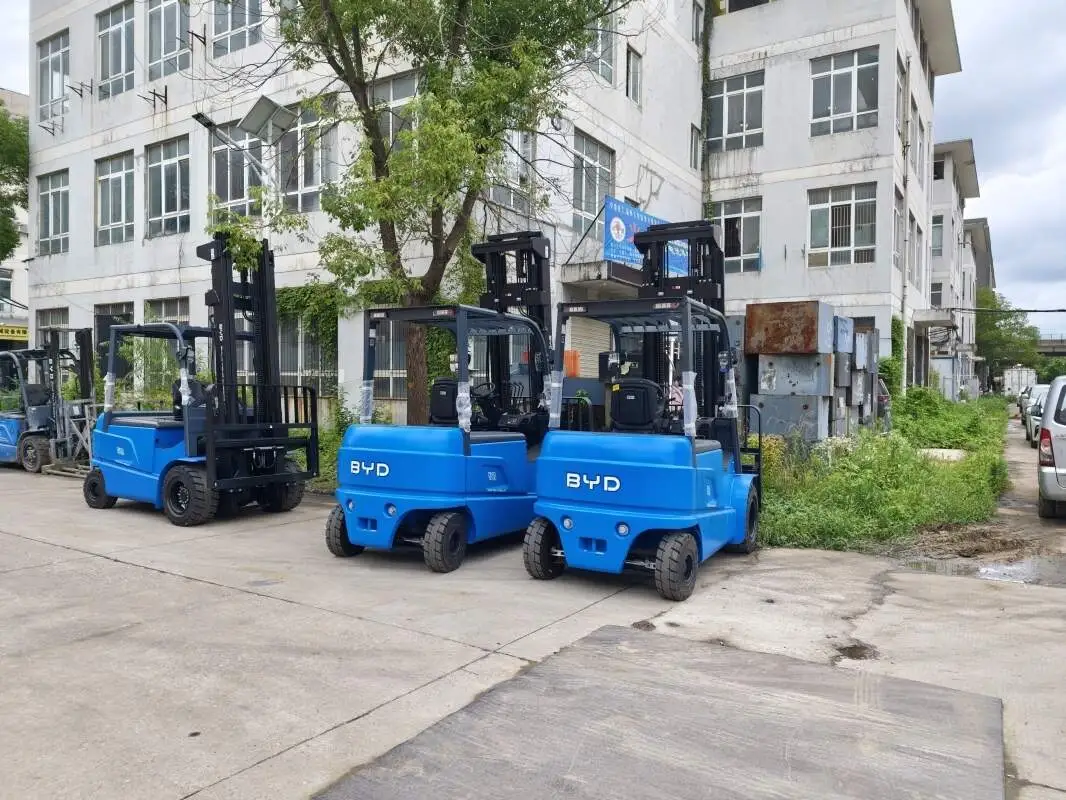
Telehandler forklifts, a versatile piece of industrial equipment, play a critical role in construction sites, warehouses, and agricultural operations where lifting and reaching across varied terrain is essential. While manufacturer specifications provide baseline figures for lifting height and reach, real-world performance often deviates due to a range of operational factors. Understanding these variables is key to maximizing the telehandler’s utility and ensuring safe, efficient operations.
When evaluating real-world lifting height, load weight is one of the most significant factors. A telehandler rated for a maximum lifting height with a light load will see a reduction in achievable height when carrying heavier loads, as the machine’s stability system activates to prevent tipping. Additionally, uneven or soft terrain can further limit lifting height, as the telehandler must adjust its stance to maintain balance. Even the type of attachment used, such as a bucket versus a fork carriage, can impact the effective lifting height by adding extra weight and changing the machine’s center of gravity.
Reach performance, too, is subject to real-world constraints. The maximum horizontal reach specified by manufacturers assumes optimal conditions—level ground, minimal load, and a fully extended telescopic boom at the ideal angle. In practice, carrying a heavy load will shorten the safe horizontal reach, as extending the boom further would compromise stability. Operator skill also plays a role here; experienced operators can adjust the boom angle and extension incrementally to maintain load balance, maximizing reach without risking a tip-over. Environmental factors like wind can also affect reach, especially when lifting lightweight, bulky loads that are susceptible to wind drift.
Field tests consistently show that telehandler performance varies significantly between controlled factory settings and real job sites. For example, on a sloped construction site, a telehandler may only achieve 80% of its rated maximum lifting height when carrying a full load, compared to 95% on level ground. Similarly, when working in a warehouse with low overhead clearance, operators must balance reach and height to navigate safely, often operating below the machine’s full theoretical capacity. Regular maintenance also influences performance—worn hydraulic components can slow boom extension and reduce lifting precision, affecting both height and reach over time.
To optimize real-world lifting height and reach, operators should conduct pre-operation checks to ensure the machine is in good working order and adjust load weights based on the task at hand. Using load charts specific to the terrain and attachment being used can help determine safe operational limits. Additionally, training programs that focus on real-world scenarios can equip operators with the skills to adapt to varying conditions, maximizing the telehandler’s capabilities while maintaining safety standards.
In conclusion, while telehandler forklifts offer impressive lifting and reach capabilities on paper, their real-world performance depends on a combination of load, terrain, attachments, operator skill, and maintenance. By understanding these factors, businesses can make more informed decisions about equipment use, improve operational efficiency, and ensure a safer working environment for all personnel.