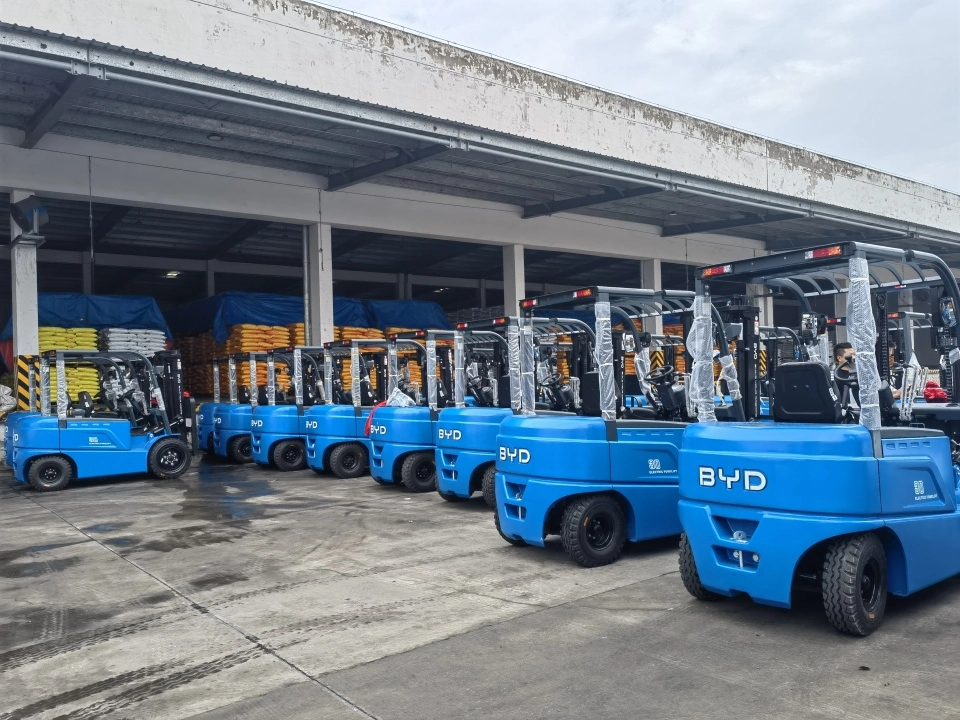
Steering is a fundamental aspect of forklift operation that directly impacts safety, efficiency, and load stability. Different types of forklifts are designed for specific work environments, each requiring tailored steering techniques to navigate effectively without compromising safety. Below is a breakdown of essential steering skills for common forklift types, focusing on practical, compliant practices to support smooth daily operations.
Counterbalance Forklifts: These are the most widely used forklifts in warehouses and loading docks. Their steering system relies on a rear-wheel mechanism, which means the rear wheels turn to guide the front of the lift. When operating counterbalance forklifts, maintain a steady speed when turning, especially with a loaded pallet. Avoid sharp turns at high speeds, as this can cause the load to shift or the forklift to tip. Always check your surrounding area—use side mirrors and turn your head to scan blind spots before initiating a turn. For tight spaces, make gradual turns and adjust your position to ensure the load and forklift body clear obstacles.
Narrow Aisle Forklifts: Designed for compact warehouse layouts with narrow passageways, these forklifts often feature articulated steering or three-wheel systems that allow for tight maneuverability. When steering in narrow aisles, move at walking speed to maintain control. Use the forklift’s precise steering mechanism to make small, controlled adjustments rather than large turns. Keep the load close to the mast to reduce the risk of hitting aisle racks. Before entering an aisle, confirm the width is sufficient for your forklift and load. If reversing, use a spotter if available, or rely on rearview mirrors and frequent checks of your surroundings.
Rough Terrain Forklifts: Built for outdoor environments like construction sites or lumber yards, these forklifts have large, rugged tires and a robust steering system to handle uneven ground. When steering on rough terrain, reduce speed to adapt to the surface conditions. Avoid sudden turns on loose gravel or muddy areas, as this can lead to skidding. Keep the load low to the ground to improve stability while turning. If navigating inclines, steer gently and maintain a consistent speed to prevent the forklift from tipping backward or forward. Always be aware of hidden obstacles like holes or uneven patches that could affect steering control.
Reach Forklifts: Used for high-level storage in warehouses, reach forklifts have an extending mast and a compact design. Their steering system is optimized for tight spaces, but operators must be mindful of the extended reach when turning. When steering with the mast extended, move slowly and avoid sharp turns, as the extended load can create extra leverage that affects stability. Keep the mast retracted when moving between aisles to reduce the risk of collisions. When turning in open areas, ensure there is enough space for the forklift’s full turning radius, including the extended mast and load.
Regardless of the forklift type, consistent training and adherence to safety guidelines are critical. Regularly inspect the steering system for any signs of wear or damage before operation. Always prioritize safety over speed, and adjust your steering technique based on the environment and load conditions. By mastering these tailored steering skills, operators can enhance productivity, reduce the risk of accidents, and ensure compliance with workplace safety standards.