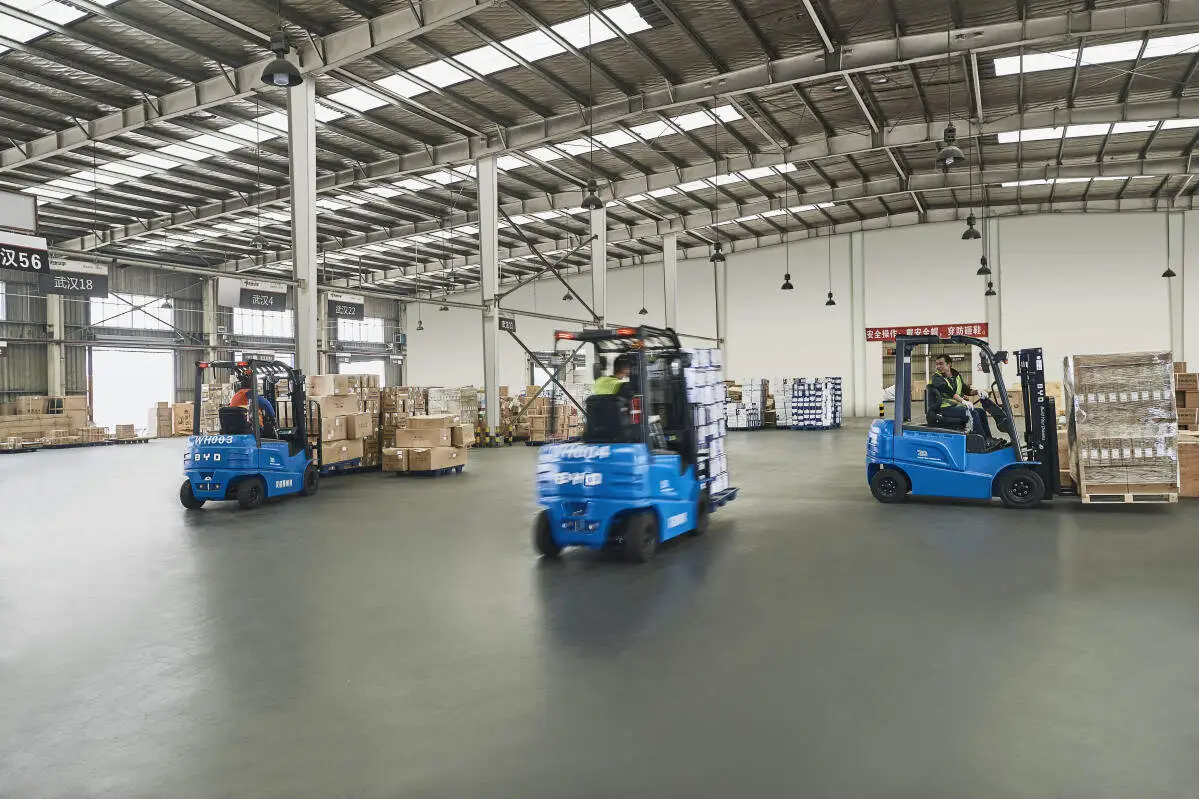
7000 pound rated capacity forklifts are versatile heavy-duty material handling tools that serve a range of industrial and commercial applications, where lifting and transporting heavy loads efficiently and safely is a core requirement. Understanding the suitable working scenarios for these forklifts helps businesses choose the right equipment to optimize their daily operations.
In large-scale warehouse storage operations, these forklifts shine when managing heavy palletized goods, bulk inventory, or oversized containers. Many warehouses handle items like packaged industrial equipment, stacked building supplies, or high-volume consumer goods shipments that exceed the load limits of lighter forklift models. The 7000 pound rating allows operators to move full pallets of heavy materials in a single trip, cutting down on the number of trips needed and boosting overall workflow efficiency. Additionally, most models feature maneuverable frames that can navigate narrow aisles common in modern high-density warehouses, ensuring easy access to storage racks without compromising on load capacity.
Construction job sites are another ideal environment for 7000 pound rated capacity forklifts. These sites require robust solutions to handle heavy building materials such as steel beams, concrete blocks, prefabricated structural components, and bundles of rebar. Unlike lighter forklifts that may struggle with uneven terrain or heavy payloads, these heavy-duty models typically come with durable tires and reinforced chassis to maintain stability during operation. They also play a critical role in loading and unloading delivery trucks, ensuring construction materials are moved from storage areas to active work zones quickly and securely.
Within manufacturing facilities, these forklifts support seamless daily operations by moving raw materials, semi-finished components, and finished products between production lines, storage areas, and shipping docks. For instance, in automotive manufacturing, they can handle heavy engine parts, metal stamping components, or assembled sub-assemblies that demand reliable lifting power. Their ability to manage heavy loads helps minimize bottlenecks in the production process, as materials can be delivered to workstations promptly. Furthermore, many models are compatible with specialized attachments like fork positioners or clamps, enabling flexible handling of different material types beyond standard pallets.
Lumber and timber yards also benefit greatly from 7000 pound rated capacity forklifts. These facilities deal with heavy, long-length materials such as logs, lumber bundles, and wooden structural beams. The forklifts’ 7000 pound load capacity allows them to lift and transport these heavy items without straining their systems. Their wide, stable base helps balance long, awkwardly shaped materials, reducing the risk of load shifts during transport. Operators can efficiently move lumber from outdoor storage areas to processing equipment or loading docks, supporting the smooth flow of operations in these high-volume facilities.
Across all these scenarios, 7000 pound rated capacity forklifts offer a balanced combination of power, maneuverability, and durability that meets the demands of heavy-duty material handling. When selecting a forklift for a specific application, it’s essential to consider factors like terrain type, load dimensions, and workspace layout to ensure optimal performance and operator safety.