Telehandler forklifts, also known as telescopic handlers, are highly versatile heavy-duty machines that combine the lifting capacity of a standard forklift with the extended reach of a crane. Their adjustable telescopic booms enable access to hard-to-reach areas, making them indispensable across a diverse range of industries. Below are some of the most common application scenarios where these machines deliver tangible operational value.
In the construction industry, telehandler forklifts play a pivotal role in daily site operations. They are used to lift and transport heavy building materials such as steel beams, concrete blocks, and roofing panels to elevated work zones, reducing the need for multiple specialized pieces of equipment. Fitted with attachments like bucket forks or work platforms, they also support tasks like debris removal, tree trimming, and at-height maintenance. Their maneuverability in tight construction zones makes them ideal for both small residential builds and large commercial developments.
Within the agricultural sector, telehandler forklifts address diverse needs throughout the farming cycle. During planting season, they help transport and unload large bags of seeds, fertilizers, and irrigation equipment. At harvest time, they lift and stack hay bales, crates of produce, and grain sacks into storage facilities or onto transport trucks. They also assist in maintaining farm infrastructure, such as repairing fences or lifting heavy machinery parts for upkeep. Their ability to navigate uneven terrain makes them reliable for small family farms and large agricultural operations alike.
In warehousing and logistics centers, telehandler forklifts optimize storage and retrieval processes. Unlike standard forklifts, their extended boom reach allows access to high-rise storage racks, efficiently stacking pallets of goods at heights traditional equipment cannot reach. This maximizes vertical storage space, enabling facilities to accommodate more inventory without expanding their physical footprint. They also streamline loading and unloading for trucks and containers, reducing turnaround times and improving overall logistics efficiency, while their compact design suits narrow warehouse aisles.
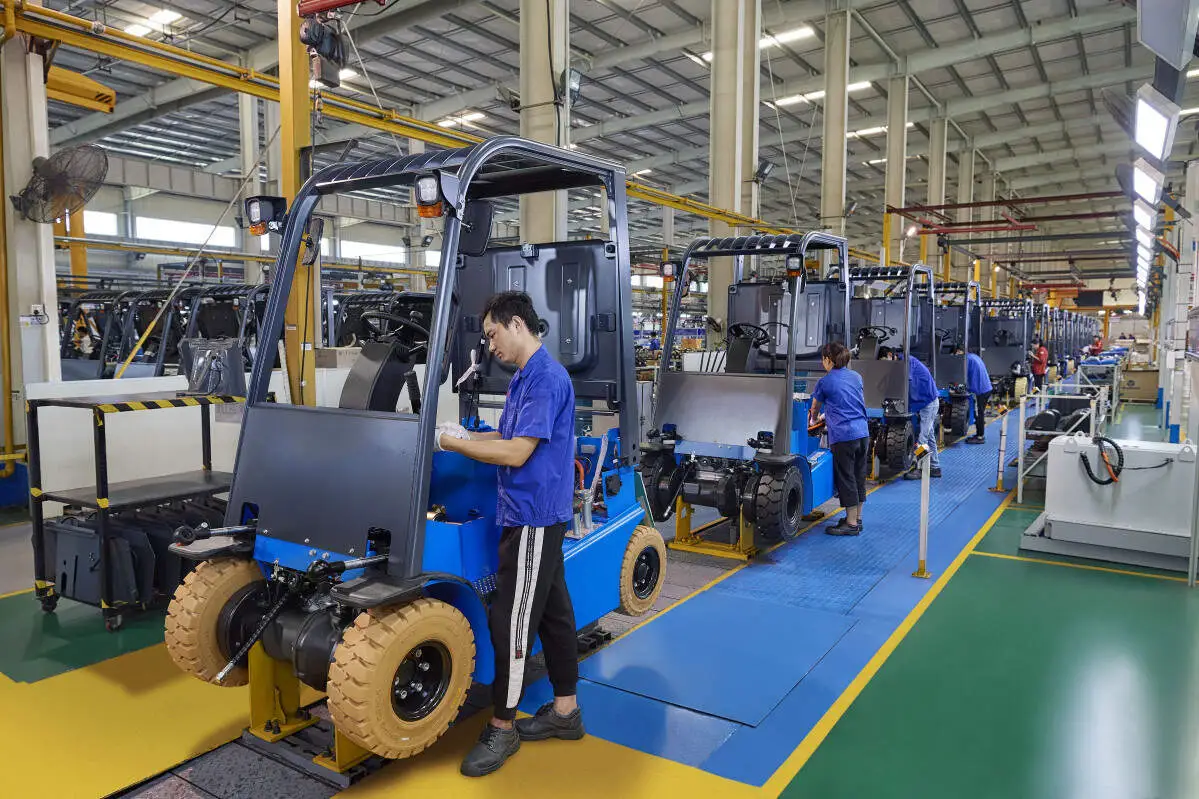
Manufacturing facilities rely on telehandler forklifts to support production lines and inventory management. They move raw materials from storage to production stations, ensuring a steady supply of components for manufacturing processes. They also transport finished products to packaging zones or loading docks for distribution. Equipped with clamp forks, they can handle irregularly shaped items like metal pipes or large machinery parts. Their flexibility and lifting capacity are essential for maintaining smooth operations in busy manufacturing environments.
For landscaping and outdoor maintenance projects, telehandler forklifts offer practical solutions for lifting and positioning heavy elements. They transport and place large trees, boulders, and landscaping materials such as mulch and gravel. During winter, fitted with snow blades or blowers, they clear driveways, parking lots, and outdoor spaces. Their ability to operate on soft or uneven ground makes them ideal for residential landscaping, public park maintenance, and golf course upkeep.
Across all these industries, telehandler forklifts stand out for their adaptability, efficiency, and ability to perform multiple tasks with minimal equipment changes. By leveraging the right attachments and their telescopic reach, businesses can enhance productivity, reduce labor costs, and improve workplace safety, making them a valuable investment for diverse material handling needs.