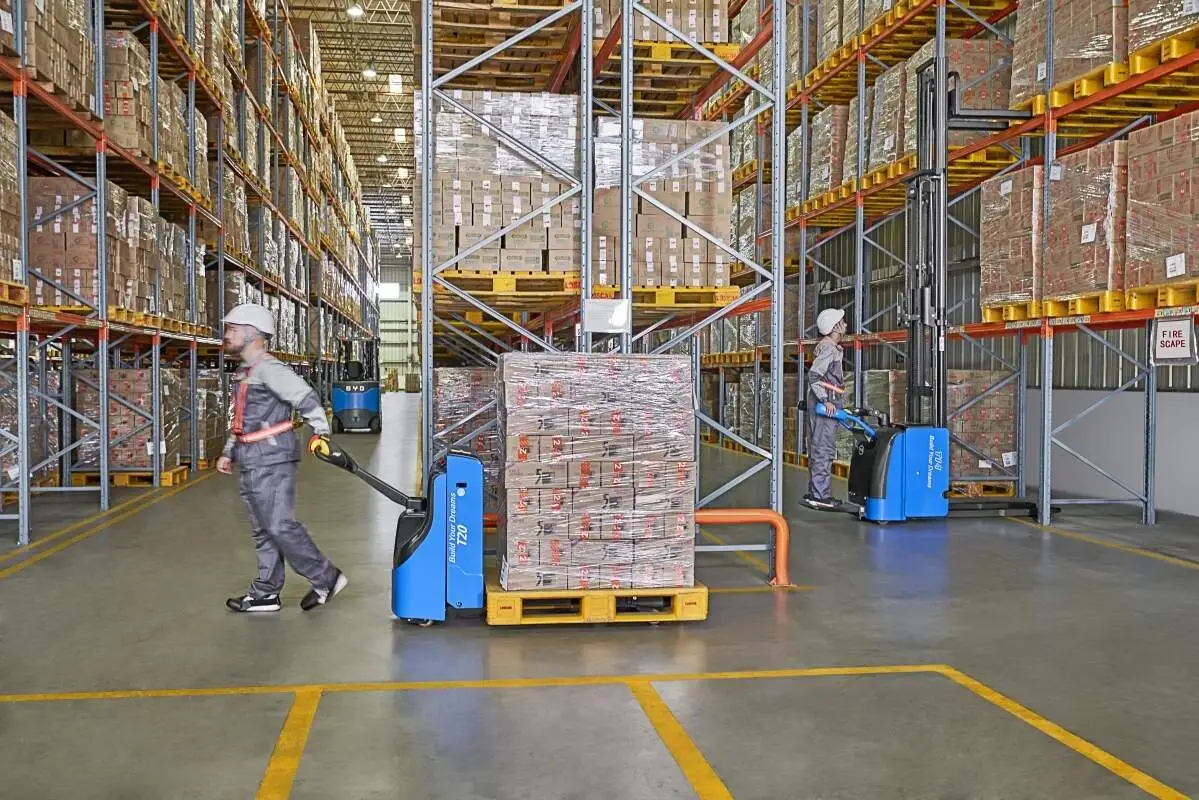
Effective warehouse layout is foundational to smooth material handling operations, with forklift traffic arrangement playing a critical role in both efficiency and safety. One of the most overlooked yet essential aspects of this planning is determining the standard aisle width tailored to forklift operations. Getting this measurement right can reduce collisions, minimize maneuvering time, and boost overall productivity.
Several key factors influence the standard aisle width calculation for forklifts. First, the type of forklift is paramount. Counterbalance forklifts, the most common in general warehouses, require wider aisles due to their need to turn while carrying loads, whereas narrow-aisle forklifts are engineered to operate in tighter spaces. The forklift’s physical dimensions, including its turning radius and overall length, must be carefully accounted for. Additionally, the size of the loads being transported—such as pallet dimensions and load height—affect required clearance. Loads that extend beyond the forklift’s footprint need extra space to avoid hitting racking or stationary obstacles.
To calculate the standard aisle width, start by measuring the forklift’s turning radius. For counterbalance forklifts, the minimum aisle width is typically 1.5 times the turning radius, plus an additional clearance of 12 to 18 inches to accommodate safe maneuvering. For example, if a forklift has an 8-foot turning radius, the minimum aisle width would be 12 feet plus 1.5 feet, totaling 13.5 feet. Narrow-aisle forklifts may require as little as 6 to 8 feet, depending on their design and the average load size. It’s important to note that these are baseline values; for high-traffic areas where multiple forklifts operate simultaneously, increasing the width by 2 to 3 feet can reduce congestion and lower collision risks.
Safety is non-negotiable when finalizing aisle widths. Adequate clearance ensures forklift operators have enough space to react to unexpected situations, such as a shifting pallet or another vehicle entering the aisle. Visibility is another critical factor; wider aisles can improve sightlines between operators, reducing the chance of accidental impacts. Additionally, clearly marking aisles with painted lines or safety barriers helps operators stay within designated traffic zones, further enhancing workplace safety.
Beyond basic calculations, optimizing forklift traffic arrangement can amplify warehouse efficiency. Implementing one-way traffic systems in narrow aisles eliminates head-on collisions and streamlines flow. Regularly reviewing aisle widths as operational needs evolve—such as adopting new forklift models or handling larger loads—ensures the layout remains aligned with current requirements. Training operators on proper aisle navigation and load handling also contributes to a safer, more efficient warehouse environment, ensuring that calculated aisle widths are utilized effectively.