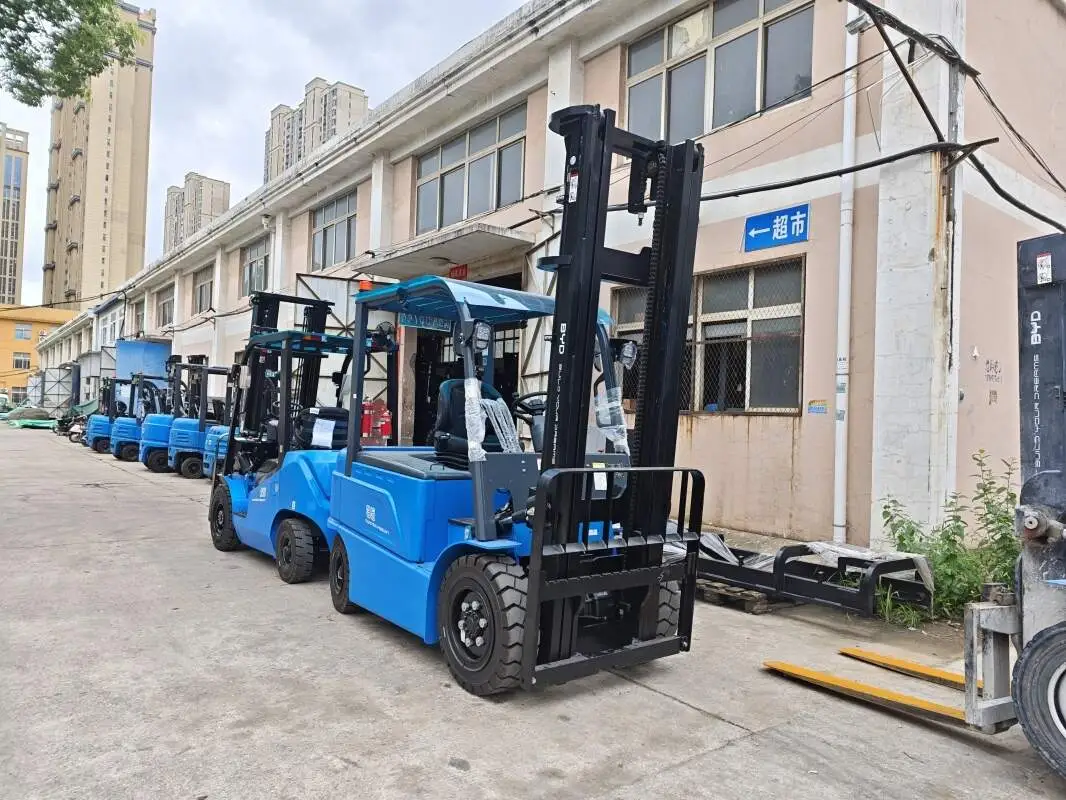
Modern industrial forklifts rely heavily on hydraulic systems to perform their core material handling tasks, from lifting heavy loads to adjusting fork angles and enabling smooth steering. At the heart of these systems lies a fundamental physical principle that ensures consistent power transmission: Pascal’s Law. This law states that pressure applied to an enclosed fluid is transmitted equally in all directions, creating a mechanical advantage that allows forklifts to move heavy objects with minimal operator effort.
The hydraulic system in a forklift consists of several interconnected components working in tandem. First, the hydraulic pump converts mechanical energy from the forklift’s engine into hydraulic energy. When the operator activates a control, the pump draws hydraulic fluid from a reservoir, pressurizes it, and sends it through a network of hoses and tubes. This pressurized fluid acts as the force carrier throughout the system.
Next, hydraulic cylinders play a critical role in translating hydraulic energy back into mechanical motion. For lifting operations, a main lift cylinder receives pressurized fluid, which pushes a piston upward. This piston is connected to the forklift’s mast assembly, raising the forks and the load above the ground. Similarly, tilt cylinders are used to adjust the angle of the forks, allowing operators to safely balance loads and navigate uneven surfaces or unload materials at different heights.
Control valves are another essential component, regulating the flow direction and pressure of the hydraulic fluid. These valves respond to operator inputs, such as the lift lever or tilt control, directing fluid to the appropriate cylinder and adjusting the speed of movement. For example, a directional control valve switches the flow of fluid to either extend or retract a cylinder, while pressure relief valves prevent over-pressurization, protecting the system from damage.
The hydraulic reservoir stores the fluid, providing a constant supply for the pump and helping to dissipate heat generated during operation. Filters within the system remove contaminants from the fluid, ensuring that components like pumps and cylinders remain free from debris that could cause wear or malfunctions. Regular maintenance of these components, including checking fluid levels and replacing filters, is key to keeping the hydraulic system operating efficiently.
In daily operations, the hydraulic system’s efficiency becomes evident when handling heavy loads. Unlike mechanical systems, hydraulic setups deliver consistent force across all operations, making them ideal for the varying demands of industrial warehouses and construction sites. Whether lifting pallets stacked with goods, tilting forks to secure a load during transport, or using hydraulic steering for tight maneuvering, the system ensures smooth and controlled movement, reducing the risk of accidents and improving overall productivity.
As industrial operations evolve, hydraulic systems in forklifts continue to be refined, with advancements in fluid technology and component design enhancing their durability and energy efficiency. By understanding the working principle and key components of these systems, operators and maintenance teams can ensure that forklifts remain reliable assets in material handling operations.