


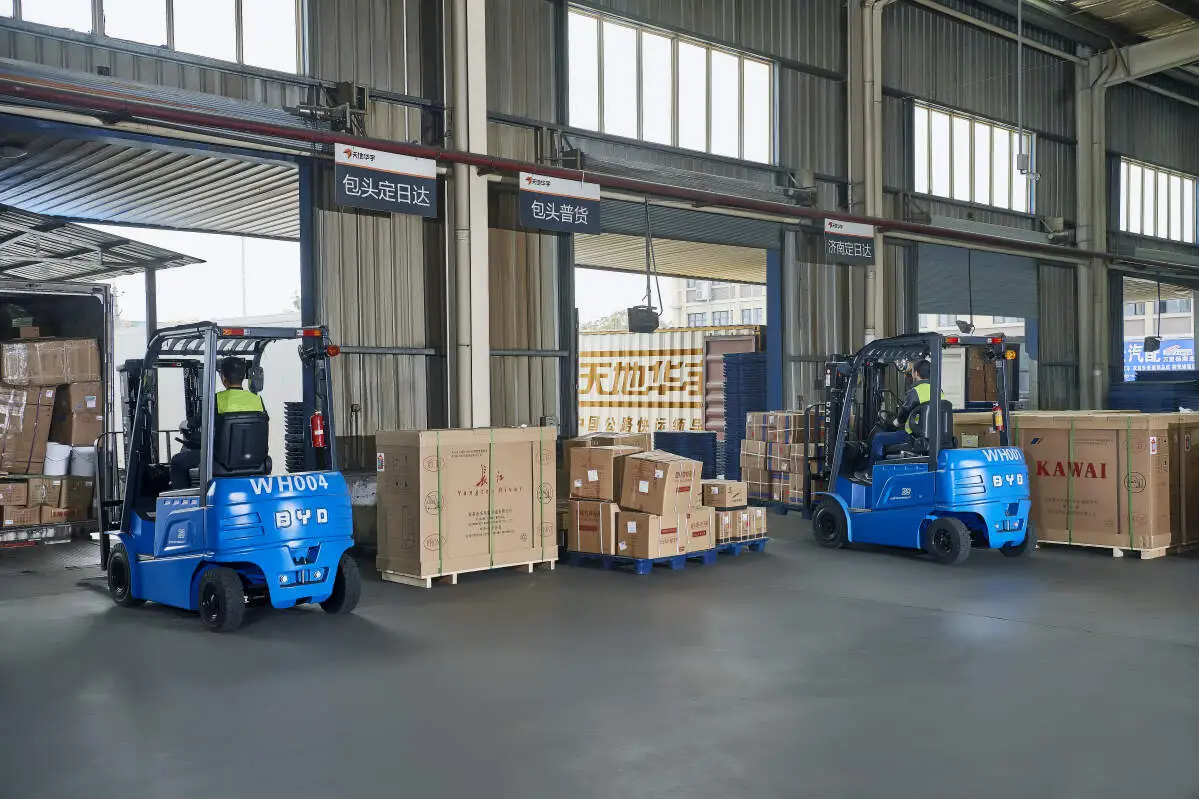
The efficient and stable operation of the electric forklift relies on the coordinated operation of the entire lithium iron phosphate power system. This system is composed of lithium iron phosphate batteries, battery management systems (BMS), special chargers and supporting wiring harness accessories. Each component performs key functions and is indispensable.
As the energy storage core of the system, the lithium iron phosphate battery is suitable for the working conditions of frequent start-stop and heavy-load operations of electric forklifts. It has the characteristics of long cycle life and good thermal stability. It can stabilize the output power in multi-scene operations such as warehouses and logistics parks, and at the same time maintain good discharge performance in low temperature environments to meet the needs of operations in different regions. It has more advantages in safety and can reduce potential safety hazards in operations.
BMS is the "intelligent housekeeper" of lithium iron phosphate batteries, responsible for real-time monitoring of various state parameters of the battery pack, including battery voltage, operating temperature, charge and discharge current, etc. Through accurate data collection and analysis, BMS can achieve voltage balance between cells, avoid overcharging and over-discharging of some cells, and effectively prolong the overall service life of the battery. At the same time, when the battery has an abnormal state, BMS will issue an early warning signal in time to ensure power safety during operation, and adapt to the dynamic adjustment needs of forklifts under complex working conditions.
The dedicated charger is a key link in the energy supply of the electric forklift, and it needs to be accurately matched with the characteristics of the lithium iron phosphate battery. It has a segmented charging mode of constant current and constant voltage, and can adjust the charging parameters according to the battery status fed back by the BMS to ensure charging efficiency while avoiding damage to the battery. For different operation scenarios, the charger can also provide charging options of different powers, which can be quickly replenished in emergency operations, and can be used to maintain battery performance in slow charging mode when idling daily.
The wiring harness accessories are the "nerve veins" that connect the core components, and bear the function of power transmission and signal interaction. Since the forklift operating environment is mostly bumpy and dusty, the wiring harness needs to have the characteristics of wear resistance, tensile resistance and corrosion resistance to ensure that there will be no problems such as line damage and signal interruption during long-term use. High-quality wiring harnesses can ensure the stable communication between the BMS and the battery and charger, so that the whole system is always in an efficient and coordinated operation state.
The components of the entire lithium iron phosphate power system cooperate with each other to support the power output and operation safety of the electric forklift. Understanding the functional characteristics and collaborative logic of each component helps the operator to carry out daily maintenance and troubleshooting, thereby improving the efficiency and service life of the forklift.

