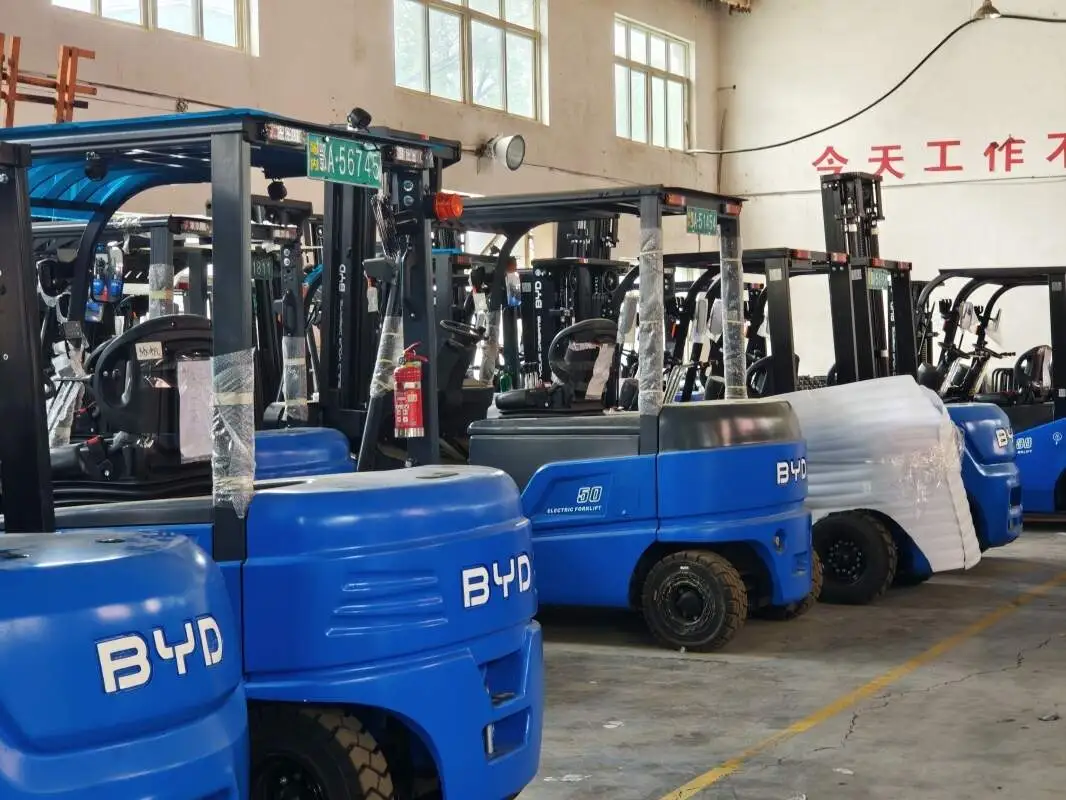
In modern material handling operations, bales of various types—including cotton, hay, paper, and textile bales—are common cargo that demand precise and efficient handling. electric forklifts equipped with bale clamps have become essential tools for this task, offering enhanced maneuverability and load control compared to traditional forklift attachments. As a professional in electric forklift solutions, Jianshu New Energy, an exclusive distributor of BYD electric forklifts, provides this comprehensive handling guidance to help operators master the safe and efficient management of multiple bale types.
Before initiating any bale handling task, thorough pre-operation checks are critical to ensure safety and efficiency. First, inspect the electric forklift’s overall condition: confirm the battery charge is sufficient, brakes are responsive, and all control systems are functioning properly. Next, examine the bale clamp: check for any signs of wear, damage, or loose components on the clamp arms and hydraulic system. Additionally, assess the specific characteristics of the bales to be handled—such as their weight, size, and material rigidity. Soft bales like hay require different clamping pressure than dense paper bales, so understanding these details helps avoid cargo damage or clamp failure.
Different bale types call for tailored clamping techniques to secure loads effectively without causing damage. For soft, lightweight bales like hay or cotton: adjust the clamp arms to a wider opening to accommodate the bale’s bulk, then apply gradual, moderate hydraulic pressure until the bale is held firmly but not compressed excessively. This prevents the bale from losing shape or tearing. For dense, heavy bales such as paper or compressed textile bales: align the clamp arms precisely with the bale’s edges to distribute clamping force evenly. Use a slightly higher pressure to ensure the bale remains stable during lifting and transport. When handling irregularly shaped bales, take extra time to position the clamp arms symmetrically to maintain balance and avoid shifting during movement.
Safety should be the top priority throughout the handling process. Operators must maintain clear visibility at all times—adjust mirrors and ensure the path ahead is free of obstacles. Drive at a controlled speed, especially when turning or navigating narrow spaces, to prevent load sway or tipping. When lifting bales, keep them at a low height during transport, only raising them to the necessary level when stacking or unloading. Avoid sudden acceleration or deceleration, as this can cause the bale to shift or fall. Additionally, never exceed the electric forklift’s rated load capacity, as overloading can lead to instability and equipment damage.
Proper post-operation maintenance extends the lifespan of both the electric forklift and the bale clamp. After completing tasks, clean the clamp arms to remove any debris, hay, or residue that could accumulate and affect performance. Inspect the hydraulic hoses and connections for leaks or damage, and report any issues to maintenance personnel promptly. Store the bale clamp in a dry, covered area to prevent rust and corrosion. Regular maintenance checks, as recommended by the equipment manufacturer, ensure the clamp remains in optimal working condition for future tasks.
Mastering the handling of multiple bale types with a bale clamp on electric forklifts requires a combination of proper preparation, tailored techniques, and consistent safety practices. Jianshu New Energy, as an exclusive distributor of BYD electric forklifts, is committed to providing professional guidance and support to help operators enhance their material handling efficiency and safety. For more information or technical assistance, please contact us at 17399989919@163.com.