


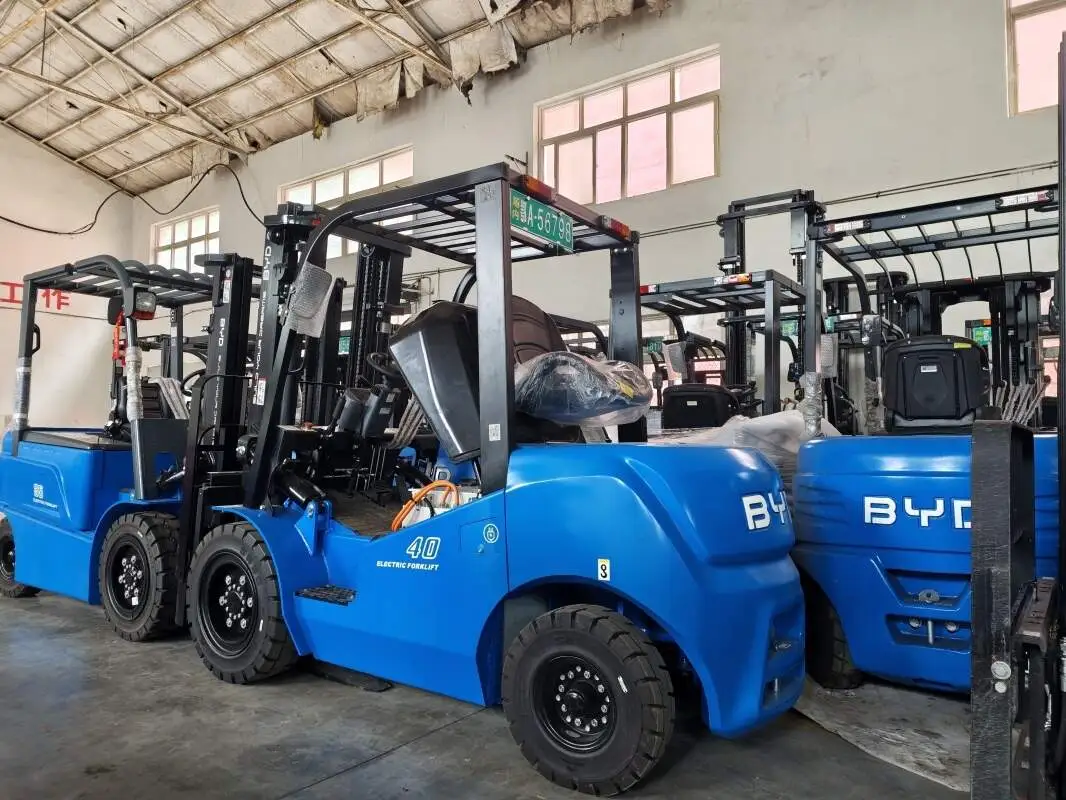
In modern material handling operations, selecting the right forklift can significantly impact efficiency, safety, and operational costs. Two popular electric options are reach trucks and counterbalance forklifts, each designed to excel in specific scenarios. Understanding their unique strengths and limitations is key to making an informed decision that aligns with your business needs.
Electric Reach Trucks: Precision for Narrow Spaces and High Storage
Electric reach trucks are engineered to maximize vertical storage space in warehouses with narrow aisles. Their defining feature is an extendable mast that can reach deep into high racks, making them ideal for facilities utilizing tall shelving systems to optimize floor space. Typically, they handle load capacities ranging from 1 to 2.5 tons, which suits most light to medium-duty storage and retrieval tasks.
One of the primary advantages of electric reach trucks is their maneuverability. With a compact design and tight turning radius, they navigate narrow aisles easily, reducing the need for wide open spaces between racks. This makes them a top choice for dense storage environments where every square foot counts. Powered by electric batteries, they produce zero emissions, making them safe for indoor use without compromising air quality. Additionally, their electric drivetrains result in lower noise levels compared to traditional fuel-powered equipment, creating a more comfortable work environment for operators.
However, electric reach trucks do have limitations. They perform best on smooth, flat surfaces, as uneven floors can affect stability and maneuverability. Their vertical reach is a strength, but their horizontal lift capacity decreases as the mast extends higher, so they are not ideal for heavy loads at maximum height. Maintenance requirements include regular battery checks and charging system upkeep, though overall maintenance costs are generally lower than fuel-powered alternatives.
Counterbalance Forklifts: Versatility for Heavy Loads and Open Spaces
Counterbalance forklifts are the workhorses of many material handling operations, known for their versatility in both indoor and outdoor settings. Unlike reach trucks, they use a counterweight at the rear to offset the weight of the load being lifted, eliminating the need for extendable masts or additional support structures. This design allows them to handle heavier loads, with electric models typically ranging from 1 to 10 tons, making them suitable for heavy-duty tasks like loading and unloading trucks, moving bulky pallets, and stacking materials in open areas.
The main benefit of counterbalance forklifts is their flexibility. They operate effectively on a variety of surfaces, including paved outdoor areas, as long as the ground is stable. Their ability to lift heavy loads to moderate heights makes them a go-to choice for general-purpose material handling where space is not a constraint. Electric counterbalance models offer the same emission-free advantage as reach trucks, making them safe for indoor use, while their robust construction withstands the rigors of outdoor operations.
On the downside, counterbalance forklifts require more space to operate. Their larger turning radius means they need wider aisles compared to reach trucks, which can reduce storage density in warehouses. They also consume more energy when handling heavy loads, leading to potentially higher charging costs or more frequent battery swaps. While electric models have lower maintenance needs than fuel-powered ones, their larger components may require more intensive servicing over time.
Key Factors to Guide Your Selection
To choose between electric reach trucks and counterbalance forklifts, consider the following critical factors:
1. Workspace Layout: If your warehouse has narrow aisles and tall storage racks, an electric reach truck is the optimal choice. For open floors, outdoor loading docks, or facilities with wide aisles, a counterbalance forklift will offer better flexibility.
2. Load Requirements: Evaluate the typical weight and height of loads you handle. For light to medium loads (under 2.5 tons) that need to be stored at high heights, reach trucks are ideal. For heavy loads over 2.5 tons or tasks involving ground-level moving and loading, counterbalance forklifts are more suitable.
3. Operating Environment: Indoor-only operations with smooth floors benefit from the precision and low emissions of reach trucks. If your operations include outdoor tasks or uneven surfaces, electric counterbalance forklifts provide the stability and durability needed.
4. Operational Costs: While both electric models have lower fuel costs than fuel-powered alternatives, reach trucks generally have lower energy consumption for light loads. Counterbalance forklifts may have higher charging costs due to their heavier load capacities, but their versatility can reduce the need for multiple types of equipment.
5. Storage Goals: If maximizing vertical storage density is a priority, reach trucks allow you to utilize higher racks without expanding your warehouse footprint. Counterbalance forklifts are better suited for facilities where floor space is abundant, and storage height is not the primary concern.
Conclusion
Choosing between electric reach trucks and counterbalance forklifts depends on balancing your operational needs, workspace constraints, and load requirements. Electric reach trucks excel in narrow, high-storage environments, offering precision and space efficiency. Counterbalance forklifts provide versatility for heavy loads and open spaces, making them ideal for multi-purpose operations. By carefully evaluating each factor, you can select the forklift that enhances productivity, reduces costs, and supports long-term operational success.

