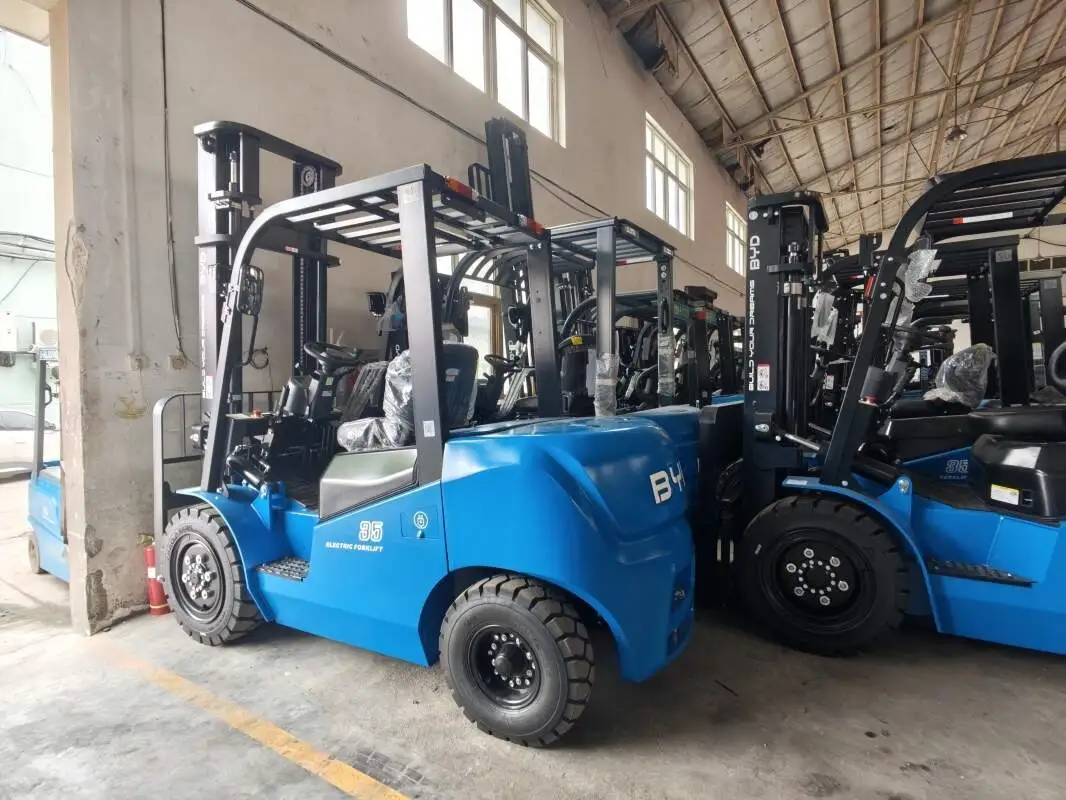
When operating a second-hand forklift, ensuring replacement forks are accurately matched is critical for operational safety and efficiency. Ill-fitting forks can cause load instability, accelerate wear on the mast and carriage, and create safety risks for operators and bystanders. A comprehensive second-hand forklift fork sizes chart serves as an essential tool to navigate replacement part selection, eliminating guesswork and reducing costly mistakes.
Before using a sizes chart, it’s important to understand the key dimensions that define forklift forks. Primary measurements include overall fork length, which dictates load support and maneuverability. Blade width affects how well forks fit into pallet openings, while blade thickness directly impacts load-bearing capacity. Shank dimensions—including height, width, and thickness of the section attaching to the carriage—are non-negotiable for a secure fit; even minor discrepancies can prevent proper locking, leading to dangerous slippage during use.
A reliable sizes chart organizes these dimensions in a clear, accessible format. To use it effectively, start by taking precise measurements of your existing forks. Use a tape measure or caliper to record all key values, focusing on correct reference points: measure overall length from the blade tip to the shank base, and shank height from the top of the shank to the bottom of the carriage-engaging hook. For blade width, measure at the thickest point near the shank, as tip wear can reduce width over time. For shank width and thickness, measure across the flat section sliding into carriage channels to ensure a snug fit without excessive play.
Second-hand forklifts may have modified or worn forks, making accurate measurement even more vital. Over time, forks can bend, warp, or develop wear spots that alter original dimensions, so rely on current measurements rather than the forklift’s original specifications. Older models may also have non-standard sizes no longer in production, but a sizes chart can help identify alternative forks that meet the same dimensional requirements, even for different models.
Common mistakes to avoid include focusing solely on overall length while ignoring other dimensions. A fork with the correct length but a thinner blade may not support the original load capacity, leading to potential failure. Another error is assuming all forks in the same capacity class are interchangeable; capacity is a general guideline, but dimensions vary between models, so cross-referencing with the chart is essential.
In conclusion, a second-hand forklift fork sizes chart is an invaluable resource for accurate replacement part matching. By understanding key dimensions, taking precise measurements, and cross-referencing with the chart, you can ensure replacement forks fit securely, support intended loads, and maintain the forklift’s safety and efficiency. Taking the time to match forks correctly prevents costly repairs and downtime, while protecting operators and load integrity.