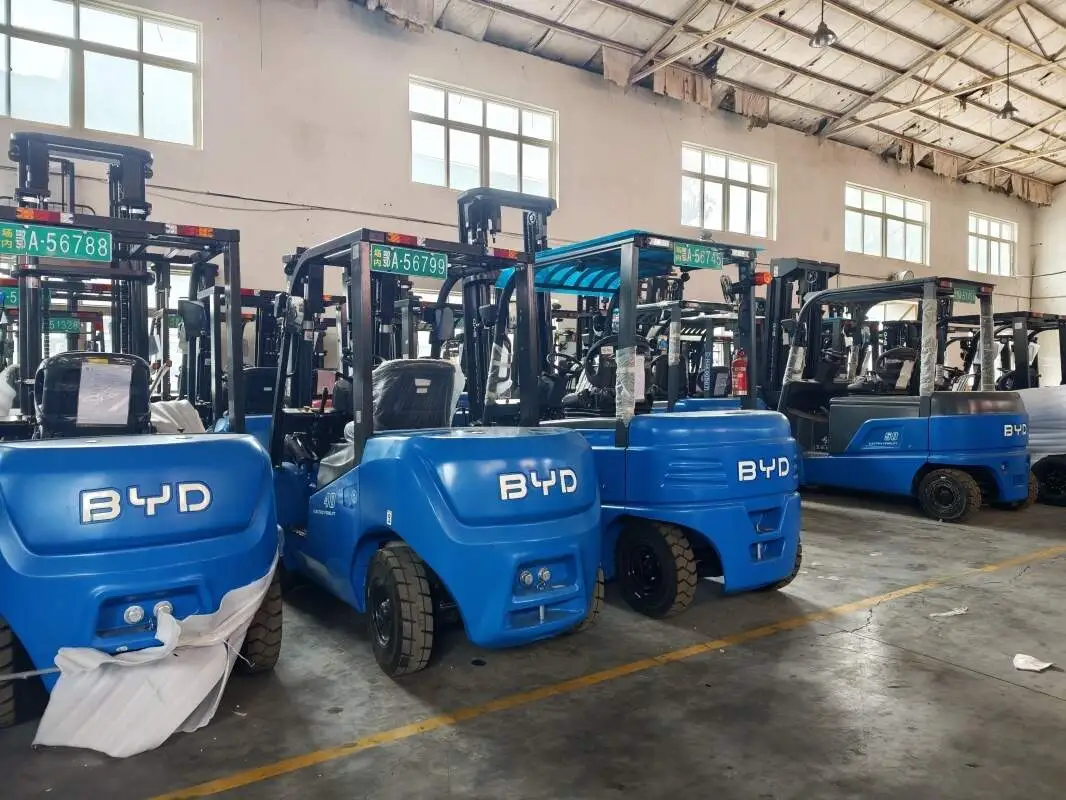
Vergleich und Erklärung der Struktur des Lithiumbatteriesystems von S14JW und S20JW Staplern

2026-07-02

Vergleich und Erklärung der Struktur des Lithiumbatteriesystems von S14JW und S20JW Staplern(Figur1)

In industriellen Lager- und Logistikszenarien wirkt sich das Lithiumbatteriesystem eines Staplers direkt auf die Batterielebensdauer, die Betriebsstabilität und die Anpassungsfähigkeit der Ausrüstung aus. Obwohl die Lithiumbatteriesysteme der S14JW- und S20JW-Stapler zum gleichen Anwendungstyp gehören, gibt es spezifische Unterschiede im strukturellen Design. Im Folgenden werden sie anhand mehrerer Dimensionen verglichen und erläutert.

Zellen- und Modulkonfiguration

Bei den Lithium-Batteriesystemen der beiden Stapler liegt der Schwerpunkt auf der Auswahl der Batteriezellen und der Konfiguration der Module. Das S14JW-Lithium-Batteriesystem verfügt über eine kompakte Batteriezellenanordnung, und das Gesamtvolumen des Moduls ist klein. Die Kapazität der einzelnen Module passt sich den Anforderungen der Geräte an kleine und mittlere Lasten an. Die Module werden mit leichten Steckern kombiniert, um den Anforderungen an die strukturelle Festigkeit und Gewichtsreduzierung Rechnung zu tragen. Das S20JW-Lithium-Batteriesystem verwendet Batterien mit höherer Kapazität, mit weniger Modulen, aber stärkerer Energiespeicherung mit einem Modul. Es eignet sich für Szenarien mit hoher Last im Dauerbetrieb. Die Verpackungsstruktur des Moduls achtet mehr auf Stoßfestigkeit und reagiert auf Störungen in komplexen Speicherumgebungen.

Architektur des Batteriemanagementsystems

Die Designrichtung der Struktur des Batteriemanagementsystems der beiden ist unterschiedlich. Das Batteriemanagementsystem von S14JW verwendet eine integrierte Architektur, die Datenerfassungs-, Gleichgewichtssteuerungs- und Schutzmodule in einer Steuereinheit integriert. Das Schaltungslayout ist einfach und nimmt wenig Platz ein. Es eignet sich für die kompakte Installationsumgebung im Inneren des Geräts. Es kann den Gesamtbetriebsstatus während der täglichen Wartung schnell erkennen. Das Batteriemanagementsystem von S20JW verwendet eine verteilte Architektur. Die Datenerfassungsmodule sind in der Nähe jedes Moduls verstreut. Die Hauptsteuereinheit verarbeitet Informationen zentral. Dieses Design kann die Betriebsparameter jedes Moduls genauer überwachen, sich an die feinen Managementanforderungen von Lithium-Batteriesystemen mit großer Kapazität anpassen und die Ausgabestrategie zeitnaher anpassen, wenn die Last schwankt.

Schutzsystem zur Wärmeableitung

Der Unterschied in der Wärmeableitungsstruktur ist der Schlüssel zur Anpassung der beiden Lithiumbatteriesysteme an unterschiedliche Betriebsintensitäten. Das S14JW-Lithiumbatteriesystem verwendet eine auf passiver Wärmeableitung basierende Struktur. Die Wärmeableitungsrippen des Modulgehäuses arbeiten mit dem natürlichen Belüftungskanal im Inneren des Geräts zusammen, um den Wärmeableitungsbedarf bei kleinen und mittleren Lasten zu decken. Die Struktur ist einfach und die Wartungskosten sind niedrig. Das S20JW-Lithiumbatteriesystem ist mit aktiven Wärmeableitungskomponenten ausgestattet. Zwischen den Modulen sind kleine Wärmeableitungslüfter angebracht, und das wärmeleitende Silikonpad wird verwendet, um die Wärmeleitfähigkeit zu verbessern. Gleichzeitig hat die Schutzhülle eine bessere Staub- und Wasserdichtigkeit, die den stabilen Betrieb des Lithiumbatteriesystems unter hoher Last und rauen Lagerumgebungen gewährleisten kann.

Layout der Installationsanpassung

Das Installationslayout der beiden Lithiumbatteriesysteme passt sich dem strukturellen Design der verschiedenen Modelle an. Das S14JW-Lithiumbatteriesystem verfügt über eine modulare Schubladeninstallationsstruktur, die am Ende des Geräts weniger Platz einnimmt, was für einen schnellen Modulwechsel praktisch ist. Es eignet sich für Betriebsszenarien, die eine häufige Terminplanung und einen schnellen Nachschub erfordern. Das S20JW-Lithiumbatteriesystem verfügt über ein festes Gesamtinstallationslayout, das sich eng an die Rahmenstruktur anpasst, um die Gesamtstabilität zu verbessern und sich an den Schwerpunkt von Großlaststaplern anzupassen. Nach der Installation ist der Gesamtbetrieb des Geräts reibungsloser.

Der Vergleich der oben genannten Abmessungen zeigt, dass die Struktur des Lithiumbatteriesystems der Stapler S14JW und S20JW auf ihren jeweiligen Betriebsszenarien basiert. Die Benutzer können das geeignete Staplermodell und das Lithiumbatteriesystem entsprechend der Lastintensität, der Betriebsfrequenz und den Umgebungsbedingungen ihrer eigenen Lagerhaltung auswählen.

We use cookie to improve your online experience. By continuing to browse this website, you agree to our use of cookie.

Cookies

Please read our Terms and Conditions and this Policy before accessing or using our Services. If you cannot agree with this Policy or the Terms and Conditions, please do not access or use our Services. If you are located in a jurisdiction outside the European Economic Area, by using our Services, you accept the Terms and Conditions and accept our privacy practices described in this Policy.
We may modify this Policy at any time, without prior notice, and changes may apply to any Personal Information we already hold about you, as well as any new Personal Information collected after the Policy is modified. If we make changes, we will notify you by revising the date at the top of this Policy. We will provide you with advanced notice if we make any material changes to how we collect, use or disclose your Personal Information that impact your rights under this Policy. If you are located in a jurisdiction other than the European Economic Area, the United Kingdom or Switzerland (collectively “European Countries”), your continued access or use of our Services after receiving the notice of changes, constitutes your acknowledgement that you accept the updated Policy. In addition, we may provide you with real time disclosures or additional information about the Personal Information handling practices of specific parts of our Services. Such notices may supplement this Policy or provide you with additional choices about how we process your Personal Information.


Cookies

Cookies are small text files stored on your device when you access most Websites on the internet or open certain emails. Among other things, Cookies allow a Website to recognize your device and remember if you've been to the Website before. Examples of information collected by Cookies include your browser type and the address of the Website from which you arrived at our Website as well as IP address and clickstream behavior (that is the pages you view and the links you click).We use the term cookie to refer to Cookies and technologies that perform a similar function to Cookies (e.g., tags, pixels, web beacons, etc.). Cookies can be read by the originating Website on each subsequent visit and by any other Website that recognizes the cookie. The Website uses Cookies in order to make the Website easier to use, to support a better user experience, including the provision of information and functionality to you, as well as to provide us with information about how the Website is used so that we can make sure it is as up to date, relevant, and error free as we can. Cookies on the Website We use Cookies to personalize your experience when you visit the Site, uniquely identify your computer for security purposes, and enable us and our third-party service providers to serve ads on our behalf across the internet.

We classify Cookies in the following categories:
 ●  Strictly Necessary Cookies
 ●  Performance Cookies
 ●  Functional Cookies
 ●  Targeting Cookies


Cookie List
A cookie is a small piece of data (text file) that a website – when visited by a user – asks your browser to store on your device in order to remember information about you, such as your language preference or login information. Those cookies are set by us and called first-party cookies. We also use third-party cookies – which are cookies from a domain different than the domain of the website you are visiting – for our advertising and marketing efforts. More specifically, we use cookies and other tracking technologies for the following purposes:

Strictly Necessary Cookies
These cookies are necessary for the website to function and cannot be switched off in our systems. They are usually only set in response to actions made by you which amount to a request for services, such as setting your privacy preferences, logging in or filling in forms. You can set your browser to block or alert you about these cookies, but some parts of the site will not then work. These cookies do not store any personally identifiable information.

Functional Cookies
These cookies enable the website to provide enhanced functionality and personalisation. They may be set by us or by third party providers whose services we have added to our pages. If you do not allow these cookies then some or all of these services may not function properly.

Performance Cookies
These cookies allow us to count visits and traffic sources so we can measure and improve the performance of our site. They help us to know which pages are the most and least popular and see how visitors move around the site. All information these cookies collect is aggregated and therefore anonymous. If you do not allow these cookies we will not know when you have visited our site, and will not be able to monitor its performance.

Targeting Cookies
These cookies may be set through our site by our advertising partners. They may be used by those companies to build a profile of your interests and show you relevant adverts on other sites. They do not store directly personal information, but are based on uniquely identifying your browser and internet device. If you do not allow these cookies, you will experience less targeted advertising.

How To Turn Off Cookies
You can choose to restrict or block Cookies through your browser settings at any time. Please note that certain Cookies may be set as soon as you visit the Website, but you can remove them using your browser settings. However, please be aware that restricting or blocking Cookies set on the Website may impact the functionality or performance of the Website or prevent you from using certain services provided through the Website. It will also affect our ability to update the Website to cater for user preferences and improve performance. Cookies within Mobile Applications

We only use Strictly Necessary Cookies on our mobile applications. These Cookies are critical to the functionality of our applications, so if you block or delete these Cookies you may not be able to use the application. These Cookies are not shared with any other application on your mobile device. We never use the Cookies from the mobile application to store personal information about you.

If you have questions or concerns regarding any information in this Privacy Policy, please contact us by email at . You can also contact us via our customer service at our Site.